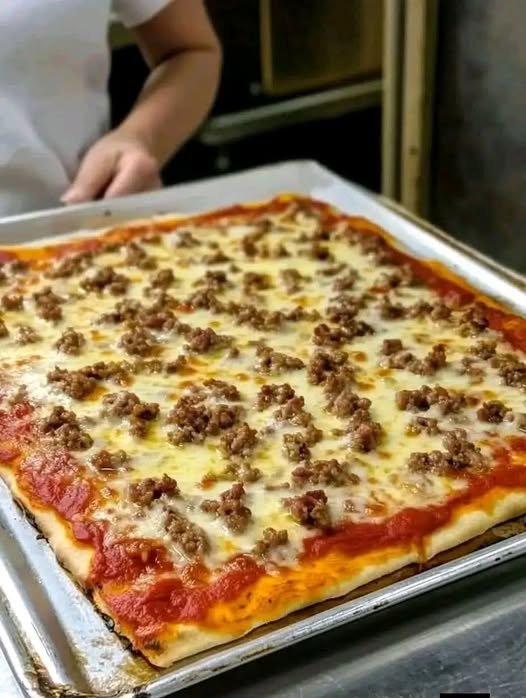
Instructions
- Prepare the Dough (if making from scratch): In a large mixing bowl, combine the warm water, sugar, and yeast. Let it sit for 5-10 minutes until foamy, indicating the yeast is active.
- Add the flour, salt, and 1 tablespoon of olive oil to the yeast mixture. Mix with a spoon or a stand mixer with a dough hook until a shaggy dough forms.
- Turn the dough out onto a lightly floured surface and knead for 5-7 minutes until it’s smooth and elastic. If using a stand mixer, knead for 3-5 minutes on medium speed.
- Lightly grease a clean bowl with olive oil. Place the dough in the bowl, turning once to coat. Cover the bowl with plastic wrap or a clean kitchen towel and let it rise in a warm place for 1 to 1.5 hours, or until doubled in size.
- Prepare the Meat Topping: While the dough is rising, heat 1 teaspoon of olive oil in a large skillet over medium-high heat. Add the ground beef or sausage and cook, breaking it up with a spoon, until it’s fully browned and no pink remains.
- Drain off any excess grease thoroughly. Season the cooked meat with salt and pepper to taste. Set aside to cool slightly.
- Prepare the Sauce: In a small bowl, combine the canned tomato sauce, dried oregano, garlic powder, onion powder, and optional sugar. Season with salt and pepper to taste. Stir well and set aside.
- Preheat Oven and Prepare Pan: Preheat your oven to 425°F (220°C). Lightly grease a 13×18-inch (half sheet pan) baking sheet with olive oil. If you don’t have a half sheet pan, a 9×13-inch pan will work for a thicker crust, but adjust baking time.
- Stretch the Dough: Once the dough has doubled, gently punch it down to release the air. Transfer the dough to the prepared sheet pan.
- Using your fingertips, gently press and stretch the dough to fit the entire bottom of the pan, pushing it right up to the edges. If the dough resists, let it rest for 5-10 minutes, then continue stretching. You want an even thickness across the pan.
- Assemble the Pizza: Spread the prepared tomato sauce evenly over the stretched dough, leaving a small border for the crust.
- Sprinkle the cooked ground meat evenly over the sauce.
- Generously sprinkle the shredded mozzarella cheese over the meat. If desired, sprinkle with Parmesan cheese.
- Bake the Pizza: Place the sheet pan in the preheated oven. Bake for 18-25 minutes, or until the crust is golden brown around the edges, the cheese is melted and bubbly, and lightly golden in spots. Baking time may vary depending on your oven and pan size.
- Rest and Serve: Once baked, carefully remove the pizza from the oven. Let it rest on the sheet pan for 5-10 minutes before slicing. This helps the cheese set and prevents toppings from sliding off.
- Slice into rectangular or square pieces, just like in school, and serve warm.
Cooking Tips and Variations
To achieve that perfect, nostalgic school pizza experience, a few key tips can make all the difference. For the crust, don’t be afraid to really stretch the dough thin enough to cover the entire sheet pan; the signature soft, slightly chewy texture comes from an even, not-too-thick base. If your dough is resisting, let it rest for 5-10 minutes, covered, to relax the gluten before continuing to stretch. This patience will be rewarded with a perfectly uniform crust. When it comes to the ground meat, ensure it’s fully cooked and, crucially, thoroughly drained of grease before spreading it on the pizza. Excess grease can make your pizza soggy and less appealing. A good quality, plain tomato sauce is essential for the base; you want those simple, comforting flavors to shine through, so avoid overly complex or chunky sauces. And finally, don’t skimp on the mozzarella! A generous layer is key to that classic bubbly, melty top.
This recipe is also wonderfully adaptable for various tastes and dietary needs. For a vegetarian version, simply omit the ground meat and instead use sautéed mushrooms, bell peppers, or onions. You could even use a plant-based ground “meat” substitute. If you prefer pepperoni, feel free to add a layer over the cheese, or combine it with the ground meat for a “supreme” school pizza. For a slightly different cheese profile, you can mix in a small amount of provolone with the mozzarella for a sharper flavor. To make the pizza quicker on a busy weeknight, consider using store-bought pizza dough or even a pre-baked crust; simply follow the instructions for sauce, toppings, and baking. For an extra touch of flavor, a sprinkle of dried basil or a pinch of red pepper flakes can be added to the sauce if you like a little more zing. You can also brush the exposed crust edges with a little olive oil before baking for a slightly crispier, more golden finish.
Storage and Reheating
Storing leftover school pizza properly is essential to maintaining its deliciousness for future enjoyment. Once the pizza has cooled completely to room temperature, you can store individual slices or larger sections in an airtight container or wrap them tightly in aluminum foil or plastic wrap. This will prevent the pizza from drying out or absorbing odors from other foods in your refrigerator. Properly stored, the pizza will remain fresh in the refrigerator for up to 3-4 days. For longer storage, school pizza freezes exceptionally well. Wrap individual slices tightly in plastic wrap, then place them in a freezer-safe bag or container. It can be frozen for up to 2-3 months. Thaw frozen pizza in the refrigerator overnight before reheating, or reheat directly from frozen using the methods below.
Reheating school pizza to preserve its original texture and flavor is easy with a few methods. The best way to reheat for a crispy crust and melty cheese is in the oven or a toaster oven. Preheat your oven to 350°F (175°C). Place slices directly on a baking sheet or on aluminum foil and bake for 8-12 minutes, or until the cheese is bubbling and the crust is heated through. If reheating from frozen, it may take 15-20 minutes. For a quicker option, a microwave can be used, though it may result in a softer crust. Place a slice on a microwave-safe plate and microwave for 30-60 seconds, or until heated through. To help prevent the crust from becoming rubbery in the microwave, place a small glass of water in the microwave alongside the pizza. Alternatively, you can reheat slices in a non-stick skillet over medium-low heat with a lid for a few minutes. This method can help crisp up the bottom crust while melting the cheese.
Frequently Asked Questions
Can I use store-bought pizza dough for this recipe?
Absolutely! Using store-bought pizza dough is a fantastic shortcut that will significantly reduce preparation time without sacrificing much of the authentic school pizza taste. Look for a dough that comes in a ball or a rectangular sheet. Allow it to come to room temperature for about 30-60 minutes before stretching it onto your sheet pan. Follow the rest of the instructions for the sauce, toppings, and baking time as written, making minor adjustments if your specific dough package suggests different baking temperatures or times.
What kind of cheese is best for school pizza?
For the most authentic school pizza experience, low-moisture, part-skim mozzarella cheese is your best bet. This type of mozzarella melts beautifully, creates that familiar stretchy texture, and doesn’t release too much water, which can make your pizza soggy. While fresh mozzarella is delicious, it contains too much moisture for this particular style. A shredded blend of mozzarella and a small amount of provolone can also work well if you’re looking for a slightly sharper flavor, but plain mozzarella is truly the classic choice.
How can I prevent my pizza crust from getting soggy?
Several factors contribute to a non-soggy crust. First, ensure your ground meat topping is thoroughly cooked and, crucially, drained of all excess grease before spreading it on the pizza. Too much grease will seep into the dough. Second, don’t overload your pizza with sauce; a thin, even layer is sufficient. Third, make sure your oven is fully preheated to the recommended temperature before baking. A hot oven quickly sets the crust. Lastly, if you tend to have issues with soggy crusts, you can try pre-baking the dough for 5-7 minutes before adding the sauce and toppings. This helps to dry out the crust slightly and create a barrier against moisture.