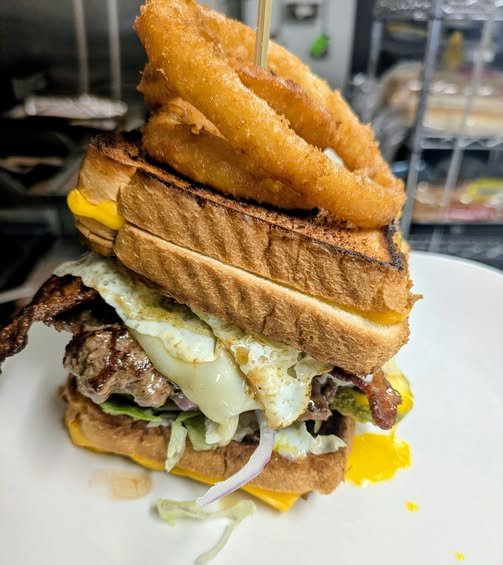
Instructions
- Prepare the Onion Rings: Begin by preparing the onion rings. Separate the sliced sweet onion into individual rings. In a medium bowl, whisk together the flour, paprika, garlic powder, and cayenne pepper (if using). In another bowl, pour the buttermilk. In a third bowl, place the panko breadcrumbs.
- Dip each onion ring first into the seasoned flour, shaking off excess. Then, dip into the buttermilk, allowing excess to drip off. Finally, coat thoroughly in the panko breadcrumbs, pressing gently to ensure an even coating. Place the breaded onion rings on a wire rack set over a baking sheet and refrigerate for at least 30 minutes. This helps the coating adhere better during frying.
- Cook the Bacon: While the onion rings are chilling, cook the bacon. Lay the bacon slices in a large skillet (cast iron works best) over medium heat. Cook until crispy, turning occasionally. This typically takes 8-12 minutes depending on thickness. Remove the bacon from the skillet and place it on a plate lined with paper towels to drain excess grease. Reserve 1-2 tablespoons of bacon fat in the skillet.
- Prepare the Burger Patties: Divide the ground beef into four equal portions. Gently form each portion into a patty, about 1/2 inch thick and slightly wider than your bread slices, as they will shrink during cooking. Create a small indentation in the center of each patty with your thumb; this helps prevent them from bulging in the middle. Season both sides of the patties generously with salt and black pepper.
- Cook the Burger Patties: Heat the skillet with the reserved bacon fat over medium-high heat. If you don’t have enough bacon fat, add a tablespoon of vegetable oil. Place the patties in the hot skillet and cook for 3-5 minutes per side for medium-rare, or longer for desired doneness. For medium, aim for an internal temperature of 140-145°F (60-63°C). During the last minute of cooking, place two slices of cheddar cheese on top of each patty to melt. Remove the cheeseburgers from the skillet and set aside.
- Fry the Onion Rings: Heat about 2-3 inches of vegetable oil in a deep pot or Dutch oven to 350-375°F (175-190°C). Carefully add the chilled onion rings in batches, without overcrowding the pot. Fry for 2-4 minutes, or until golden brown and crispy. Use a slotted spoon to remove the onion rings and place them on a plate lined with paper towels to drain. Season lightly with salt immediately after frying.
- Fry the Eggs: In a separate non-stick skillet, or using a clean portion of your burger skillet, melt a small knob of butter or a teaspoon of oil over medium heat. Crack the eggs into the skillet. Cook for 2-3 minutes for sunny-side up, or until the whites are set but the yolk is still runny. Season with a pinch of salt and pepper.
- Toast the Bread: While the eggs are cooking, lightly toast the slices of white bread or Texas toast. You can do this in a toaster, under the broiler, or in a clean, dry skillet until lightly golden.
- Assemble the Kitchen Sink Burger: Now for the grand finale! Lay out your toasted bread slices. On four of the slices (these will be the bottom buns), spread a thin layer of your chosen sauce if desired.
- Place a generous handful of fresh lettuce on each bottom slice.
- Top the lettuce with a cheese-covered burger patty.
- Layer two slices of crispy bacon on top of each patty.
- Carefully place a fried egg on top of the bacon.
- Add a few slices of red onion and 2-3 pickle slices.
- Crown with a generous stack of golden, crispy onion rings.
- Place the remaining four slices of toasted bread on top to complete your magnificent Kitchen Sink Burgers.
- Serve Immediately: For best results, serve these towering burgers immediately. You may want to insert a long skewer or toothpick through the center of each burger to help hold it together.
Cooking Tips and Variations
For the juiciest patties, make sure your ground beef is at least 80/20 (80% lean, 20% fat). Don’t overwork the meat when forming patties; a light touch keeps them tender. Using a cast iron skillet for cooking the patties and bacon will give you an excellent sear and crispy texture. To ensure your bacon is perfectly crispy without burning, start it in a cold pan and gradually increase the heat. For the fried eggs, use fresh eggs – they tend to have firmer whites that hold their shape better. If you prefer a different cheese, feel free to substitute; Swiss, provolone, or pepper jack would all be delicious. For an extra kick, mix a little hot sauce into your buttermilk for the onion rings. You can also experiment with different types of bread; brioche buns or pretzel buns would make excellent alternatives to the toasted white bread. Consider adding a slice of grilled pineapple or some sautéed mushrooms for even more flavor complexity. If you’re feeling adventurous, whip up a homemade aioli or a spicy Sriracha mayo to elevate your burger sauce game.
Storage and Reheating
Due to the numerous components and the fried nature of some ingredients, the Kitchen Sink Burger is best enjoyed fresh and immediately after assembly. Storing a fully assembled burger will result in soggy bread and less-than-crispy elements. If you have leftover cooked components, store them separately. Cooked burger patties can be stored in an airtight container in the refrigerator for up to 3 days. Cooked bacon can be stored in an airtight container for up to 5 days. Fried onion rings and fried eggs are best consumed immediately, as they lose their crispness and texture upon refrigeration. To reheat burger patties, gently warm them in a skillet over medium-low heat until heated through, or microwave briefly. Reheating bacon in a dry skillet or oven will help restore some crispness. It is not recommended to reheat fried eggs or onion rings as they will become rubbery or soggy. If you anticipate leftovers, it’s best to cook only what you plan to eat and prepare fresh onion rings and eggs for each serving.
Frequently Asked Questions
What kind of ground beef is best for this burger?
For a juicy and flavorful burger, we recommend using an 80/20 ground beef blend (80% lean, 20% fat). The fat content is crucial for moisture and taste, especially with so many other ingredients in the burger. Leaner beef can result in a dry patty.
Can I make the onion rings ahead of time?
While the onion rings are best when fried fresh, you can bread them ahead of time and store them in the refrigerator for up to 24 hours before frying. Ensure they are arranged in a single layer on a wire rack so they don’t stick together. Frying them just before assembly is key for maximum crispness.
What if I don’t like fried eggs?
No problem! The beauty of the Kitchen Sink Burger is its versatility. If you’re not a fan of fried eggs, you can simply omit them. Alternatively, you could replace them with a dollop of guacamole, a slice of grilled halloumi cheese, or even a generous smear of cream cheese for a different kind of richness.
How do I keep the burger from falling apart while eating?
This is a common challenge with loaded burgers! A long, sturdy skewer or a couple of wooden toothpicks inserted through the center of the burger will help hold all the components together. Don’t be afraid to press down gently on the top bun before serving. Also, embrace the mess – sometimes the best burgers require a few extra napkins!