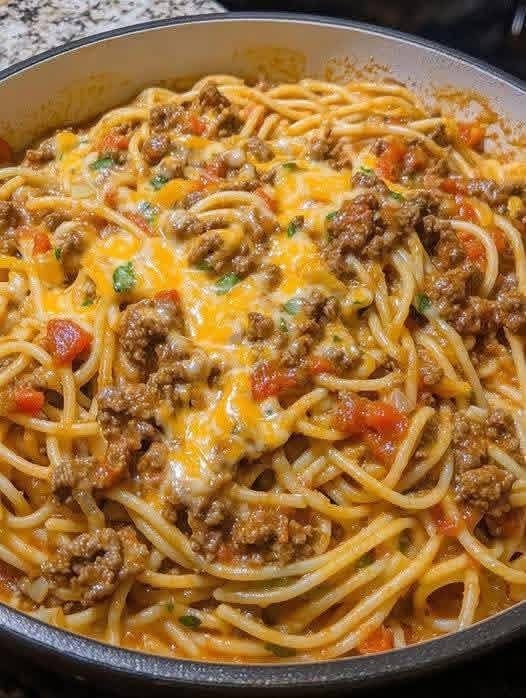
Instructions
- Heat the olive oil in a large skillet or Dutch oven over medium-high heat. Add the ground beef and chopped onion. Cook, breaking up the meat with a spoon, until the beef is browned and the onion is softened, about 6-8 minutes.
- Drain any excess grease from the skillet. Add the minced garlic and cook for another minute until fragrant.
- Stir in the taco seasoning, diced tomatoes (undrained), tomato sauce, beef broth, water, chili powder, ground cumin, cayenne pepper (if using), salt, and black pepper. Bring the mixture to a simmer, stirring occasionally.
- Add the broken spaghetti noodles to the skillet. Make sure the noodles are submerged in the sauce as much as possible. You might need to gently push them down with a spoon.
- Reduce the heat to medium-low, cover the skillet, and let it simmer for 15-20 minutes, or until the spaghetti is al dente (cooked through but still firm to the bite). Stir occasionally to prevent the noodles from sticking to the bottom of the pan and to ensure even cooking. If the sauce becomes too thick or the noodles aren’t fully cooked, add a little more water or broth, 1/4 cup at a time.
- Once the spaghetti is cooked, remove the skillet from the heat. Stir in 1 cup of the shredded cheese until melted and fully incorporated into the spaghetti mixture.
- Sprinkle the remaining 1 cup of shredded cheese evenly over the top of the spaghetti. Cover the skillet again for 2-3 minutes, or until the cheese is melted and bubbly. Alternatively, if your skillet is oven-safe, you can place it under a broiler for 1-2 minutes until the cheese is golden and bubbly (watch carefully to prevent burning).
- Garnish with fresh chopped cilantro before serving. Serve hot with your favorite taco toppings on the side.
Cooking Tips and Variations
For perfectly cooked spaghetti that isn’t mushy, make sure to stir frequently during the simmering process, especially in the first few minutes after adding the pasta. This prevents the noodles from clumping together and sticking to the bottom of the pan. The pasta will absorb a lot of the liquid, so don’t be alarmed if the sauce thickens considerably.
To drain excess grease from the ground meat effectively, you can either tilt the pan and spoon out the fat, or carefully transfer the cooked meat to a colander lined with paper towels, then return it to the skillet. This step is crucial for a less greasy and more flavorful sauce.
If you prefer a spicier kick, increase the amount of cayenne pepper or add a diced jalapeño or serrano pepper along with the onion. For a milder flavor, omit the cayenne entirely. You can also add a dash of your favorite hot sauce at the end.
For a vegetarian version, swap the ground beef for an equal amount of cooked brown or green lentils, or a plant-based ground meat substitute. Ensure your taco seasoning is vegetarian-friendly. You might need to adjust the cooking time slightly, as lentils don’t require browning.
To make a creamier Taco Spaghetti, stir in 1/4 cup of cream cheese or a dollop of sour cream (about 1/4 to 1/2 cup) along with the first cup of shredded cheese. This adds a lovely richness and smooth texture to the sauce.
Experiment with different cheeses! While cheddar and Monterey Jack are classics, a pepper jack cheese would add a nice spicy kick, or a blend of Colby and Jack could offer a milder flavor. Freshly grated cheese melts much better and has a superior texture compared to pre-shredded varieties, which often contain anti-caking agents.
Enhance the vegetable content by adding diced bell peppers (any color) or corn kernels when you add the diced tomatoes. These add extra flavor, color, and nutrients to your dish. You can also stir in a handful of fresh spinach during the last few minutes of cooking until it wilts.
For an even deeper flavor, consider using fire-roasted diced tomatoes instead of regular diced tomatoes. This adds a smoky complexity that complements the taco flavors beautifully.
Don’t be afraid to taste and adjust seasonings as you go. Before adding the spaghetti, taste the sauce and add more salt, pepper, or taco seasoning if needed. Different brands of taco seasoning vary in saltiness and spice level.
If you’re short on time, you can prepare the meat sauce ahead of time and store it in the refrigerator. When ready to serve, reheat the sauce, add the broken spaghetti, and proceed with step 4 of the instructions. This can cut down on active cooking time on a busy weeknight.
Consider making this a true “one-pot” meal by ensuring your skillet or Dutch oven is large enough to comfortably hold all ingredients, including the uncooked spaghetti. A 5-6 quart capacity is usually ideal.
Storage and Reheating
Taco Spaghetti makes for fantastic leftovers! To store, allow the dish to cool completely to room temperature. Transfer any remaining Taco Spaghetti to an airtight container. It can be refrigerated for up to 3-4 days. For longer storage, you can freeze individual portions in freezer-safe containers for up to 2-3 months. Just be aware that pasta can sometimes become a bit softer in texture after freezing and thawing.
When reheating from the refrigerator, the best method is to gently warm it on the stovetop over medium-low heat. Add a splash of water, broth, or even milk (1-2 tablespoons per serving) to help rehydrate the sauce and prevent it from drying out. Stir occasionally until heated through. Alternatively, you can reheat individual portions in the microwave. Place a serving in a microwave-safe dish, add a tiny bit of liquid, cover loosely, and microwave in 1-minute intervals, stirring in between, until hot. If reheating from frozen, thaw in the refrigerator overnight before reheating on the stovetop or in the microwave, adding extra liquid as needed.
Frequently Asked Questions
Can I use different types of pasta?
Absolutely! While spaghetti is traditional for this dish, you can definitely experiment with other pasta shapes. Penne, rotini, or even elbow macaroni would work wonderfully. Just be sure to check the cooking time on the pasta package, as it may vary from spaghetti, and adjust the simmering time accordingly until the pasta is al dente. Shorter pasta shapes might even make it easier to eat!
Is it possible to make this dish in an Instant Pot or slow cooker?
Yes, both methods are possible with some adjustments. For an Instant Pot, you would typically brown the meat and sauté the aromatics using the “Sauté” function, then add the liquids and broken spaghetti, and pressure cook for about 5-7 minutes with a quick release. For a slow cooker, you’d cook the meat separately, then combine all ingredients (except the cheese and cilantro) in the slow cooker and cook on low for 3-4 hours or high for 1.5-2 hours, adding the spaghetti during the last 30-60 minutes, ensuring it’s submerged. The exact times will vary, so keep an eye on the pasta’s doneness.
What are the best toppings for Taco Spaghetti?
The beauty of Taco Spaghetti is its versatility with toppings! Classic taco toppings are perfect here. Some popular choices include a dollop of sour cream or Greek yogurt, fresh diced avocado or guacamole, a sprinkle of extra shredded cheese, chopped green onions, sliced black olives, or pico de gallo. For added crunch, you can crush up some tortilla chips or strips and sprinkle them over the top. Don’t forget a squeeze of lime juice for a bright finish!
My sauce seems too thin/thick. How can I fix it?
If your sauce is too thin after the spaghetti has cooked, you can simmer it uncovered for a few more minutes to allow some of the liquid to evaporate and thicken. If it’s too thick or the spaghetti isn’t cooking through, simply add more liquid (water or broth), 1/4 cup at a time, until it reaches your desired consistency and the pasta is cooked. Remember that the pasta will continue to absorb liquid even after cooking, so it may thicken slightly upon standing.