Instructions
- Prepare the Mashed Potatoes:
- Place the peeled and cubed potatoes in a large pot and cover with cold water by about an inch. Add 1 teaspoon of salt.
- Bring to a boil over high heat, then reduce heat to medium and simmer until the potatoes are fork-tender, about 15-20 minutes.
- Drain the potatoes thoroughly in a colander. Return the hot, drained potatoes to the empty pot.
- Add the softened butter, warm milk or cream, salt, and white pepper to the pot.
- Mash the potatoes using a potato masher or a fork until smooth and creamy. Taste and adjust seasoning as needed. Cover and keep warm.
- Prepare the Steak:
- Remove the steaks from the refrigerator 30-45 minutes before cooking to bring them closer to room temperature. Pat them thoroughly dry with paper towels.
- Season both sides of the steaks generously with coarse sea salt and freshly ground black pepper.
- Heat a heavy-bottomed cast iron skillet or other oven-safe pan over high heat until smoking lightly, about 3-5 minutes.
- Add the olive oil to the hot pan and swirl to coat. Carefully place the steaks in the hot pan, ensuring not to overcrowd. Cook for 2-3 minutes per side for a deep, golden-brown crust.
- Reduce heat to medium-low. Add the butter, rosemary/thyme sprigs, and smashed garlic cloves to the pan. Tilt the pan slightly and, using a spoon, continuously baste the melting butter and aromatics over the steaks for 1-2 minutes.
- For medium-rare (130-135°F), continue cooking, flipping occasionally, or transfer the pan to a preheated oven at 400°F (200°C) for 5-8 minutes, depending on thickness and desired doneness. Use a meat thermometer to check internal temperature (see tips below).
- Once the desired internal temperature is reached, remove the steaks from the pan and transfer them to a cutting board. Tent loosely with foil and let them rest for at least 5-10 minutes. This is crucial for juicy steaks.
- Prepare the Garlic Butter Shrimp Sauce:
- While the steak is resting, heat a separate large skillet over medium-high heat. Add 1 tablespoon of olive oil and 1 tablespoon of butter.
- Add the diced green bell pepper, red bell pepper, and onion to the skillet. Sauté for 3-5 minutes until softened.
- Add the minced garlic and sauté for another minute until fragrant, being careful not to burn it.
- Stir in the smoked paprika and cayenne pepper (if using). Cook for 30 seconds.
- Pour in the chicken broth or white wine, and lemon juice. Bring to a simmer, scraping up any browned bits from the bottom of the pan. Let it reduce slightly for 2-3 minutes.
- Add the shrimp to the sauce. Cook for 2-3 minutes, stirring occasionally, until the shrimp turn pink and opaque. Do not overcook.
- Stir in the remaining 1 tablespoon of butter until melted and the sauce is glossy. Taste and adjust seasoning with salt and pepper.
- Assemble and Serve:
- Slice the rested steaks against the grain into thick slices.
- On each plate, spoon a generous portion of the creamy mashed potatoes.
- Arrange the sliced steak next to the potatoes.
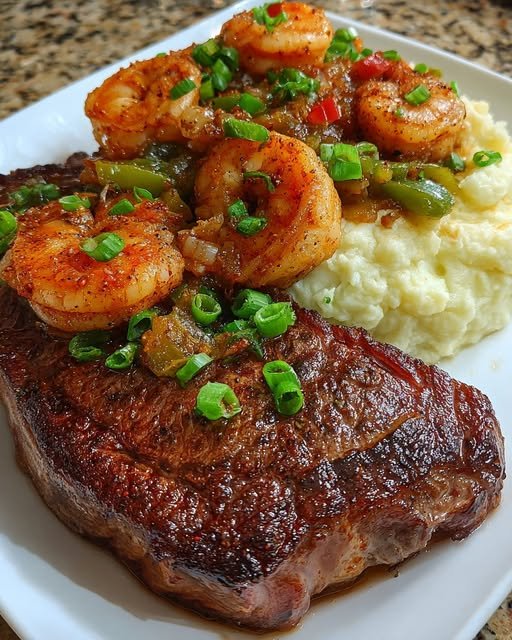
- Spoon a generous portion of the garlic butter shrimp and sauce over the steak and alongside the potatoes.
- Garnish with fresh chopped parsley and chives. Serve immediately.
Cooking Tips and Variations
For the Perfect Steak: Always pat your steak completely dry before seasoning and searing. Moisture on the surface will steam the meat instead of creating a beautiful, crispy crust. Use a high-smoke-point oil like avocado, grapeseed, or refined olive oil for searing, as extra virgin olive oil can burn at high temperatures. Don’t overcrowd the pan; cook steaks one at a time if necessary to maintain high heat. For precise doneness, invest in a good instant-read meat thermometer: Rare (125°F/52°C), Medium-Rare (130-135°F/54-57°C), Medium (135-140°F/57-60°C), Medium-Well (140-145°F/60-63°C). Remember that the steak’s internal temperature will rise by 5-10 degrees while resting, so remove it from heat just before it reaches your target. Resting the steak is non-negotiable; it allows the muscle fibers to relax and reabsorb juices, resulting in a more tender and flavorful cut.
Creamy Mashed Potato Secrets: For the fluffiest mashed potatoes, start with cold water and add salt to the cooking water; this seasons the potatoes from the inside out. Don’t overwork the potatoes when mashing, as this can make them gluey. For an extra rich and smooth texture, you can pass them through a potato ricer or food mill before adding butter and cream. Warmed milk or cream incorporates better and keeps the potatoes hot. Feel free to adjust the amount of butter and cream to your desired richness.
Preventing Overcooked Shrimp: Shrimp cook very quickly, often in just 2-3 minutes per side, depending on their size. They are done when they turn pink and opaque. Overcooked shrimp become rubbery and tough, so keep a close eye on them. The sauce will continue to cook them slightly after they’re removed from the heat, so err on the side of slightly undercooked rather than overcooked. Using fresh, high-quality shrimp makes a noticeable difference in flavor and texture.
Sauce Variations: While our garlic butter sauce with bell peppers is fantastic, you can easily customize it. For a richer, more decadent sauce, add a splash of heavy cream at the end. For a brighter flavor, increase the lemon juice or add a sprinkle of fresh lemon zest. Other herbs like fresh dill or tarragon can also be lovely with shrimp. Consider a classic chimichurri for a fresh, herbaceous kick, or a simple garlic herb butter for the steak and shrimp.
Side Dish Alternatives: Instead of or in addition to mashed potatoes, consider roasted asparagus, green beans almondine, creamed spinach, or a simple garden salad with a vinaigrette. These lighter sides can balance the richness of the main dish.
Different Cuts of Steak: While New York Strip is excellent, feel free to use other prime cuts like ribeye, filet mignon, or sirloin. Adjust cooking times based on thickness and fat content. Filet mignon will cook faster due to its leanness, while a ribeye’s marbling will render delicious fat.
Other Seafood Options: Elevate your surf and turf with other delicious seafood. Seared scallops, lobster tail, or even crab legs can be fantastic alternatives or additions to the shrimp. Adjust cooking techniques accordingly for each seafood item.
Storage and Reheating
Storage: Store any leftover steak, shrimp, and mashed potatoes in separate airtight containers in the refrigerator. Properly stored, they will remain fresh for up to 2-3 days. It’s best to keep the components separate, as the steak and shrimp sauces can affect the texture of the potatoes if mixed for too long.
Reheating Steak: Reheating steak can be tricky to avoid drying it out. For best results, preheat your oven to 250°F (120°C). Place the steak on a wire rack set over a baking sheet and heat for 15-20 minutes, or until warmed through. Alternatively, you can slice the steak thinly and gently warm it in a skillet with a tablespoon of beef broth or butter over low heat, just until heated through. Avoid microwaving, as it can make the steak tough.
Reheating Shrimp: Shrimp are best reheated gently to prevent them from becoming rubbery. You can warm them in a skillet over low heat with a splash of chicken broth or water, just until they are heated through. Microwaving shrimp is generally not recommended as it can quickly overcook them.
Reheating Mashed Potatoes: Mashed potatoes reheat beautifully. For a stovetop method, place them in a saucepan over low heat, adding a splash of milk or cream and a pat of butter, stirring occasionally until creamy and hot. You can also reheat them in the microwave, stirring every minute or so, adding a little milk/cream if they seem dry, until heated through. For larger quantities, reheat in an oven-safe dish covered with foil at 350°F (175°C) for 20-30 minutes, stirring halfway.
Frequently Asked Questions
What is the best cut of steak for Surf & Turf?
While many cuts work, a New York Strip, Ribeye, or Filet Mignon are typically considered the best for surf and turf. New York Strip offers a good balance of tenderness and flavor with a nice chew. Ribeye is known for its rich marbling and intense flavor. Filet Mignon is prized for its exceptional tenderness, though it has less fat and flavor than other cuts. Choose based on your preference for tenderness versus robust flavor.
Can I prepare any components of this dish in advance?
Yes, you can certainly do some prep work ahead of time. The potatoes can be peeled and cut and stored in cold water in the refrigerator overnight. The bell peppers and onion can be diced in advance. The shrimp can be peeled and deveined and kept in the refrigerator for up to 24 hours. However, it’s best to cook the steak and shrimp fresh just before serving for optimal texture and flavor.
How do I know when my steak is done without a thermometer?
While a meat thermometer is highly recommended for accuracy, you can use the “poke test” as an estimation. Gently press the center of the steak with your finger. Rare steak will feel very soft and mushy, medium-rare will have some give but spring back slightly, medium will be firmer with a slight spring, and well-done will feel very firm with no give. This method requires practice and is less reliable than a thermometer, so use it as a rough guide.
What wine pairs well with Surf & Turf?
Given the combination of red meat and seafood, pairing can be flexible. For a red wine, a medium-bodied Cabernet Sauvignon, Merlot, or a Pinot Noir would complement the steak without overpowering the shrimp. If you prefer white wine, a rich Chardonnay (especially unoaked or lightly oaked) or a crisp Sauvignon Blanc can work well, especially with the garlic butter shrimp, though it might be a lighter pairing for a robust steak. A dry rosé is also a versatile option that bridges the gap between red and white.