Instructions
Part 1: Prepare the Herbed Baby Potatoes
- Wash the baby potatoes thoroughly. If any are larger than bite-sized, cut them in half to ensure even cooking.
- Place the potatoes in a large pot and cover with cold water by about an inch. Add a generous pinch of salt to the water.
- Bring the water to a boil over high heat, then reduce heat to medium-low and simmer until the potatoes are fork-tender but not mushy, about 10-15 minutes depending on size.
- Drain the potatoes thoroughly in a colander. Allow them to steam dry for a few minutes to remove excess moisture.
- In a large skillet or cast iron pan, heat 2 tablespoons of olive oil and 2 tablespoons of butter over medium-high heat.
- Once the butter is melted and slightly foamy, add the drained potatoes to the skillet.
- Cook the potatoes, stirring occasionally, until they are golden brown and slightly crispy on the outside, about 8-12 minutes.
- Add the minced garlic, chopped parsley, chives, and dill (if using) to the skillet. Sauté for another 1-2 minutes until the garlic is fragrant and the herbs are slightly wilted.
- Season with 1/2 teaspoon sea salt and 1/4 teaspoon black pepper. Toss to combine. Remove from heat and set aside.
Part 2: Prepare the Sticky Glazed Salmon
- In a small bowl, whisk together the soy sauce, honey or maple syrup, rice vinegar, grated ginger, minced garlic, sesame oil, and sriracha (if using). This is your glaze.
- Pat the salmon fillets dry thoroughly with paper towels. This helps achieve a nice sear. Season both sides lightly with salt and pepper.
- Heat 1 tablespoon of olive oil or avocado oil in a large non-stick skillet over medium-high heat.
- Once the oil is shimmering, place the salmon fillets skin-side down (if applicable) in the hot skillet. Cook for 4-5 minutes until the skin is crispy and golden brown.
- Flip the salmon fillets. Pour about half of the prepared glaze over the salmon.
- Continue to cook for another 3-5 minutes, basting occasionally with the glaze in the pan, until the salmon is cooked through and flakes easily with a fork. The internal temperature should reach 145°F (63°C). Be careful not to overcook.
- Remove the salmon from the pan and set aside on a plate. If desired, you can briefly reduce the remaining glaze in the pan over low heat for a thicker sauce to drizzle.
Part 3: Assemble the Caprese Salad
- In a medium bowl, combine the halved cherry tomatoes and halved or quartered fresh mozzarella balls.
- Add the torn or sliced fresh basil leaves.
- Drizzle with extra virgin olive oil and balsamic glaze.
- Season with 1/4 teaspoon sea salt and 1/8 teaspoon black pepper.
- Gently toss all ingredients to combine.
Part 4: Plating and Serving
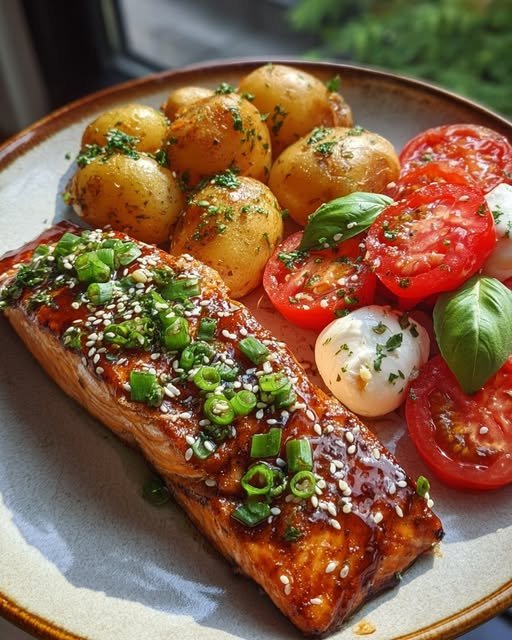
- On each serving plate, artfully arrange one sticky glazed salmon fillet.
- Spoon a generous portion of the herbed baby potatoes alongside the salmon.
- Place a serving of the fresh Caprese salad next to the potatoes.
- Garnish the salmon with a sprinkle of sesame seeds and chopped green onions.
- Serve immediately and enjoy your beautiful, flavorful meal!
Cooking Tips and Variations
For the Salmon:
- Don’t Overcook: Salmon cooks quickly. Overcooked salmon is dry and unappetizing. Aim for an internal temperature of 145°F (63°C) for perfectly flaky, moist fish. A meat thermometer is your best friend here.
- Crispy Skin: If using skin-on salmon, ensure your pan is hot and the skin is patted very dry before searing. Press down gently on the fillet with a spatula for the first minute of cooking to ensure even contact with the pan.
- Baking Option: If you prefer baking, preheat your oven to 400°F (200°C). Place salmon on a parchment-lined baking sheet, brush with half the glaze, and bake for 12-15 minutes, brushing with remaining glaze halfway through, until cooked through.
- Glaze Thickness: For a thicker, more syrupy glaze, you can simmer the sauce in a separate small saucepan over low heat for a few minutes until it reduces slightly.
- Spice It Up: Increase the sriracha in the glaze for more heat, or add a pinch of red pepper flakes.
For the Potatoes:
- Don’t Mash: Boil the potatoes until they are tender enough to pierce with a fork, but still hold their shape. Over-boiling will make them mushy when you pan-fry them.
- Herb Alternatives: Feel free to experiment with other fresh herbs like rosemary, thyme, or oregano. A mix of herbs often yields the best flavor. Dried herbs can be used in a pinch, but reduce the quantity by half as they are more potent.
- Roasting Option: Instead of pan-frying, you can roast the boiled potatoes. Toss them with olive oil, salt, pepper, and garlic, then roast at 400°F (200°C) for 20-25 minutes, flipping halfway, until golden and crispy. Add fresh herbs after roasting.
For the Caprese Salad:
- Quality Matters: The Caprese salad relies heavily on the quality of its ingredients. Use ripe, flavorful tomatoes and fresh, creamy mozzarella for the best results.
- Balsamic Glaze: You can easily make your own balsamic glaze by simmering balsamic vinegar in a saucepan over low heat until it reduces by about half and thickens to a syrupy consistency. Be careful not to burn it.
- Add-ins: For an extra layer of flavor, consider adding thinly sliced red onion or a few pitted Kalamata olives to your Caprese.
Plating Perfection:
- Arrange components with intention. A slight overlap of ingredients can create a more inviting presentation.
- Use a clean plate! Wipe away any drips or smudges before serving for a professional finish.
Storage and Reheating
This dish is best enjoyed fresh, especially the Caprese salad which can become watery over time. However, leftovers can be stored and reheated.
- Storage: Store the salmon, potatoes, and Caprese salad separately in airtight containers in the refrigerator. The salmon and potatoes will keep for up to 2-3 days. The Caprese salad is best consumed within 1-2 days.
- Reheating Salmon: Reheat salmon gently to prevent it from drying out. You can warm it in a microwave on a low setting for 1-2 minutes, or in a preheated oven at 275°F (135°C) for 10-15 minutes until just warmed through. Adding a splash of water or broth to the dish before microwaving can help retain moisture.
- Reheating Potatoes: The herbed baby potatoes can be reheated in a skillet over medium heat until warmed through and slightly re-crisped, about 5-7 minutes. Alternatively, you can reheat them in the microwave for 1-2 minutes, though they may lose some crispness.
- Caprese Salad: The Caprese salad is best served at room temperature. Do not reheat. If storing, drain any accumulated liquid before serving again.
Frequently Asked Questions
Can I prepare any components of this meal in advance?
Yes, you can definitely do some prep work ahead of time! The salmon glaze can be made up to 2-3 days in advance and stored in the refrigerator. The baby potatoes can be boiled and drained a day ahead, then stored in the fridge. When ready to cook, you’ll just need to pan-fry them with the oil, butter, garlic, and herbs. The Caprese salad is best assembled just before serving to maintain the freshness of the tomatoes and basil, but you can halve the tomatoes and mozzarella ahead of time.
What’s the best way to get a truly sticky glaze on the salmon?
The key to a truly sticky glaze is reduction. After you flip the salmon, pour about half of the glaze over it. As the salmon cooks, the sugars in the glaze will caramelize and thicken. If you want an even thicker, more concentrated glaze, remove the salmon from the pan once cooked, and then simmer the remaining glaze in the pan over low heat for an additional 1-2 minutes, stirring constantly, until it reduces to a syrupy consistency. Drizzle this over the cooked salmon before serving.
Can I use dried herbs instead of fresh for the potatoes?
While fresh herbs offer the best flavor and aroma for the baby potatoes, you can certainly use dried herbs if fresh aren’t available. As a general rule, use about one-third the amount of dried herbs as you would fresh. So, for example, if the recipe calls for 1/4 cup fresh parsley, use about 1 tablespoon of dried parsley. Add dried herbs in with the oil and butter to allow them to bloom and release their flavors before adding the potatoes.
What type of salmon is best for this recipe?
Any type of salmon fillet will work well for this recipe, whether it’s Atlantic, Sockeye, Coho, or Chinook. Look for fillets that are about 1-inch thick for even cooking. Skin-on salmon is often preferred for pan-searing as the skin becomes crispy and delicious, adding another layer of texture. However, skinless fillets are also perfectly fine and will cook just as well with the glaze.