Instructions
- Prepare the Steaks: Remove the steaks from the refrigerator at least 30-60 minutes before cooking to bring them closer to room temperature. This promotes even cooking. Pat the steaks thoroughly dry with paper towels. Season generously on all sides with salt and freshly ground black pepper.
- Heat the Pan: Place a heavy-bottomed skillet (cast iron is ideal) over high heat until it’s smoking lightly, about 3-5 minutes. Add the olive oil to the hot pan and swirl to coat the bottom.
- Sear the Steaks: Carefully place the seasoned steaks into the hot skillet. Do not overcrowd the pan; cook one or two at a time if necessary. Sear undisturbed for 2-3 minutes per side until a deep brown, crusty sear forms.
- Lower Heat and Add Butter/Aromatics: Reduce the heat to medium. Add 4 tablespoons of the unsalted butter, minced garlic, and rosemary/thyme sprigs (if using) to the pan.
- Baste the Steaks: As the butter melts, tilt the pan slightly and use a large spoon to continuously baste the steaks with the melted butter, garlic, and herb mixture. Continue basting for 2-4 minutes, flipping the steaks once or twice, until they reach your desired doneness.
- Check Doneness: For medium-rare, aim for an internal temperature of 130-135°F (54-57°C). For medium, 135-140°F (57-60°C). Use an instant-read thermometer inserted into the thickest part of the steak.
- Rest the Steaks: Transfer the cooked steaks to a cutting board and tent loosely with aluminum foil. Let them rest for at least 5-10 minutes. This allows the juices to redistribute, resulting in a more tender and flavorful steak.
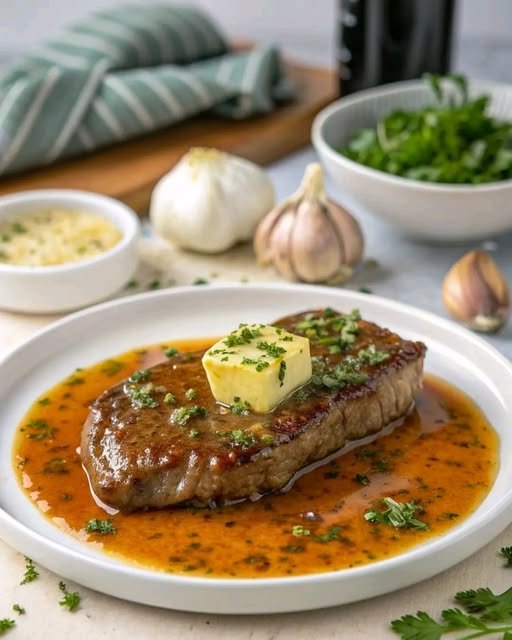
- Make the Garlic Butter Sauce: While the steaks are resting, return the pan with the remaining butter, garlic, and herbs to medium heat. Pour in the beef broth or white wine. Bring to a simmer, scraping up any browned bits from the bottom of the pan with a wooden spoon. Let the sauce reduce slightly for 1-2 minutes until it thickens slightly and the flavors concentrate. Stir in the remaining 2 tablespoons of unsalted butter until melted and emulsified, creating a glossy sauce. Taste and adjust seasoning if needed.
- Serve: Slice the rested steaks against the grain into thick pieces. Arrange on plates and generously spoon the warm garlic butter sauce over the top. Garnish with fresh chopped parsley. Serve immediately.
Cooking Tips and Variations
Achieving the Perfect Sear: The key to a beautiful crust is a very hot pan and dry steak. Patting the steak completely dry before seasoning and searing ensures that moisture doesn’t create steam, which would prevent browning. Don’t move the steak once it hits the hot pan until you’re ready to flip it. Let that crust develop!
The Importance of Resting: This step is non-negotiable! Resting allows the muscle fibers to relax and reabsorb the juices that have migrated to the center during cooking. Cutting into a steak too soon will result in a dry steak with all its delicious juices running out onto your cutting board.
Choosing the Right Cut: While ribeye, New York strip, and sirloin are excellent choices for pan-searing due to their marbling and tenderness, you can also use other cuts like flat iron or even tenderloin. Adjust cooking times based on thickness and marbling.
Garlic Preparation: For a milder garlic flavor, you can use whole, smashed garlic cloves in the basting butter and remove them before serving. For a more intense flavor, mince the garlic finely. You can also roast the garlic beforehand for a sweeter, mellower taste.
Adjusting Sauce Flavor: Feel free to experiment with the sauce. A squeeze of fresh lemon juice at the end can add a bright, zesty counterpoint to the richness. A pinch of red pepper flakes can introduce a subtle heat. For an even richer sauce without wine, use all beef broth.
Butter Basting Technique: Don’t be shy with the butter basting! It’s what infuses the steak with incredible flavor and helps create that beautiful, glossy finish. Tilting the pan makes it easier to scoop and pour the butter over the top consistently.
Herb Variations: While rosemary and thyme are classic companions to beef, consider other herbs like sage or a bay leaf for different aromatic profiles. You can also omit the herbs if you prefer a pure garlic-butter flavor.
Wine Pairing: This rich steak pairs beautifully with a dry red wine. A Cabernet Sauvignon, Merlot, or even a Zinfandel would complement the robust flavors of the beef and garlic butter sauce perfectly. For white wine drinkers, a full-bodied Chardonnay could also work.
Storage and Reheating
Storage: Leftover steak and sauce should be stored in separate airtight containers in the refrigerator. The steak will last for 3-4 days, and the sauce will last for up to 5 days.
Reheating Steak: Reheating steak can be tricky to maintain tenderness. The best method is to gently reheat slices in a skillet over low heat with a little bit of the leftover sauce or beef broth, just until warmed through. Alternatively, you can reheat in the oven at a low temperature (around 250°F / 120°C) until warm. Avoid microwaving whole steak pieces as it can make them tough.
Reheating Sauce: The garlic butter sauce can be reheated gently in a small saucepan over low heat, stirring occasionally, until it’s warmed through and smooth again. If it appears to have separated, a quick whisk as it warms can bring it back together.
Frequently Asked Questions
What cut of steak is best for this recipe?
For this pan-searing method, cuts like ribeye, New York strip (strip loin), or sirloin are excellent choices. They have good marbling, which contributes to flavor and tenderness, and are thick enough to develop a good crust while remaining juicy on the inside. A tenderloin could also work if you prefer a leaner cut.
How do I know when my steak is done without a thermometer?
While an instant-read thermometer is the most reliable way, you can use the “touch test.” A rare steak feels soft and jiggly, medium-rare is soft with a bit of spring, medium is firm with some give, and well-done is very firm. However, this method takes practice, and a thermometer provides accuracy for perfect results every time.
Can I make the garlic butter sauce ahead of time?
You can prepare the minced garlic and have your butter portioned out, but it’s best to make the sauce fresh after cooking the steaks. The pan drippings from searing the steak are crucial for building a rich, flavorful sauce, and the quick reduction ensures it’s at its peak freshness and consistency.
What are good side dishes to serve with this steak?
This rich steak pairs wonderfully with simple, complementary sides. Roasted asparagus, green beans, or broccoli are great vegetable options. Creamy mashed potatoes, a baked potato, or even a simple side salad with a vinaigrette dressing would also be excellent choices to balance the richness of the dish.