Instructions
- Prepare the Steak: Pat the steak dry with paper towels. Season generously on both sides with 1/2 tsp salt and 1/4 tsp black pepper.
- Caramelize the Onions: Heat 1 tablespoon of olive oil in a large skillet over medium-low heat. Add the thinly sliced onions. Cook, stirring occasionally, for 25-35 minutes, or until the onions are deeply golden brown and very soft. If they start to dry out, add a tablespoon of water to deglaze the pan. Remove from skillet and set aside.
- Cook the Asparagus: While onions are caramelizing, preheat your oven to 400°F (200°C). On a baking sheet, toss the asparagus with 1 tablespoon of olive oil, 1/4 tsp salt, and 1/8 tsp black pepper. Roast for 10-12 minutes, or until tender-crisp and slightly charred. Alternatively, grill the asparagus over medium-high heat for 5-7 minutes, turning occasionally.
- Sear the Steak: Heat the same large skillet (or a separate cast-iron skillet) over medium-high heat until very hot, almost smoking. Add 1 tablespoon of olive oil. Carefully place the seasoned steak in the hot skillet.
- Cook to Desired Doneness:
- For medium-rare (130-135°F / 54-57°C): Cook for 3-4 minutes per side.
- For medium (135-140°F / 57-60°C): Cook for 4-5 minutes per side.
- For medium-well (140-145°F / 60-63°C): Cook for 5-6 minutes per side.
Use a meat thermometer for accuracy.
- Rest the Steak: Transfer the cooked steak to a cutting board. Tent loosely with foil and let it rest for at least 5-10 minutes. This allows the juices to redistribute, resulting in a more tender and flavorful steak.
- Assemble the Salad: While the steak is resting, combine the mixed greens, cherry tomatoes, and cucumber in a large bowl. Drizzle with balsamic vinaigrette and toss gently.
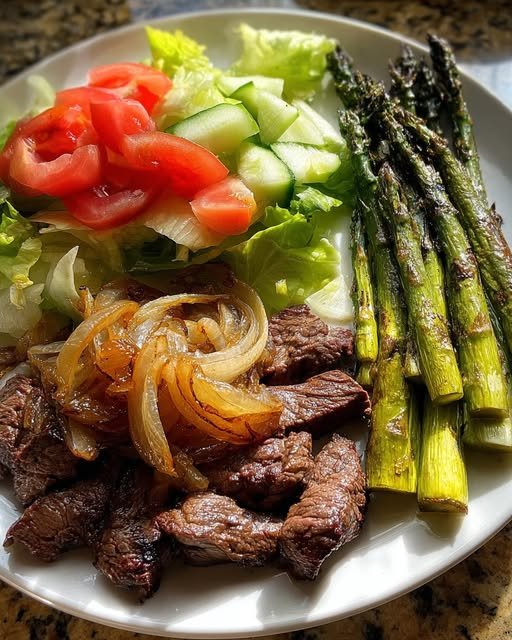
- Slice and Serve: Slice the rested steak against the grain into thin strips. Arrange the sliced steak, roasted asparagus, caramelized onions, and fresh salad on individual plates. Serve immediately and enjoy your power plate!
Cooking Tips and Variations
For the best Steak & Veggie Power Plate experience, these tips and variations will help you achieve perfection every time.
Steak Searing Secrets
- Room Temperature Steak: For an even cook, take your steak out of the refrigerator 20-30 minutes before cooking. This allows it to come closer to room temperature.
- Hot Pan is Key: Ensure your skillet is screaming hot before adding the steak. This creates that beautiful, crusty sear. If using cast iron, it’s even better.
- Don’t Overcrowd: If cooking multiple steaks, cook them in batches to maintain high pan temperature and achieve a proper sear. Overcrowding will steam the meat instead of searing it.
- Resting is Non-Negotiable: This is arguably the most important step for juicy steak. Don’t skip the 5-10 minute rest period.
- Steak Doneness Guide:
- Rare: 120-125°F (49-52°C) – Cool red center.
- Medium-Rare: 130-135°F (54-57°C) – Warm red center.
- Medium: 135-140°F (57-60°C) – Warm pink center.
- Medium-Well: 140-145°F (60-63°C) – Slightly pink center.
- Well-Done: 150-155°F (66-68°C) – Little to no pink.
Remember, the internal temperature will rise a few degrees as the steak rests.
Flavor Boosters for Steak
- Garlic & Herb Butter: In the last minute of searing, add a tablespoon of butter, a smashed garlic clove, and a sprig of fresh rosemary or thyme to the pan. Spoon the melted butter over the steak as it finishes cooking.
- Marinades: For flank or sirloin, a simple marinade of soy sauce, Worcestershire sauce, garlic, and a touch of brown sugar for 30 minutes to an hour can add incredible depth.
- Spice Rubs: Experiment with different dry rubs. Paprika, chili powder, onion powder, and a touch of cayenne can add a smoky, spicier kick.
Vegetable Variations
- Roasted Bell Peppers: Slice bell peppers (any color) and toss them with the asparagus before roasting.
- Zucchini or Yellow Squash: Slice into rounds or spears and roast or grill alongside the asparagus.
- Broccoli or Cauliflower Florets: Roast these hearty vegetables for a few extra minutes until tender and slightly browned.
- Green Beans: Toss with olive oil, salt, and pepper and roast until tender-crisp.
- Sweet Potatoes: Cut into small cubes and roast for a heartier side.
- Mushrooms: Sauté sliced cremini or button mushrooms in a separate pan with a little butter and garlic until tender and browned.
Salad Enhancements
- Cheese: Crumbled feta, goat cheese, or shaved Parmesan can add a tangy or salty element.
- Nuts or Seeds: Toasted walnuts, pecans, sunflower seeds, or pumpkin seeds provide a lovely crunch and healthy fats.
- Avocado: Sliced or diced avocado adds creaminess and healthy monounsaturated fats.
- Different Dressings: Beyond balsamic, try a lemon-herb vinaigrette, a creamy Caesar, or a light ranch dressing.
Caramelized Onion Hacks
- Patience is a Virtue: Don’t rush the caramelization process. Low and slow heat is essential for developing that deep, sweet flavor without burning.
- Deglaze for Flavor: If the pan starts to get too dry or brown bits accumulate, add a splash of water, wine, or broth to scrape up the fond (browned bits) – this adds flavor and prevents burning.
Storage and Reheating
Proper storage and reheating are key to enjoying your Steak & Veggie Power Plate leftovers.
Storage
- Separate Components: For best results, store the steak, caramelized onions, roasted asparagus, and salad components separately.
- Steak: Place sliced or whole steak in an airtight container in the refrigerator for up to 3-4 days.
- Cooked Vegetables (Asparagus, Onions): Store in separate airtight containers in the refrigerator for up to 3-4 days.
- Salad: Store the mixed greens separately from the dressing. Keep the tomatoes and cucumber in a separate container as well to prevent sogginess. Consume within 1-2 days for best freshness.
Reheating
- Steak:
- Oven Method: Preheat oven to 250-275°F (120-135°C). Place steak on a baking sheet, cover loosely with foil, and heat for 10-15 minutes, or until warmed through. This method helps prevent drying out.
- Skillet Method: Heat a lightly oiled skillet over medium-low heat. Add steak and heat for 2-3 minutes per side, just until warmed. Be careful not to overcook.
- Microwave (least recommended): If you must, microwave on 50% power in 30-second intervals until warm. This method can make steak tough.
- Cooked Vegetables (Asparagus, Onions):
- Oven Method: Reheat on a baking sheet at 350°F (175°C) for 5-7 minutes, or until warmed.
- Skillet Method: Sauté in a lightly oiled skillet over medium heat for 3-5 minutes.
- Microwave: Heat in a microwave-safe dish for 1-2 minutes, stirring halfway through.
- Salad: Do not reheat. Simply reassemble with fresh dressing just before serving.
Frequently Asked Questions
Can I prepare parts of this meal ahead of time?
Absolutely! The caramelized onions can be made 2-3 days in advance and stored in the refrigerator. You can also wash and chop your salad vegetables and store them separately. The asparagus can be snapped and seasoned a few hours before roasting. This makes assembly on a busy weeknight much quicker.
What’s the best way to ensure my steak is tender?
Beyond choosing a good cut of steak, two crucial steps ensure tenderness: first, patting the steak dry and searing it in a very hot pan to create a crust without overcooking the interior; and second, allowing the steak to rest for 5-10 minutes after cooking. Resting allows the muscle fibers to relax and reabsorb juices, resulting in a more tender and flavorful bite. Also, always slice against the grain!
Can I use frozen vegetables for this power plate?
While fresh vegetables are generally preferred for texture and flavor in this dish, you can use frozen asparagus. Thaw it completely and pat it very dry before tossing with oil and seasonings and roasting. Be aware that the texture may be slightly softer than fresh asparagus. For the salad, always opt for fresh ingredients.
How can I make this meal lower in carbs?
This meal is already naturally quite low in carbohydrates. To further reduce them, ensure you stick to non-starchy vegetables like asparagus, bell peppers, zucchini, and leafy greens. Avoid adding starchy sides like potatoes or corn. The caramelized onions do contribute some natural sugars, but in moderation, they fit well within a low-carb framework.