Instructions
- Prepare the Soft-Boiled Eggs:
- Bring a small pot of water to a rolling boil.
- Carefully lower the eggs into the boiling water using a slotted spoon.
- Reduce heat slightly to maintain a gentle boil and cook for exactly 6-7 minutes for a perfectly runny yolk and firm whites.
- Immediately transfer the cooked eggs to an ice bath (a bowl of ice water) to stop the cooking process. This also helps with easier peeling. Let them cool for at least 2-3 minutes.
- Gently tap and peel the eggs under cool running water or in the ice bath. Slice in half lengthwise.
- Cook the Sautéed Onions:
- While the eggs are cooking, heat 1 teaspoon of olive oil in a small non-stick pan over medium-low heat.
- Add the thinly sliced onions to the pan.
- Sauté, stirring occasionally, for 8-12 minutes, or until the onions are soft, translucent, and lightly caramelized. If they start to brown too quickly, reduce the heat. Season with a pinch of salt. Remove from heat and set aside.
- Cook the Steak:
- Pat the steak dry with paper towels. This is crucial for a good sear.
- Season both sides generously with salt and freshly ground black pepper.
- Heat the remaining 2 teaspoons of olive oil in a heavy-bottomed skillet (cast iron works best) over high heat until it’s just smoking.
- Carefully place the seasoned steak in the hot skillet.
- Sear for 2-4 minutes per side for medium-rare, or longer for desired doneness. For a 1-inch thick steak, aim for an internal temperature of 130-135°F (54-57°C) for medium-rare. Use a meat thermometer for accuracy.
- For added flavor and a beautiful crust, you can add a tablespoon of butter and a sprig of rosemary or thyme to the pan during the last minute of cooking, basting the steak with the melted butter.
- Remove the steak from the skillet and place it on a cutting board. Tent it loosely with foil and let it rest for at least 5-10 minutes. This allows the juices to redistribute, resulting in a more tender and flavorful steak.
- Slice the steak against the grain into desired thickness.
- Prepare the Avocado:
- While the steak is resting, slice the ripe avocado in half, remove the pit, and scoop out the flesh.
- You can either slice it or cube it. A squeeze of lime or lemon juice will prevent browning and add a bright flavor.
- Assemble the Power Plate:
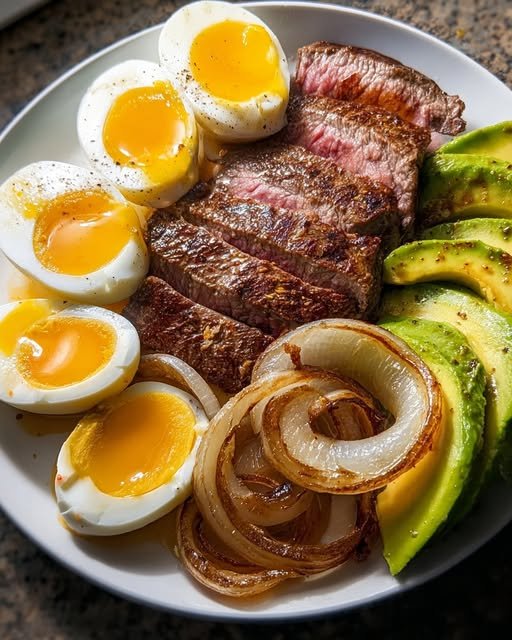
- Arrange the sliced steak, soft-boiled egg halves, sliced avocado, and sautéed onions artfully on a plate.
- Season the entire plate with an extra sprinkle of sea salt and freshly ground black pepper, to taste.
- Garnish with chopped fresh chives or parsley, if using, and a pinch of red pepper flakes for a kick.
- Serve immediately and enjoy your nutrient-dense power plate!
Cooking Tips and Variations
To achieve the best results with your Steak, Soft-Boiled Eggs & Avocado Power Plate, consider these expert tips and explore exciting variations:
- For the Perfect Steak: Always bring your steak to room temperature for about 20-30 minutes before cooking. This ensures more even cooking. Don’t overcrowd the pan; if cooking multiple steaks, cook them in batches. After searing, if your steak is thicker than 1 inch, you might want to finish it in a preheated oven (at 375°F/190°C) for a few minutes to reach your desired doneness without over-searing the outside. Remember, resting the steak is non-negotiable for juicy results.
- For Foolproof Soft-Boiled Eggs: For even easier peeling, some chefs recommend adding a teaspoon of baking soda to the boiling water, though the ice bath is often sufficient. If you prefer a jammy yolk (slightly less runny), cook for 7-8 minutes instead of 6-7. For easier slicing, use a very sharp, thin knife.
- Choosing Your Avocado: A ripe avocado will yield to gentle pressure when squeezed. Avoid avocados that are too hard or have soft, mushy spots. To speed up ripening, place an avocado in a paper bag with a banana or apple.
- Onion Enhancements: For a deeper, richer flavor, you can deglaze the pan after sautéing the onions with a splash of balsamic vinegar or red wine, scraping up any browned bits from the bottom of the pan.
- Steak Variations: Feel free to experiment with different cuts of steak like flank steak, hanger steak, or even a tenderloin for a more luxurious experience. Adjust cooking times accordingly. Marinating tougher cuts for a few hours can also enhance tenderness and flavor.
- Herb and Spice Upgrades: Don’t limit yourself to just salt and pepper. Consider a rub for your steak made with garlic powder, onion powder, paprika, and a touch of cayenne. For the eggs, a sprinkle of everything bagel seasoning or a dash of hot sauce can add a delightful kick.
- Add a Green Base: For an extra boost of nutrients and volume, serve your power plate on a bed of fresh spinach, arugula, mixed greens, or even some sautéed kale. This adds a lovely peppery or earthy contrast.
- Cheese Please: A sprinkle of crumbled feta, goat cheese, or shaved Parmesan can add a tangy or salty dimension to the plate.
- Spice It Up: A dash of chili powder or a few slices of fresh jalapeño can elevate the heat profile if you enjoy a spicy kick.
- Citrus Zest: Grating a tiny bit of lemon or lime zest over the entire plate just before serving can brighten all the flavors.
Storage and Reheating
Proper storage and reheating are key to enjoying your power plate leftovers while maintaining quality and safety. However, due to the nature of some ingredients, optimal enjoyment is always when fresh.
- Steak: Store leftover sliced steak in an airtight container in the refrigerator for up to 3-4 days. To reheat, gently warm in a skillet over medium-low heat with a tiny bit of beef broth or water to prevent drying out. You can also microwave, but be careful not to overcook, as it can become tough.
- Soft-Boiled Eggs: Cooked soft-boiled eggs (peeled or unpeeled) can be stored in an airtight container in the refrigerator for up to 2 days. For best texture, it’s generally recommended to eat soft-boiled eggs fresh, as the yolk tends to firm up slightly upon refrigeration and reheating can alter their delicate consistency. If reheating, a quick dip in warm water or very brief microwave (10-15 seconds) can warm them without cooking further.
- Avocado: Sliced avocado is best consumed fresh. Once cut, it will start to oxidize and brown, even with lime juice, though the lime juice helps slow the process. If you must store it, press plastic wrap directly onto the surface of the avocado slices or halves (with the pit in) and store in an airtight container in the refrigerator for a maximum of 1 day. Discard if it becomes excessively brown or mushy.
- Sautéed Onions: Store leftover sautéed onions in an airtight container in the refrigerator for up to 3-4 days. They can be reheated in a skillet or microwave.
- Assembled Plate: If you have an assembled plate with all components, it’s best to disassemble it for storage. Store each component separately to maintain its best quality. Reheat steak and onions, and add fresh avocado and eggs if possible.
Frequently Asked Questions
Can I prepare any components of this meal ahead of time?
Yes, you can definitely do some prep work in advance! The sautéed onions can be cooked and stored in the refrigerator for a few days. You can also pre-cook the soft-boiled eggs, though their texture is best when freshly prepared. However, it’s recommended to cook the steak and slice the avocado just before serving for optimal freshness, flavor, and texture.
What’s the best way to ensure my steak is cooked to my preferred doneness?
The most accurate way to ensure your steak is cooked to your preferred doneness is by using a meat thermometer. For medium-rare, aim for an internal temperature of 130-135°F (54-57°C). For medium, 135-140°F (57-60°C). Remember that the temperature will rise a few degrees as the steak rests, so pull it off the heat just before it reaches your target temperature.
Can I use frozen steak for this recipe?
While fresh steak is always preferable for texture and flavor, you can use frozen steak. The most important step is to thaw it completely in the refrigerator overnight before cooking. Never cook steak from frozen, as it will result in uneven cooking and a less desirable texture. Once thawed, pat it very dry before seasoning and searing.
I’m not a fan of runny yolks. How can I adjust the egg doneness?
If you prefer a firmer yolk, often called “jammy,” simply increase the cooking time for the eggs. For a jammy yolk, cook the eggs for 7-8 minutes instead of 6-7. For a fully hard-boiled egg, cook for 9-10 minutes. Always transfer them to an ice bath immediately after cooking to stop the process and make peeling easier.