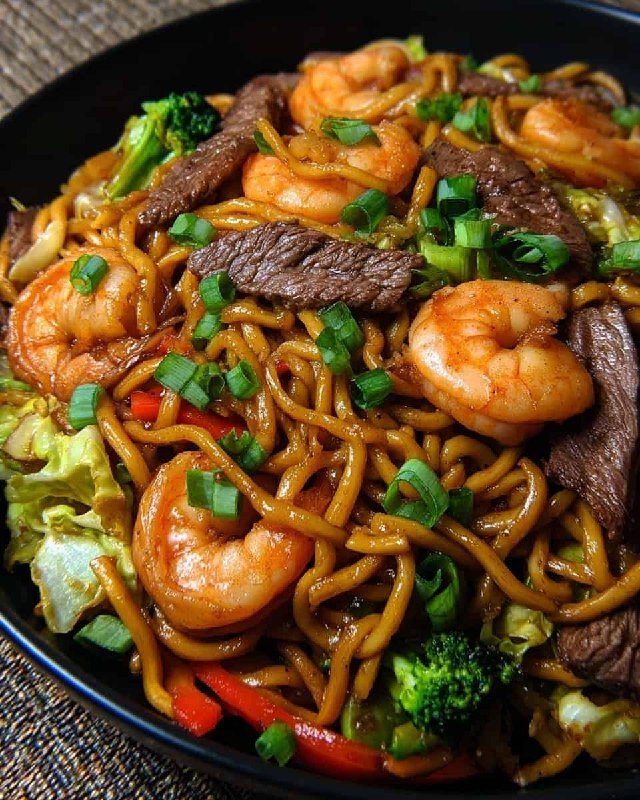
Instructions
- Prepare the Steak and Shrimp: In a medium bowl, combine the thinly sliced steak with the marinade ingredients (2 tablespoons soy sauce, 1 tablespoon cornstarch, 1 tablespoon rice vinegar, 1 teaspoon sesame oil). Toss to coat evenly and set aside for at least 15 minutes. In a separate bowl, season the peeled and deveined shrimp with a pinch of salt and pepper.
- Cook the Lo Mein Noodles: Bring a large pot of salted water to a rolling boil. Add the Lo Mein noodles and cook according to package directions until al dente. They should be tender but still have a slight bite. Drain well and rinse briefly with cold water to prevent sticking. Drizzle with a tiny bit of sesame oil and toss to coat, then set aside.
- Make the Lo Mein Sauce: In a small bowl, whisk together all the Lo Mein sauce ingredients: 1/2 cup soy sauce, 1/4 cup oyster sauce, 2 tablespoons brown sugar, 1 tablespoon rice vinegar, 1 tablespoon sesame oil, and optional sriracha. Set aside. Just before adding to the stir-fry, whisk in the cornstarch slurry (1 tablespoon cornstarch mixed with 2 tablespoons cold water) to ensure it’s well combined and lump-free.
- Stir-fry the Steak: Heat 1 tablespoon of vegetable oil in a large wok or a heavy-bottomed skillet over high heat until shimmering. Add the marinated steak in a single layer, ensuring not to overcrowd the pan. Cook for 2-3 minutes per side until nicely browned and cooked through. Remove the steak from the wok and set aside on a plate.
- Stir-fry the Shrimp: Add the remaining 1 tablespoon of vegetable oil to the same wok. Once hot, add the seasoned shrimp. Cook for 1-2 minutes per side, or until pink and opaque. Be careful not to overcook. Remove the shrimp from the wok and add it to the plate with the steak.
- Sauté the Aromatics and Vegetables: If the wok is dry, add a tiny splash more oil. Add the minced garlic, grated ginger, and chopped green onions (from the 2 green onions designated for cooking). Stir-fry for about 30 seconds until fragrant.
- Add the Vegetables: Add the broccoli florets and thinly sliced red bell pepper to the wok. Stir-fry for 3-4 minutes, or until the vegetables are crisp-tender. Next, add the shredded Napa cabbage and stir-fry for another 1-2 minutes until slightly wilted.
- Combine Everything: Return the cooked steak and shrimp to the wok with the vegetables. Add the cooked Lo Mein noodles to the wok. Pour the prepared Lo Mein sauce evenly over the noodles and ingredients.
- Toss and Serve: Using tongs, toss everything together vigorously for 1-2 minutes, ensuring the noodles, steak, shrimp, and vegetables are thoroughly coated in the sauce. The sauce will thicken slightly as it heats.
- Garnish and Enjoy: Garnish with the remaining sliced green onions and optional sesame seeds. Serve immediately and savor your homemade Steak & Shrimp Lo Mein Delight!
Cooking Tips and Variations
Achieving restaurant-quality Lo Mein at home is all about technique and fresh ingredients. Here are some pro tips and exciting variations to make your dish truly shine:
- Steak Selection and Preparation: For the most tender steak, always slice it thinly against the grain. Cuts like sirloin, flank, or skirt steak are excellent choices. Marinating the steak is crucial for flavor and tenderness; don’t skip this step! If you have time, marinate for 30 minutes to an hour.
- Don’t Overcrowd the Wok: This is perhaps the most important rule of stir-frying. Cooking in batches ensures everything gets a good sear instead of steaming. If your wok or pan isn’t large enough, cook the steak and shrimp in separate batches.
- High Heat is Key: Stir-frying requires high heat to achieve that signature smoky flavor and crisp-tender texture for your vegetables. Make sure your wok or pan is smoking hot before adding ingredients.
- Al Dente Noodles: Always cook your Lo Mein noodles al dente. They will continue to cook slightly when tossed with the hot sauce and other ingredients. Overcooked noodles will become mushy. Rinsing with cold water after draining helps stop the cooking process and prevents sticking.
- Vegetable Customization: Feel free to use your favorite stir-fry friendly vegetables. Snap peas, carrots (julienned), mushrooms, baby corn, water chestnuts, or bok choy would all be delicious additions. Cut them into similar sizes for even cooking.
- Spice it Up: If you love heat, don’t hesitate to add more sriracha to the sauce, or a pinch of red pepper flakes during the vegetable sauté step.
- Protein Swaps: This recipe is incredibly versatile! You can easily substitute the steak and shrimp with chicken (sliced chicken breast or thighs), pork (thinly sliced pork loin), or even tofu (extra-firm, pressed and cubed) for a vegetarian option. Adjust cooking times accordingly.
- Gluten-Free Option: To make this dish gluten-free, ensure you use gluten-free soy sauce (tamari) and look for gluten-free Lo Mein noodles or substitute with rice noodles.
- Add a Crunch: For an extra layer of texture, consider adding a handful of chopped roasted peanuts or cashews as a garnish.
- Taste and Adjust: Always taste your sauce before adding it to the wok, and again after everything is combined. You might want to add a touch more soy sauce for saltiness, brown sugar for sweetness, or rice vinegar for tang.
Storage and Reheating
This Steak & Shrimp Lo Mein Delight makes for fantastic leftovers, perfect for a quick lunch or dinner the next day. Proper storage and reheating will ensure it tastes almost as good as fresh.
Storage:
- Allow the Lo Mein to cool completely to room temperature before storing. This prevents condensation and keeps the noodles from getting soggy.
- Transfer the cooled Lo Mein to an airtight container.
- Store in the refrigerator for up to 3-4 days.
Reheating:
- Microwave: This is the quickest method. Place a single serving in a microwave-safe dish. Add a tablespoon or two of water or chicken broth over the noodles to reintroduce some moisture and prevent them from drying out. Cover loosely with a lid or microwave-safe plastic wrap (leaving a small vent) and microwave on medium-high heat for 1-2 minutes, stirring halfway, until heated through.
- Stovetop: For best results, especially with larger quantities, reheat on the stovetop. Heat a large skillet or wok over medium heat. Add a teaspoon of vegetable oil or a splash of water/broth. Add the Lo Mein and stir-fry gently for 3-5 minutes, tossing frequently, until heated through. This method helps to revive some of the stir-fried texture.
- Avoid Overheating: Be careful not to overheat the Lo Mein, especially the shrimp, as it can become rubbery. Reheat just until warm.
Frequently Asked Questions
What kind of noodles should I use for Lo Mein?
Traditional Lo Mein uses fresh or dried Chinese egg noodles, which are typically thicker and chewier than ramen or instant noodles. Look for “Lo Mein noodles” or “egg noodles” in the Asian section of your grocery store. If you can’t find them, spaghetti or linguine can be a decent substitute in a pinch, but the texture won’t be quite the same.
Can I prepare parts of this dish in advance?
Yes, absolutely! You can prepare the marinade for the steak and let it sit in the fridge for several hours or even overnight. The Lo Mein sauce can also be whisked together and stored in an airtight container in the refrigerator for up to 3 days. Chopping all your vegetables in advance will also significantly speed up the cooking process when it’s time to stir-fry.
Why did my Lo Mein turn out soggy?
Soggy Lo Mein is usually a result of overcooking the noodles, overcrowding the wok during stir-frying (which steams rather than fries the ingredients), or adding too much liquid to the sauce. To prevent this, cook noodles al dente, stir-fry in batches if necessary, and ensure your wok is hot. The cornstarch slurry in the sauce helps thicken it, so make sure to whisk it well before adding.
Can I make this vegetarian or vegan?
Yes, this recipe is very adaptable! For a vegetarian version, omit the steak and shrimp. You can substitute with extra-firm tofu (pressed and cubed), tempeh, or even a mix of mushrooms. For a vegan version, in addition to the protein swap, ensure your soy sauce is vegan (most are, but check labels), use a mushroom-based “oyster” sauce substitute, and replace any honey with maple syrup or agave nectar if used in a variation.