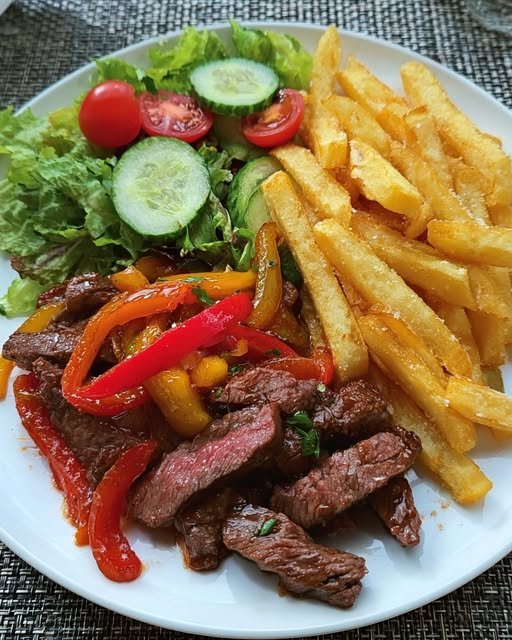
Instructions
-
Prepare the Steak: Pat the steak dry with paper towels. Slice the steak against the grain into thin strips, about 1/4 to 1/2 inch thick and 2-3 inches long. In a medium bowl, combine the sliced steak with 2 tablespoons of olive oil and 2 tablespoons of fajita seasoning. Toss to ensure all steak strips are evenly coated. For best flavor, cover and marinate in the refrigerator for at least 30 minutes, or up to 2 hours. If time allows, marinating for longer, even overnight, will yield more tender and flavorful results.
-
Prepare the Vegetables: While the steak marinates, slice the bell peppers and onion (if using) into thin strips. Wash and chop the lettuce, slice the cucumber, and halve the cherry tomatoes for the salad. Set aside.
-
Cook the Fries (Store-Bought): Preheat your oven or air fryer according to the package instructions for the frozen French fries. Spread the fries in a single layer on a baking sheet or in the air fryer basket. Cook for the recommended time, flipping halfway through, until golden brown and crispy. Season with a pinch of salt immediately after cooking. If making homemade fries, proceed to the next step.
-
Cook the Fries (Homemade – Optional): If making homemade fries, peel and cut two large russet potatoes into 1/4-inch thick sticks. Rinse the potato sticks thoroughly under cold water until the water runs clear to remove excess starch. Soak the potato sticks in a bowl of cold water for at least 30 minutes (or up to 2 hours) to ensure extra crispiness. Drain the potatoes well and pat them completely dry with paper towels. This step is crucial for crispiness. Heat about 3-4 cups of vegetable oil in a large heavy-bottomed pot or Dutch oven to 325°F (160°C). Fry the potatoes in batches for 5-7 minutes until soft and slightly pale, but not browned. Remove with a slotted spoon and drain on a wire rack set over paper towels. Increase the oil temperature to 375°F (190°C). Fry the potatoes again in batches for 2-4 minutes until golden brown and crispy. Remove and drain on a wire rack. Season generously with salt immediately.
-
Cook the Fajitas: While the fries are cooking (or after they are done), heat a large cast-iron skillet or heavy-bottomed pan over medium-high heat. Add 1-2 tablespoons of olive oil to the hot skillet. Once the oil is shimmering, add the marinated steak strips in a single layer, making sure not to overcrowd the pan. Cook for 2-3 minutes per side, or until browned and cooked to your desired doneness (medium-rare is ideal for tenderness). Remove the cooked steak from the skillet and set aside on a plate, tented with foil to keep warm.
-
Sauté the Vegetables: In the same skillet, add another tablespoon of olive oil if needed. Add the sliced bell peppers and onions (if using). Sauté for 5-7 minutes, stirring occasionally, until the vegetables are tender-crisp and slightly charred. If desired, you can add a pinch more fajita seasoning to the vegetables while they cook.
-
Combine and Assemble: Return the cooked steak to the skillet with the sautéed peppers and onions. Toss everything together for 1 minute to combine the flavors and ensure the steak is reheated. Remove from heat.
-
Prepare the Salad Dressing (Optional): In a small bowl, whisk together 3 tablespoons olive oil, 1 tablespoon vinegar, 1 teaspoon Dijon mustard, 0.5 teaspoon honey, and salt and pepper to taste until emulsified. Set aside.
-
Plate the Meal: Divide the steak fajita mixture, crispy fries, and fresh salad among serving plates. Drizzle the salad with the optional vinaigrette or your favorite dressing. Garnish the fajitas with fresh chopped cilantro or parsley. Serve immediately with lime wedges on the side for squeezing over the fajitas.
Cooking Tips and Variations
To ensure your Steak Fajitas with Fries & Fresh Salad turns out perfectly every time, here are some essential cooking tips and exciting variations to try:
Steak Selection and Preparation:
- Cut Against the Grain: This is arguably the most crucial tip for tender fajita steak. Flank, skirt, and sirloin steaks have long muscle fibers. Slicing perpendicular to these fibers (against the grain) shortens them, making the cooked steak much more tender and easier to chew.
- Marinating Time: While 30 minutes is the minimum, aim for at least 2 hours of marination for optimal flavor absorption and tenderness. Overnight marination in the refrigerator can yield even better results, especially for tougher cuts like flank steak.
- Don’t Overcrowd the Pan: When searing the steak, cook it in batches if necessary. Overcrowding the skillet will lower the pan’s temperature, causing the steak to steam instead of sear, resulting in a less desirable gray color and tougher texture.
- High Heat, Quick Cook: Fajita steak cooks best over high heat for a short period. This creates a beautiful crust while keeping the interior juicy and tender.
- Rest the Steak: After cooking, always let the steak rest for 5-10 minutes before slicing. This allows the juices to redistribute throughout the meat, preventing them from running out when you cut into it, ensuring a more succulent steak.
Fajita Vegetable Perfection:
- Don’t Overcook: The bell peppers and onions should be tender-crisp, with a slight char, but still retain some bite. Overcooking them will make them soggy and diminish their vibrant flavor.
- Add a Splash of Liquid: If the pan seems too dry while sautéing vegetables, a tablespoon of water or broth can help create some steam to tenderize them without adding too much oil.
Crispy Fries Every Time:
- Homemade Fry Tips: For truly exceptional homemade fries, the double-fry method is key. The first fry at a lower temperature cooks the potato through, and the second fry at a higher temperature creates that irresistible golden crispness. Soaking the cut potatoes in cold water before frying removes excess starch, which also contributes to crispier results. Always pat them completely dry before frying to prevent oil splattering and ensure even cooking.
- Air Fryer for Convenience: If you own an air fryer, it’s a fantastic tool for achieving crispy store-bought (or even homemade, pre-blanched) fries with less oil. Follow your air fryer’s specific instructions for temperature and time.
Salad Freshness:
- Variety is the Spice of Life: Don’t limit yourself to just lettuce, cucumber, and tomatoes. Consider adding sliced avocado for creaminess, corn for sweetness, black beans for extra protein, or a sprinkle of cotija cheese for a salty tang.
- Dressings: While a simple vinaigrette is provided, feel free to use your favorite store-bought dressing. Ranch, creamy avocado, or a zesty cilantro-lime dressing would all be excellent choices.
Flavor Variations:
- Homemade Fajita Seasoning: Customizing your own seasoning blend allows you to control the spice level and flavor profile. Adjust the cayenne pepper for more or less heat.
- Smoky Flavor: For an extra layer of flavor, consider adding a dash of liquid smoke to your steak marinade or a pinch of smoked paprika to your fajita seasoning.
- Citrus Boost: A squeeze of fresh lime juice over the finished fajitas and even the salad brightens all the flavors.
- Spicy Kick: If you love heat, add some thinly sliced jalapeños or serrano peppers to the skillet with your bell peppers and onions.
Serving Suggestions:
- Traditional Twist: While this recipe is designed as a plated meal, you can always serve the fajita mixture with warm tortillas (corn or flour) on the side for those who want to make their own wraps.
- Sauce It Up: Offer a side of sour cream, guacamole, or salsa to complement the fajitas.
Storage and Reheating
Proper storage and reheating are key to enjoying your delicious Steak Fajitas with Fries & Fresh Salad leftovers safely and without sacrificing too much flavor or texture.
Storage:
- Separate Components: For best results and to maintain the quality of each element, it’s highly recommended to store the different components of the meal separately.
- Steak Fajita Mixture: Allow the cooked steak and vegetable mixture to cool completely to room temperature (within 2 hours of cooking). Transfer it to an airtight container. It can be stored in the refrigerator for up to 3-4 days.
- Fries: Cooked fries tend to lose their crispness quickly. If you have leftover fries, let them cool completely. Store them in an airtight container in the refrigerator for 1-2 days. Be aware that they will likely become soft.
- Salad: Store the dressed salad separately from the undressed greens and vegetables. Any salad with dressing on it will become soggy very quickly. Undressed salad greens, cucumber, and tomatoes can be stored in separate airtight containers in the refrigerator for 2-3 days. If you made extra dressing, store it in a separate container.
Reheating:
- Steak Fajita Mixture:
- Skillet: This is the best method for reheating the steak and vegetables. Heat a little olive oil in a skillet over medium heat. Add the fajita mixture and sauté for 5-7 minutes, stirring occasionally, until heated through. Be careful not to overcook the steak, as it can become tough.
- Microwave: While convenient, the microwave can sometimes make the steak a bit chewy. Place the fajita mixture in a microwave-safe dish, cover loosely, and heat in 30-60 second intervals, stirring in between, until heated through.
- Fries: Reheating fries to their original crispness can be a challenge, but these methods offer the best chance:
- Oven/Toaster Oven: Spread the cold fries in a single layer on a baking sheet. Bake at 400°F (200°C) for 5-10 minutes, flipping halfway, until hot and crispy.
- Air Fryer: This is often the best method for reheating fries. Place the fries in a single layer in the air fryer basket. Air fry at 375°F (190°C) for 3-5 minutes, shaking the basket once or twice, until hot and crispy.
- Skillet: Heat a small amount of oil in a skillet over medium-high heat. Add the fries in a single layer and cook for 3-5 minutes, stirring frequently, until heated through and crisp.
- Salad: Leftover dressed salad is generally not recommended for reheating or even re-serving, as it becomes wilted and soggy. For undressed salad components, simply toss with fresh dressing just before serving.
Frequently Asked Questions
What kind of steak is best for fajitas?
For fajitas, the best cuts of steak are typically flank steak, skirt steak, or sirloin steak. Flank and skirt steaks are popular choices because they absorb marinades well and, when sliced against the grain, become wonderfully tender and flavorful. Sirloin is a leaner option that also works great. The key is to slice any of these cuts thinly and against the grain to ensure maximum tenderness.
Can I prepare parts of this meal ahead of time?
Absolutely! Many components can be prepped in advance. You can slice and marinate the steak up to 24 hours ahead of time. The bell peppers and onions can be sliced and stored in an airtight container in the refrigerator for 1-2 days. The salad vegetables can be washed, chopped, and stored separately in the refrigerator for a few days, and the dressing can be made and stored in a jar for up to a week. This pre-preparation makes assembly on the day of cooking much quicker and easier.
How can I make this dish spicier?
To add more heat, you have several options. If using homemade fajita seasoning, increase the amount of cayenne pepper. You can also add a pinch of red pepper flakes to the steak marinade or to the skillet when sautéing the vegetables. For fresh heat, thinly slice a jalapeño or serrano pepper and cook it along with the bell peppers and onions. Serving with a side of your favorite hot sauce or a spicy salsa will also kick up the heat.
What if I don’t have a cast-iron skillet?
No problem! While a cast-iron skillet is ideal for achieving a great sear and even heat distribution, any large, heavy-bottomed skillet or pan will work just fine. Stainless steel or non-stick pans can also be used. The important thing is to get the pan nice and hot before adding the steak to ensure a good sear and avoid steaming the meat.