Instructions
- Marinate the Steak: In a medium bowl, whisk together all marinade ingredients: 2 tablespoons olive oil, lime juice, chili powder, cumin, smoked paprika, garlic powder, onion powder, cayenne pepper (if using), salt, and black pepper. Place the trimmed flank or skirt steak in a shallow dish or a zip-top bag. Pour the marinade over the steak, ensuring it’s fully coated. Seal the bag or cover the dish and refrigerate for at least 30 minutes, or up to 4 hours.
- Prepare the Mexican Rice: Heat 2 tablespoons of olive oil in a medium saucepan or pot over medium heat. Add the rinsed rice and cook, stirring frequently, for 3-5 minutes until the rice is lightly toasted and opaque.
- Add the finely diced onion to the rice and cook for another 3-4 minutes until softened. Stir in the minced garlic and cook for 1 minute until fragrant.
- Pour in the tomato sauce and stir to coat the rice. Add the chicken broth, ground cumin, chili powder, and salt. Bring the mixture to a boil, then immediately reduce the heat to low, cover the pot tightly, and simmer for 18-20 minutes, or until all the liquid has been absorbed and the rice is tender. Do not lift the lid during cooking.
- Once cooked, remove the pot from the heat and let it stand, covered, for 5-10 minutes. Fluff the rice with a fork and stir in the chopped fresh cilantro (if using). Keep warm.
- Cook the Fajita Vegetables: While the rice is simmering and the steak is marinating, heat 1 tablespoon of olive oil in a large cast-iron skillet or heavy-bottomed pan over medium-high heat. Add the sliced bell peppers and onions. Sauté for 7-10 minutes, stirring occasionally, until the vegetables are tender-crisp and slightly caramelized. Remove the cooked vegetables from the skillet and set aside.
- Cook the Steak: Remove the marinated steak from the refrigerator and let it come to room temperature for about 10-15 minutes before cooking.
- Wipe out the skillet used for the vegetables (or use a clean one) and heat the remaining 1 tablespoon of olive oil over medium-high to high heat until shimmering and almost smoking.
- Carefully place the steak in the hot skillet. Sear for 3-5 minutes per side for medium-rare to medium, depending on the thickness of your steak and your desired doneness. Use a meat thermometer to check for an internal temperature of 130-135°F for medium-rare or 135-140°F for medium.
- Remove the steak from the skillet and transfer it to a cutting board. Tent it loosely with foil and let it rest for 5-10 minutes. This resting period is crucial for juicy, tender steak.
- Slice and Assemble: After the steak has rested, slice it thinly against the grain. Cutting against the grain is vital for tenderness.
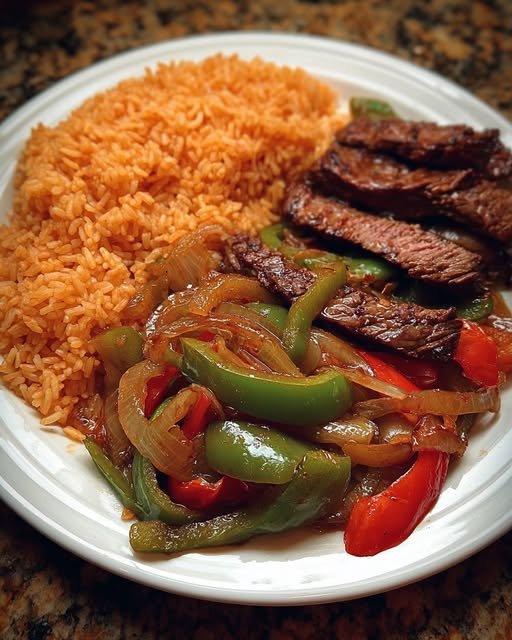
- To assemble, spoon a generous portion of the Mexican rice onto each plate. Top the rice with the sliced steak and the sautéed fajita vegetables.
- Serve immediately with your favorite optional toppings such as sour cream, guacamole, salsa, shredded cheese, and fresh lime wedges.
Cooking Tips and Variations
For the most tender steak, always slice it thinly against the grain after it has rested. This shortens the muscle fibers, making each bite incredibly tender. When searing your steak, ensure your skillet is very hot before adding the meat. A smoking hot pan creates a beautiful, flavorful crust, locking in the juices. Don’t overcrowd the pan; if cooking a large amount of steak, sear it in batches to maintain high heat.
Achieving perfectly caramelized onions and tender, slightly charred peppers is key to great fajitas. Cook them over medium-high heat, stirring occasionally, until they soften and develop a sweet, smoky char. Avoid overcooking them to maintain a slight crispness. For extra flavor, sprinkle a pinch of the fajita seasoning over the vegetables as they cook.
The Mexican rice gets its vibrant color and deep flavor from tomato sauce and spices. Using chicken broth instead of water significantly enhances the taste. Resist the urge to lift the lid while the rice is simmering; this traps the steam necessary for even cooking. After cooking, let the rice rest, covered, for a few minutes off the heat before fluffing with a fork, as this allows the grains to firm up and separate.
If you’re looking to mix things up, this recipe is highly adaptable. For a change of protein, you can easily substitute chicken breast or thighs, or even shrimp, for the steak. Adjust cooking times accordingly; chicken should be cooked through (165°F internal temperature), and shrimp cooks very quickly until pink and opaque. For a delicious vegetarian option, replace the steak with thick-sliced portobello mushrooms, firm tofu, or even hearty strips of bell peppers and onions alone, seasoned with the same fantastic marinade. You can also use vegetable broth for the rice to keep it fully vegetarian.
Don’t forget the toppings! They add an extra layer of flavor and texture. Classic choices include a dollop of cool sour cream or Greek yogurt to balance the spice, creamy guacamole or sliced avocado, fresh salsa, and a sprinkle of shredded Monterey Jack or Cheddar cheese. A squeeze of fresh lime juice over the finished plate brightens all the flavors and adds a zesty kick that truly ties the dish together. Feel free to add a sprinkle of fresh chopped cilantro for an aromatic finish.
Storage and Reheating
This Steak Fajita Rice Plate makes fantastic leftovers! To store, allow the steak, fajita vegetables, and Mexican rice to cool completely. Once cooled, store each component separately in airtight containers in the refrigerator. This helps maintain the best texture and prevents flavors from melding too much. Properly stored, the components will remain fresh for up to 3-4 days.
When you’re ready to reheat, you have a few options. For best results, especially with the steak, avoid overcooking. You can gently reheat the steak and vegetables together in a skillet over medium heat with a splash of water or broth, stirring occasionally, until warmed through. The rice can be reheated in a microwave – place it in a microwave-safe bowl, add a tablespoon of water or broth, cover with a microwave-safe lid or damp paper towel, and heat in 1-minute intervals, stirring between each, until hot. Alternatively, you can combine all components on a plate and microwave until heated through, though the steak might become slightly less tender this way. For larger portions, the oven is an option: spread the rice, steak, and vegetables on a baking sheet, cover loosely with foil, and bake at 300°F (150°C) for 15-20 minutes, or until warmed through.
Frequently Asked Questions
What cut of steak is best for fajitas?
Flank steak and skirt steak are the traditional and best choices for fajitas. They are lean, flavorful, and absorb marinades well. They also cook quickly and are perfect for slicing thinly against the grain after cooking to ensure tenderness.
Can I make the marinade ahead of time?
Absolutely! You can prepare the marinade up to a week in advance and store it in an airtight container in the refrigerator. For the steak itself, it’s best to marinate for a minimum of 30 minutes, but no more than 4 hours. Marinating for too long, especially with lime juice, can start to “cook” the meat and change its texture.
How can I make this dish spicier?
There are several ways to kick up the heat! You can increase the amount of cayenne pepper in the steak marinade, add a pinch of red pepper flakes to the fajita vegetables as they cook, or even toss in some thinly sliced fresh jalapeños or serrano peppers with the bell peppers and onions. Serving with a spicy salsa or a dash of your favorite hot sauce is another easy way to add heat at the table.
Can I freeze components of this meal?
Yes, some components can be frozen. The cooked Mexican rice freezes very well; allow it to cool completely, then store in an airtight freezer-safe container or bag for up to 3 months. Thaw in the refrigerator overnight before reheating. The cooked fajita vegetables can also be frozen, though they may lose a little texture upon thawing. Cooked steak can be frozen, but it’s best when reheated from fresh or refrigerated. It might become slightly tougher after freezing and reheating.