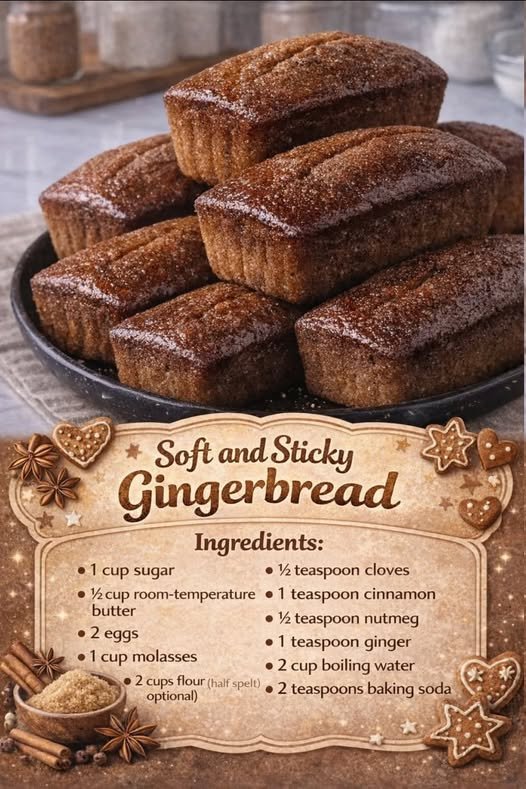
Instructions
- Preheat your oven to 350°F (175°C). Grease and flour two 8×4-inch mini loaf pans, or one 9×13-inch baking pan. If using mini loaf pans, you can also line them with parchment paper slings for easy removal.
- In a medium bowl, whisk together the flour, ground ginger, ground cinnamon, ground cloves, ground nutmeg, and salt. Set aside. This ensures all the dry ingredients are evenly distributed, leading to a consistent flavor and texture in your gingerbread.
- In a large mixing bowl, using an electric mixer (either stand mixer with paddle attachment or hand mixer), cream together the softened butter and granulated sugar until light and fluffy. This process incorporates air into the mixture, which contributes to the gingerbread’s soft texture. Scrape down the sides of the bowl as needed to ensure everything is well combined.
- Beat in the molasses until fully incorporated. The molasses will give the mixture a rich, dark color and a distinct aroma. Continue mixing until the molasses is thoroughly blended with the butter and sugar, creating a smooth consistency.
- Add the eggs one at a time, beating well after each addition. Ensure each egg is fully incorporated into the batter before adding the next. This helps to emulsify the mixture, preventing it from separating and creating a smoother batter. The batter may look slightly curdled at this stage, but don’t worry, it will come together.
- Gradually add the dry ingredients to the wet ingredients, mixing on low speed until just combined. Be careful not to overmix, as overmixing can develop the gluten in the flour too much, leading to a tough gingerbread. Mix until no streaks of dry flour remain. The batter will be very thick and somewhat stiff at this point.
- In a small bowl, dissolve the baking soda in the boiling water. This step is crucial and unique to many traditional gingerbread recipes. The hot water activates the baking soda immediately, creating a burst of leavening that contributes to the gingerbread’s soft and moist crumb. It also helps to thin out the thick batter.
- Slowly pour the hot baking soda mixture into the gingerbread batter while mixing on low speed. The batter will become much thinner and more liquid. Continue mixing until the hot water mixture is fully incorporated and the batter is smooth. The batter will now be quite runny, which is exactly what you want for a tender, moist gingerbread.
- Pour the batter evenly into the prepared loaf pans or single baking pan. For mini loaves, fill each pan about two-thirds full. For a 9×13-inch pan, spread the batter evenly to the edges.
- Bake for 30-35 minutes for mini loaves, or 40-50 minutes for a 9×13-inch pan, or until a wooden skewer or toothpick inserted into the center comes out clean or with moist crumbs attached. The gingerbread should be golden brown on top and spring back lightly when touched. Be mindful not to overbake, as this is the key to maintaining its soft and sticky texture.
- Remove the gingerbread from the oven and let it cool in the pans for about 10-15 minutes. This allows the gingerbread to set and become firmer before being removed.
- Carefully invert the gingerbread onto a wire rack to cool completely. If using parchment sling, simply lift it out. Allow it to cool thoroughly before slicing, as warm gingerbread can be very delicate and may crumble.
Cooking Tips and Variations
To achieve the absolute best “Soft and Sticky Gingerbread,” consider these essential tips. First and foremost, do not overbake! This is the golden rule for any soft baked good, but especially for gingerbread. Keep a close eye on it during the last few minutes of baking. A skewer coming out with a few moist crumbs is perfect; completely dry means it’s likely overdone. The boiling water step is not just for thinning the batter; it activates the baking soda instantly, contributing to the incredible tenderness. Use fresh spices for the most vibrant flavor; old, stale spices will result in a dull-tasting gingerbread. For molasses, unsulphured dark molasses is generally preferred for its rich, full-bodied flavor, but regular dark molasses will also work beautifully. Avoid blackstrap molasses unless you prefer a much stronger, slightly bitter flavor.
When it comes to variations, the possibilities are endless! For an extra layer of flavor and texture, try adding ½ cup of chopped candied ginger or a handful of toasted pecans or walnuts to the batter in step 6. If you’re feeling adventurous, a teaspoon of finely grated orange zest can brighten up the spice profile. For serving, a simple dusting of powdered sugar is elegant, but a drizzling of lemon glaze (powdered sugar mixed with lemon juice) or a dollop of freshly whipped cream takes it to another level. For a truly decadent treat, spread a luscious cream cheese frosting over the cooled gingerbread. To transform this into gingerbread muffins, simply divide the batter into a greased 12-cup muffin tin and bake for 20-25 minutes. You can also bake it in a bundt pan for a beautiful presentation, adjusting baking time as needed. Remember to always grease and flour your pans thoroughly, or use parchment paper, especially for intricate bundt pans, to ensure easy release.
Storage and Reheating
Proper storage is essential to maintain the signature soft and sticky texture of this gingerbread. Once completely cooled, wrap the gingerbread tightly in plastic wrap or aluminum foil. Then, place it in an airtight container. Stored at room temperature, it will remain fresh and delicious for up to 3-4 days. For longer storage, you can refrigerate it for up to a week. If you plan to keep it even longer, gingerbread freezes beautifully. Wrap individual slices or the entire loaf tightly in plastic wrap, then an additional layer of aluminum foil, and place in a freezer-safe bag or container. It will keep well in the freezer for up to 3 months.
When ready to enjoy frozen gingerbread, thaw it overnight in the refrigerator or at room temperature for a few hours. To reheat, you can gently warm individual slices in the microwave for 15-30 seconds until just warm and soft. Be careful not to overheat, as this can dry it out. Alternatively, you can wrap a slice or a small piece in foil and warm it in a preheated oven at 300°F (150°C) for 5-10 minutes. This method helps to retain moisture and bring back that freshly baked aroma. Avoid re-baking the entire loaf unless it’s very slightly underbaked, as it will likely dry out. Always serve warmed gingerbread with your favorite toppings for the best experience.
Frequently Asked Questions
What kind of molasses should I use for this recipe?
For the best flavor and texture in this soft and sticky gingerbread, we recommend using unsulphured dark molasses. This type of molasses has a rich, deep flavor that is characteristic of traditional gingerbread. While regular light molasses can be used, it will result in a milder flavor and lighter color. Blackstrap molasses is generally too strong and slightly bitter for this recipe, so it’s best to avoid it unless you specifically prefer that intense flavor profile.
My gingerbread came out dry, what went wrong?
The most common reason for dry gingerbread is overbaking. Every oven can vary, so it’s crucial to start checking for doneness a few minutes before the recipe’s minimum baking time. The gingerbread should be golden brown and spring back lightly when touched, and a toothpick inserted into the center should come out with moist crumbs, not completely clean. Another factor could be inaccurate measurement of flour; too much flour can also lead to a dry texture. Ensure you’re measuring flour by spooning it into the measuring cup and then leveling it off, rather than scooping directly from the bag, which can compact it.
Can I make this gingerbread ahead of time for a holiday gathering?
Absolutely! This gingerbread is an excellent make-ahead dessert. In fact, many people find that the flavors deepen and the texture becomes even more wonderfully moist and sticky after a day or two. Store it properly wrapped at room temperature for up to 3-4 days before your event. You can also bake it and freeze it for up to 3 months, then thaw and warm it before serving. This makes holiday entertaining much less stressful!
Why is boiling water used in this recipe?
The use of boiling water is a traditional technique in many gingerbread recipes and serves a couple of important purposes. Firstly, the hot water helps to thin out the very thick batter, making it easier to mix and ensuring a more tender crumb. Secondly, and perhaps most importantly, the heat from the boiling water rapidly activates the baking soda. This creates a quick release of carbon dioxide gas, which acts as a leavening agent, contributing significantly to the gingerbread’s soft, light, and moist texture. It’s a key factor in achieving that signature “soft and sticky” quality.