Instructions
- Marinate the Beef: In a medium bowl, combine the thinly sliced beef with the marinade ingredients: 2 tablespoons soy sauce, 1 tablespoon cornstarch, 1 tablespoon Chinese rice wine, 1 teaspoon sesame oil, and 1/2 teaspoon black pepper. Toss well to ensure all the beef is coated. Let it marinate at room temperature for at least 15-20 minutes, or refrigerate for up to 30 minutes for deeper flavor and tenderness.
- Prepare the Sizzling Sauce: In a separate small bowl, whisk together all the sauce ingredients: 1/2 cup beef broth, 1/4 cup soy sauce, 2 tablespoons oyster sauce, 1 tablespoon brown sugar, 1 tablespoon Chinese rice wine, 1 teaspoon sesame oil, and 1/2 teaspoon white pepper. Set aside. Do not add the cornstarch slurry yet.
- Heat the Wok/Skillet: Heat 1 tablespoon of cooking oil in a large wok or a heavy-bottomed skillet over high heat until it just begins to smoke. This high heat is crucial for achieving a good sear and “wok hei.”
- Cook the Beef: Add the marinated beef to the hot wok in a single layer, spreading it out. Do not overcrowd the pan; cook in two batches if necessary to ensure proper searing rather than steaming. Let the beef sear undisturbed for 1-2 minutes until beautifully browned on one side, then stir-fry for another 1-2 minutes until mostly cooked through but still slightly pink in the center. Remove the beef from the wok and set aside on a clean plate.
- Stir-fry the Aromatics and Vegetables: Add the remaining 1 tablespoon of cooking oil to the same wok. Add the chopped onions and stir-fry for 2-3 minutes until they begin to soften and become translucent. Add the red and green bell peppers and continue to stir-fry for another 2-3 minutes until they are crisp-tender. Add the minced garlic and grated ginger and stir-fry for about 30 seconds until fragrant, being careful not to burn the garlic.
- Combine and Sauce: Return the cooked beef to the wok with the vegetables. Give the prepared sizzling sauce a quick whisk (to ensure the cornstarch hasn’t settled) and pour it over the beef and vegetables. Bring the sauce to a simmer.
- Thicken the Sauce: Stir the cornstarch slurry (1 tablespoon cornstarch dissolved in 2 tablespoons cold water) one last time, then slowly pour it into the simmering sauce while stirring constantly. Continue to cook and stir for 1-2 minutes until the sauce thickens to your desired consistency, coating all the ingredients beautifully.
- Prepare for Sizzling Presentation (Optional but Recommended): While the stir-fry is finishing, place a cast iron sizzle platter or a heavy cast iron skillet in the oven heated to 400°F (200°C) for 10-15 minutes, or heat it directly on a large burner until smoking hot. Carefully remove the hot platter using oven mitts and place it on a heat-proof surface or a wooden trivet.
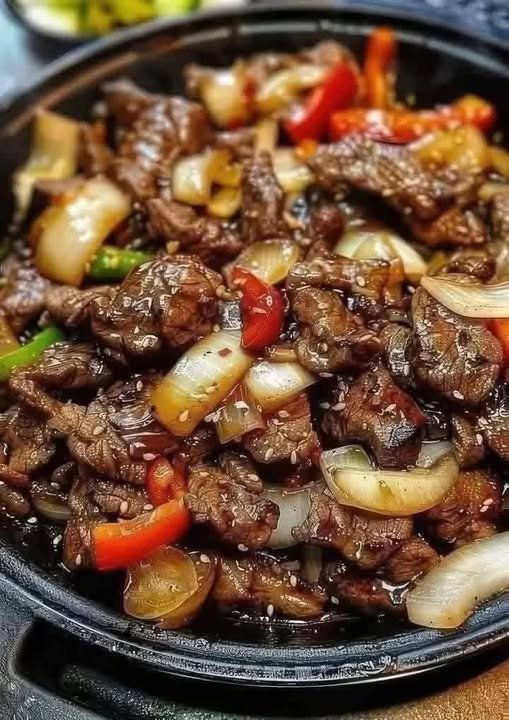
- Serve Sizzling: Immediately transfer the hot pepper steak and vegetables from the wok onto the smoking hot sizzle platter. You should hear a dramatic sizzling sound upon contact. Garnish generously with white sesame seeds. Serve immediately with steamed white rice.
Cooking Tips and Variations
Achieving Tender Beef: The secret to truly tender Chinese pepper steak lies in two key steps. First, always slice your beef against the grain. This shortens the muscle fibers, making the beef less chewy. Second, don’t skip the cornstarch in the marinade. It acts as a protective barrier, locking in moisture during high-heat cooking and contributing to that classic “velvety” texture often found in Chinese restaurant dishes. For even more tenderness, you can add a pinch of baking soda (about 1/4 teaspoon per pound of beef) to the marinade, but be careful not to overdo it, as too much can affect the texture negatively.
Mastering “Wok Hei”: “Wok hei” translates to “breath of the wok” and refers to the unique smoky, charred flavor imparted by cooking at intensely high temperatures in a well-seasoned wok. To achieve this at home, ensure your wok or skillet is screaming hot before adding any ingredients. Cook the beef in batches if necessary to prevent overcrowding, which lowers the pan temperature and leads to steaming rather than searing. A good quality carbon steel wok is ideal, but a heavy-bottomed stainless steel skillet can also work if heated sufficiently.
Vegetable Customization: While bell peppers and onions are traditional, feel free to experiment with other vegetables. Broccoli florets, snap peas, carrots (sliced thinly), mushrooms, or even bamboo shoots can be excellent additions. Add harder vegetables earlier in the stir-frying process to ensure they cook through, and softer ones later to maintain their crispness. Adjust cooking times accordingly.
Adjusting Spice Level: If you enjoy a bit of heat, you can easily add some spice to this dish. Include a pinch of red pepper flakes with the garlic and ginger, or finely mince a fresh chili pepper (like a Thai bird’s eye chili or serrano) and add it to the stir-fry. A dash of chili oil drizzled over the finished dish also works wonders.
The Sizzle Effect: For that truly authentic sizzling experience, invest in a cast iron sizzle platter. These are designed to be heated to a very high temperature before the food is added, creating that dramatic, mouth-watering sound and keeping the dish hot throughout the meal. If you don’t have one, a heavy cast iron skillet heated on the stovetop or in the oven works as a good alternative. Just be extremely careful when handling hot cast iron.
Serving Suggestions: Sizzling Chinese Pepper Steak is best served immediately over a bed of fluffy steamed white rice. The rice soaks up all that delicious sauce, making for a truly satisfying meal. For a complete meal, consider pairing it with a simple side of blanched leafy greens or a light cucumber salad.
Storage and Reheating
Storage: Leftover Sizzling Chinese Pepper Steak with Onions should be transferred to an airtight container and refrigerated within two hours of cooking. It will keep well in the refrigerator for up to 3-4 days. While the flavors may deepen, the texture of the vegetables may soften slightly over time.
Reheating: For best results, gently reheat the pepper steak on the stovetop in a skillet or wok over medium heat. Add a splash of beef broth or water (1-2 tablespoons) to help loosen the sauce and prevent it from drying out. Stir frequently until heated through, about 5-7 minutes. Avoid reheating at very high temperatures or for too long, as this can make the beef tough and the vegetables mushy. You can also reheat individual portions in the microwave, but be aware that the beef may become slightly chewier, and the vegetables less crisp. If microwaving, stir halfway through to ensure even heating.
Frequently Asked Questions
What kind of beef is best for Chinese Pepper Steak?
Flank steak is the most traditional and highly recommended cut for Chinese Pepper Steak due to its robust flavor and ability to tenderize beautifully when sliced against the grain and marinated. Other good alternatives include sirloin steak, top round, or even beef tenderloin if you’re looking for a more luxurious option. The key is to slice it very thinly and against the grain for maximum tenderness.
Can I make this dish ahead of time?
While the beef can be marinated up to 30 minutes in advance, and the sauce can be mixed a day ahead, this dish is best enjoyed fresh off the wok for optimal texture and flavor. The “sizzling” aspect is also best when prepared and served immediately. If you need to prep ahead, chop all your vegetables and make the sauce, but cook the stir-fry just before serving.
Why is my beef tough in stir-fries?
There are a few common reasons for tough beef in stir-fries. First, you might not be slicing against the grain, which makes the beef chewier. Second, skipping the cornstarch in the marinade can lead to moisture loss and toughness. Third, overcrowding the pan causes the temperature to drop, steaming the beef instead of searing it, resulting in a tougher texture. Always cook beef in batches if your pan isn’t large enough to accommodate it in a single layer.
What is Chinese rice wine, and can I substitute it?
Chinese rice wine, specifically Shaoxing wine, is a crucial ingredient in many Chinese dishes, lending a unique depth of flavor and aroma. It’s a fermented rice wine, not to be confused with rice vinegar. If you can’t find Shaoxing wine, a dry sherry can be used as a suitable substitute in a pinch, though the flavor profile will be slightly different.