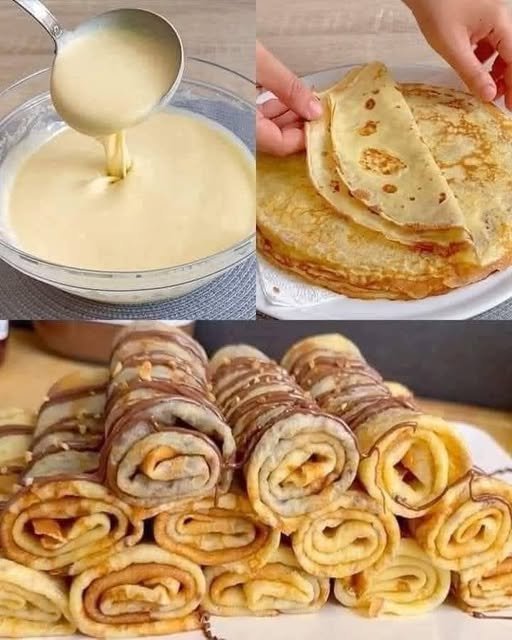
Instructions
- Prepare the Batter: In a large mixing bowl, whisk together the all-purpose flour, granulated sugar (if using), and salt until well combined. This helps prevent lumps later on.
- Add Wet Ingredients: In a separate bowl or a large measuring cup, whisk the two large eggs. Gradually whisk in the milk, water, melted butter, and vanilla extract (if using) until the mixture is smooth and uniform.
- Combine Wet and Dry: Pour the wet ingredients into the dry ingredients. Whisk continuously until the batter is smooth and free of lumps. It should have a consistency similar to thin cream. Avoid overmixing, as this can develop the gluten too much and result in tougher crepes.
- Rest the Batter (Crucial Step!): Cover the bowl with plastic wrap and refrigerate the batter for at least 30 minutes, or up to 2 hours. This resting period allows the gluten to relax, resulting in more tender crepes, and also allows the flour to fully hydrate, preventing tearing during cooking. If you’re short on time, a 15-minute rest at room temperature can work, but the longer rest is highly recommended.
- Prepare Your Pan: Heat a 8-inch non-stick crepe pan or a flat-bottomed non-stick skillet over medium heat. It’s crucial for the pan to be at the right temperature – not too hot to burn the crepe, and not too cool to prevent even cooking. A good test is to flick a drop of water onto the pan; if it sizzles and evaporates immediately, it’s ready.
- Grease the Pan: Lightly grease the hot pan with a small amount of melted butter. You can use a pastry brush or a paper towel dipped in butter to evenly coat the surface. You only need a very thin layer.
- Pour the Batter: Give the batter a quick whisk just before cooking. Pour about 1/4 cup (a small ladleful) of batter into the center of the hot pan. Immediately lift the pan off the heat and quickly swirl the pan in a circular motion to spread the batter evenly across the entire bottom surface, creating a thin, round layer.
- Cook the First Side: Place the pan back on medium heat. Cook for about 1-2 minutes, or until the edges begin to crisp slightly and turn golden brown, and the surface of the crepe appears set and dry. You might see small bubbles forming on the surface.
- Flip the Crepe: Gently loosen the edges of the crepe with a thin spatula. Slide the spatula underneath the crepe and carefully flip it over. Cook the second side for another 30-60 seconds, or until lightly golden. The second side usually cooks faster than the first.
- Remove and Repeat: Slide the cooked crepe onto a plate. You can stack them as you go; they won’t stick together. Continue with the remaining batter, lightly greasing the pan between each crepe if needed, especially if they start to stick. Adjust heat as necessary to maintain consistent cooking.
- Serve Immediately: Serve your warm crepes with your favorite fillings and toppings. For a classic sweet treat, spread with chocolate hazelnut spread and add fresh berries, then roll or fold them.
Cooking Tips and Variations
Achieving the Perfect Thinness: The key to a great crepe is its thinness. Don’t be afraid to experiment with the amount of batter. If your first crepe is too thick, use slightly less batter for the next one. The swirling motion is also critical; lift the pan and swirl quickly to ensure the batter spreads thinly and evenly.
Pan Temperature is Key: A pan that’s too cool will result in pale, rubbery crepes, while one that’s too hot will burn them quickly. Medium heat is usually ideal. If your crepes are cooking too fast on the first side, lower the heat. If they’re taking too long to set, increase it slightly.
The First Crepe is Often a “Sacrifice”: Don’t get discouraged if your first crepe isn’t perfect. This is often the case as you adjust the pan’s temperature and the amount of batter. It’s often referred to as the “test crepe” and is usually eaten by the cook!
Resting the Batter – Don’t Skip It! This step is non-negotiable for tender, pliable crepes. It allows the flour to fully hydrate and the gluten to relax, preventing tearing and making them much easier to work with.
For Savory Crepes: Omit the sugar and vanilla extract from the batter. You can add a pinch of dried herbs like chives or parsley to the batter for extra flavor. Savory fillings can include ham and cheese, sautéed mushrooms, spinach and feta, or even smoked salmon and cream cheese.
For Gluten-Free Crepes: Substitute the all-purpose flour with a 1:1 gluten-free flour blend. You might need to adjust the liquid slightly as gluten-free flours can absorb liquids differently. Allow for a longer resting time for the batter.
Dairy-Free Crepes: Replace the milk with a plant-based milk alternative like almond milk, oat milk, or soy milk. Use a dairy-free butter substitute or a neutral oil like canola or vegetable oil instead of melted butter.
Citrus Zest Boost: For a bright, fresh flavor, add 1 teaspoon of finely grated lemon or orange zest to the sweet crepe batter.
Keeping Crepes Warm: As you cook multiple crepes, you can keep the finished ones warm by stacking them on a plate and covering them loosely with foil, or by placing the plate in a very low oven (around 150°F / 65°C).
Storage and Reheating
Storing Cooked Crepes: Cooked crepes can be stored in the refrigerator for up to 3-4 days. To prevent them from sticking together, place a small piece of parchment paper or wax paper between each crepe before stacking them. Wrap the stack tightly in plastic wrap or place them in an airtight container.
Freezing Cooked Crepes: Crepes freeze beautifully! Stack them with a piece of parchment or wax paper between each one. Wrap the stack tightly in plastic wrap, then place it in a freezer-safe bag or airtight container. They can be frozen for up to 2 months. Thaw them in the refrigerator overnight before reheating.
Reheating Crepes:
- Microwave: For a quick reheat, place 1-2 crepes on a microwave-safe plate and microwave for 10-20 seconds, or until just warm and pliable. Be careful not to overheat, as they can become rubbery.
- Skillet: Heat a non-stick skillet over medium-low heat. Place a single crepe in the pan and warm for about 30 seconds per side, until soft and warm. This method is great for restoring a slightly crispy edge.
- Oven: If reheating a larger batch, preheat your oven to 250°F (120°C). Wrap the stack of crepes loosely in aluminum foil and heat for 5-10 minutes, or until warmed through.
Storing Leftover Batter: Uncooked crepe batter can be stored in an airtight container in the refrigerator for up to 2 days. Give it a good whisk before using, as the flour may settle at the bottom.
Frequently Asked Questions
Why are my crepes tearing when I try to flip them?
Tearing is a common issue, often due to a few factors: your batter might be too thin (add a tiny bit more flour), the pan isn’t hot enough (the crepe needs to set quickly), or you might be trying to flip it too early. Ensure the edges are visibly set and slightly golden, and the surface looks dry before attempting to flip. Also, a well-rested batter is less prone to tearing.
Can I make the crepe batter ahead of time?
Absolutely, and it’s highly recommended! Resting the batter for at least 30 minutes, or even overnight in the refrigerator, allows the flour to fully hydrate and the gluten to relax. This results in more tender, pliable crepes that are easier to cook and less likely to tear. Just give the batter a good whisk before you start cooking.
What’s the best pan to use for crepes?
A non-stick crepe pan (typically 8-10 inches with low sides) is ideal, as it’s designed for easy flipping and even heat distribution. If you don’t have one, a good quality non-stick skillet with a flat bottom will work perfectly. Avoid using cast iron or stainless steel unless you are very experienced, as crepes are more likely to stick.
My crepes are too thick, not thin like traditional crepes. What am I doing wrong?
If your crepes are coming out too thick, it’s likely one of two things: you’re using too much batter for the size of your pan, or you’re not swirling the pan quickly enough to spread the batter thinly. Try using slightly less batter (e.g., a smaller ladleful) and immediately lift the pan off the heat to quickly swirl and coat the bottom evenly. Practice makes perfect with this technique!