Instructions
- Prepare the Salmon: Preheat your oven to 400°F (200°C) for baking, or heat 1 tablespoon of olive oil in a large oven-safe skillet over medium-high heat for pan-searing. Pat salmon fillets dry with paper towels. Season both sides with 1/4 teaspoon salt and 1/8 teaspoon black pepper.
- Cook the Salmon (Choose Method):
- Baking: Place salmon fillets on a parchment-lined baking sheet. Bake for 12-15 minutes, or until cooked through and easily flakes with a fork.
- Pan-Searing: Place salmon skin-side down (if applicable) in the hot skillet. Sear for 4-5 minutes until the skin is crispy. Flip and cook for another 3-5 minutes, or until cooked through.
Remove salmon from heat and let rest for a few minutes before flaking or cutting into chunks.
- Hard-Boil the Eggs: Place eggs in a medium saucepan and cover with cold water by about an inch. Bring water to a rolling boil over high heat. Once boiling, immediately remove from heat, cover, and let stand for 10-12 minutes.
- Chill and Peel Eggs: While eggs are resting, prepare an ice bath (a bowl of ice water). Transfer cooked eggs to the ice bath and let cool for at least 5 minutes. Gently tap and roll each egg on a hard surface to crack the shell, then peel under cool running water. Halve or quarter the eggs.
- Prepare the Vegetables: While salmon and eggs are cooking, wash and dry the spinach. Halve the cherry tomatoes. Thinly slice the red onion. Halve or slice the pitted Kalamata olives. Dice the avocado.
- Make the Dressing: In a small bowl or jar, whisk together 3 tablespoons extra virgin olive oil, 2 tablespoons fresh lemon juice, 1 teaspoon Dijon mustard, 1/2 teaspoon dried oregano, 1/4 teaspoon salt, and a pinch of black pepper until well combined.
- Assemble the Salad: Divide the spinach among two large serving bowls or plates.
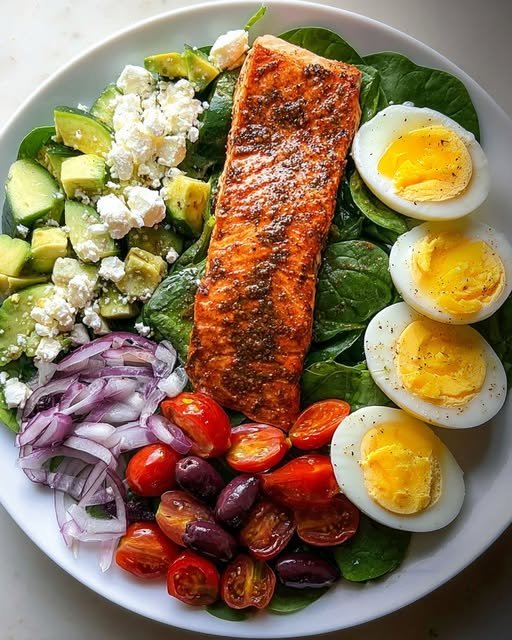
- Arrange the cooked salmon chunks, hard-boiled egg halves, cherry tomatoes, red onion slices, Kalamata olives, diced avocado, and crumbled feta cheese evenly over the spinach in each bowl.
- Dress and Serve: Drizzle the lemon herb vinaigrette generously over each salad. Serve immediately and enjoy your vibrant Salmon Power Salad!
Cooking Tips and Variations
To ensure your Salmon Power Salad is always a triumph, here are some expert tips and creative variations:
- Don’t Overcook the Salmon: Overcooked salmon can be dry and unappealing. Aim for an internal temperature of 145°F (63°C) for flaky, moist results. A meat thermometer is your best friend here. If pan-searing, ensure the skin gets crispy; it adds a fantastic texture contrast.
- Perfect Hard-Boiled Eggs: For easy peeling, ensure your eggs are not super fresh (a week or two old is ideal). Adding a teaspoon of baking soda to the boiling water can also help. After the ice bath, gently tap and roll the eggs on the counter before peeling.
- Prevent Avocado Browning: If you’re not serving immediately, dice the avocado last. A squeeze of lemon or lime juice tossed with the diced avocado will significantly slow down oxidation and keep it looking fresh.
- Customize Your Greens: While spinach is fantastic, feel free to swap it for mixed greens, arugula for a peppery kick, or chopped romaine for extra crunch.
- Add More Veggies: This salad is a canvas for your favorite vegetables! Sliced cucumber, bell peppers (red, yellow, or orange), shredded carrots, or blanched green beans would all be delicious additions.
- Cheese Alternatives: If feta isn’t your favorite, try crumbled goat cheese for a creamier, tangier note, or shaved Parmesan for a nutty, salty flavor. Dairy-free feta alternatives are also available.
- Boost the Crunch: For added texture and healthy fats, sprinkle toasted slivered almonds, pumpkin seeds (pepitas), sunflower seeds, or even some homemade croutons over your salad.
- Different Protein Options: While salmon is king here, you can easily swap it for grilled chicken breast, canned tuna (packed in olive oil for extra flavor), pan-seared shrimp, or even chickpeas for a vegetarian option.
- Dressing Variations: The lemon herb vinaigrette is bright and fresh, but feel free to experiment. A balsamic vinaigrette, a creamy dill dressing, or even a simple drizzle of olive oil and a squeeze of fresh lemon juice work wonderfully.
- Make it a Bowl: For a heartier meal, add a base of cooked quinoa, brown rice, or farro to the bottom of your salad bowl before adding the greens and toppings.
- Spice It Up: A pinch of red pepper flakes in the dressing or sprinkled over the salmon can add a delightful kick.
Storage and Reheating
This Salmon Power Salad is fantastic for meal prepping, but proper storage is key to maintaining its freshness and taste.
- Individual Components: To maximize freshness, it’s best to store the salad components separately until you’re ready to eat.
- Cooked Salmon: Store cooked salmon in an airtight container in the refrigerator for up to 3-4 days.
- Hard-Boiled Eggs: Store peeled hard-boiled eggs in an airtight container or submerged in water in the refrigerator for up to 5-7 days.
- Prepped Vegetables: Spinach, cherry tomatoes, red onion, and olives can be stored in separate airtight containers in the refrigerator for 3-4 days. For spinach, place a paper towel in the container to absorb excess moisture.
- Dressing: Store the lemon herb vinaigrette in an airtight jar or container in the refrigerator for up to 5-7 days. Shake well before each use.
- Avocado: It’s best to dice the avocado just before serving to prevent browning. If you must prep it ahead, toss it with a little lemon or lime juice and store it in an airtight container with plastic wrap pressed directly onto the surface of the avocado to minimize air exposure. It will still likely brown slightly but will remain edible for a day.
- Assembled Salad: If you assemble the entire salad, it’s best consumed immediately, especially once dressed. The dressing will cause the greens to wilt, and the avocado will brown. If you need to pack it for lunch, keep the dressing, salmon, and avocado separate, adding them just before eating.
- Reheating Salmon: If you prefer warm salmon in your salad, you can gently reheat it.
- Microwave: Place salmon on a microwave-safe plate and heat on medium power for 30-60 seconds, or until just warmed through. Be careful not to overheat, as it can dry out quickly.
- Oven: Place salmon on a baking sheet and heat in a preheated oven at 275°F (135°C) for 5-7 minutes, or until warmed.
- Air Fryer: Reheat at 300°F (150°C) for 3-5 minutes.
Frequently Asked Questions
Can I use canned salmon for this recipe?
Yes, you can absolutely use canned salmon for convenience! Drain it well and flake it into the salad. While fresh salmon offers a superior texture and flavor, canned salmon is a fantastic pantry staple that makes this salad even quicker to prepare and still provides all the great omega-3 benefits.
How can I make this salad vegetarian or vegan?
To make this salad vegetarian, simply omit the salmon. You can increase the number of eggs or add other protein sources like chickpeas, black beans, or grilled halloumi cheese. For a vegan version, omit the salmon, eggs, and feta. Replace the salmon with chickpeas or lentils, the eggs with baked tofu or tempeh, and use a dairy-free feta alternative or nutritional yeast for a cheesy flavor. Ensure your dressing is also vegan (e.g., use maple syrup instead of honey if applicable, though this recipe’s dressing is already vegan).
What’s the best way to keep the greens fresh and crisp for meal prep?
For meal prepping, store your washed and dried greens in an airtight container lined with a paper towel. The paper towel absorbs excess moisture, which is the enemy of crisp greens. Keep the dressing separate and add it just before you’re ready to eat. You can also assemble the dry components of the salad (greens, tomatoes, onion, olives, feta) in a meal prep container, then add the salmon, eggs, and avocado in separate compartments or small containers to be added at mealtime.
Can I use frozen salmon fillets?
Yes, frozen salmon fillets work perfectly! Just make sure to thaw them completely before cooking. You can thaw them overnight in the refrigerator or by placing the sealed package under cold running water for about 30 minutes to an hour. Once thawed, pat them very dry before seasoning and cooking to ensure a good sear or even baking.