Instructions
- Prepare the Rice: Rinse the rice thoroughly under cold water until the water runs clear. In a medium saucepan, combine the rinsed rice and 2 cups of water. Bring to a boil, then reduce heat to low, cover, and simmer for 15-18 minutes, or until all water is absorbed and rice is tender. Remove from heat and let stand, covered, for 5 minutes before fluffing with a fork.
- Cook the Eggs: While the rice is cooking, bring a small pot of water to a rolling boil. Carefully lower the eggs into the boiling water using a slotted spoon. Cook for 6-7 minutes for a soft-boiled egg with a jammy yolk. Immediately transfer the cooked eggs to an ice bath (a bowl of ice water) for at least 2 minutes to stop the cooking process and make them easier to peel. Once cooled, gently peel and set aside.
- Roast the Asparagus: Preheat your oven to 400°F (200°C). Snap off the tough, woody ends of the asparagus spears. On a baking sheet, toss the asparagus with 1 tablespoon of olive oil, 1/4 teaspoon salt, and 1/8 teaspoon black pepper. Spread them in a single layer. Roast for 8-12 minutes, or until tender-crisp and slightly charred.
- Sear the Salmon: Pat the salmon fillets very dry with paper towels, especially the skin if you’re keeping it on. Season both sides generously with the remaining 1/4 teaspoon salt and 1/8 teaspoon black pepper. Heat the remaining 1 tablespoon of olive oil in a large non-stick skillet over medium-high heat until shimmering. Carefully place the salmon fillets skin-side down (if applicable) in the hot pan. Cook for 4-6 minutes on the skin side until the skin is crispy and golden brown and the salmon is cooked about two-thirds of the way up the side. Flip the salmon and cook for another 2-4 minutes, or until it reaches your desired doneness and flakes easily with a fork. Squeeze fresh lemon juice over the cooked salmon.
- Prepare the Avocado: Halve the avocado, remove the pit, and scoop out the flesh. Slice it thinly.
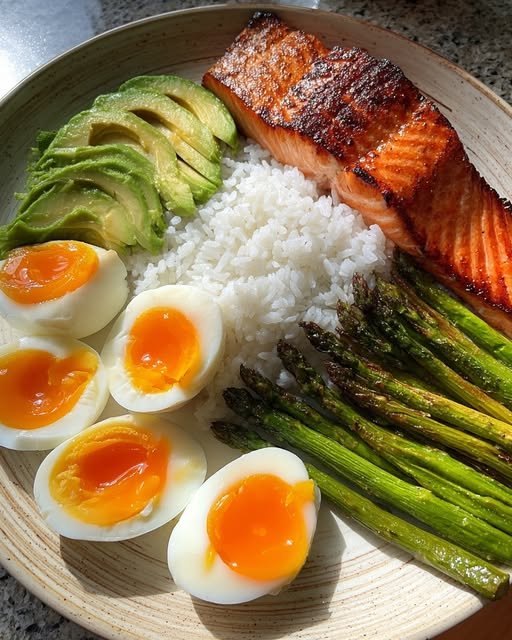
- Assemble the Plate: Divide the cooked rice between two plates. Place a salmon fillet on each plate. Arrange the roasted asparagus and sliced avocado alongside. Halve the soft-boiled eggs and place one half on each plate, showcasing the runny yolk.
- Garnish and Serve: Garnish with optional lemon wedges, sesame seeds, fresh herbs, or a drizzle of your favorite sauce. Serve immediately and enjoy your perfectly balanced meal!
Cooking Tips and Variations
For the crispiest salmon skin, ensure your pan is hot and the salmon skin is patted completely dry before searing. Don’t overcrowd the pan, as this can steam the fish instead of searing it. For a perfectly moist interior, aim for an internal temperature of 125-130°F (52-54°C) for medium-rare, or 135-140°F (57-60°C) for medium. The salmon will continue to cook slightly after removal from heat. When cooking soft-boiled eggs, exact timing is key; 6 minutes often yields a runny yolk, and 7 minutes a jammy one. The ice bath is crucial for stopping the cooking and making peeling easier. For the asparagus, don’t overcook them; they should retain a slight crispness and vibrant green color. If you prefer a different cooking method, you can grill the asparagus for a smoky flavor or steam them for a lighter touch.
This recipe is incredibly versatile! Feel free to swap white rice for brown rice, quinoa, or even cauliflower rice for a lower-carb option. If salmon isn’t your preference, cod, halibut, or even chicken breast can be used as protein alternatives, adjusting cooking times as necessary. Don’t limit yourself to asparagus; green beans, broccoli, or bell peppers can be roasted alongside. For an extra flavor kick, try marinating the salmon for 15-20 minutes in a simple mixture of soy sauce, ginger, and garlic before searing. A sprinkle of chili flakes can add a little heat, and a dollop of Greek yogurt mixed with dill and lemon juice can create a refreshing sauce.
Storage and Reheating
To store leftovers, allow all components to cool completely. Store the salmon, rice, asparagus, and avocado (if not already oxidized) in separate airtight containers in the refrigerator for up to 2-3 days. The soft-boiled eggs are best enjoyed fresh, but if you must store them, keep them peeled in an airtight container for up to 1 day. Reheating salmon can be tricky to maintain its moisture. For best results, gently reheat the salmon in a preheated oven at 275°F (135°C) for 10-15 minutes, or until just warmed through. You can also microwave it briefly on a low setting, but be careful not to overcook it. Reheat rice in the microwave with a splash of water, or on the stovetop. Asparagus can be quickly reheated in a pan or microwave. Avoid reheating avocado as it tends to become mushy and lose its texture.
Frequently Asked Questions
What kind of salmon is best for this recipe?
Any type of salmon fillet will work beautifully. Wild-caught varieties like Sockeye or King salmon often have a richer flavor and firmer texture, while Atlantic salmon is widely available and typically has a higher fat content, making it very tender. Opt for fillets that are about 1-inch thick for even cooking.
Can I prepare any components of this dish ahead of time?
Absolutely! The rice can be cooked up to 2-3 days in advance and stored in the refrigerator. The asparagus can also be roasted a day ahead and gently reheated. While the salmon is best cooked fresh, you can season it a few hours in advance and keep it in the fridge. The soft-boiled eggs are truly best made just before serving for that perfect runny yolk, but you can boil and peel them a day ahead if you don’t mind a slightly firmer yolk.
Is this recipe gluten-free?
Yes, this recipe is naturally gluten-free as long as you ensure all your ingredients, especially any optional sauces like soy sauce, are certified gluten-free. Salmon, rice, avocado, eggs, and asparagus are all naturally gluten-free. It’s a fantastic option for those with gluten sensitivities or preferences.
How can I ensure my salmon skin gets crispy?
The key to crispy salmon skin is a hot pan and dry skin. Make sure to pat the salmon fillets thoroughly dry with paper towels before seasoning. Heat your skillet over medium-high heat until it’s very hot before adding the oil, then place the salmon skin-side down. Don’t move the salmon for the first 4-6 minutes; this allows the skin to crisp up and prevents it from sticking. The fat rendering from the skin will also help create that delicious crunch.