Instructions
Part 1: Cooking the Rice
- Rinse the rice thoroughly under cold running water until the water runs clear. This removes excess starch and prevents stickiness.
- Combine the rinsed rice, 3 cups of water, and optional salt in a medium saucepan.
- Bring the water to a boil over medium-high heat.
- Once boiling, reduce the heat to low, cover the saucepan tightly with a lid, and simmer for 18-20 minutes, or until all the water has been absorbed. Do not lift the lid during this time.
- Remove the saucepan from the heat and let it stand, covered, for another 5-10 minutes. This allows the rice to steam and become perfectly fluffy.
- Fluff the cooked rice gently with a fork and set aside.
Part 2: Preparing and Frying the Chicken Balls
- In a large mixing bowl, combine the ground chicken, finely chopped yellow onion, minced garlic, soy sauce, grated ginger, black pepper, and lightly beaten egg. Mix gently until just combined. Overmixing can make the chicken balls tough.
- Add the 1/2 cup of plain breadcrumbs to the chicken mixture and mix again until evenly incorporated.
- Place the 1/4 cup of all-purpose flour in a shallow dish.
- Using your hands, roll the chicken mixture into golf ball-sized spheres (about 1.5 inches in diameter). You should get approximately 18-20 chicken balls.
- Lightly dredge each chicken ball in the flour, shaking off any excess. This helps create a crispier exterior and prevents sticking.
- Heat 2-3 cups of vegetable oil in a large, heavy-bottomed pot or deep skillet over medium-high heat until it reaches 350-375°F (175-190°C). If you don’t have a thermometer, test the oil by dropping a tiny piece of chicken mixture; it should sizzle immediately.
- Carefully place the chicken balls into the hot oil, working in batches to avoid overcrowding the pan. Overcrowding will lower the oil temperature and result in greasy chicken balls.
- Fry the chicken balls for 4-6 minutes, turning occasionally, until they are golden brown and cooked through. An instant-read thermometer inserted into the center of a chicken ball should read 165°F (74°C).
- Using a slotted spoon, remove the cooked chicken balls from the oil and place them on a plate lined with paper towels to drain excess oil.
- Repeat with the remaining chicken balls.
Part 3: Preparing the Vegetable Stir-Fry
- In a small bowl, whisk together all the stir-fry sauce ingredients: soy sauce, oyster sauce, rice vinegar, brown sugar, cornstarch, and water/chicken broth. Set aside.
- Heat 1 tablespoon of vegetable oil in a large wok or a large skillet over high heat until shimmering.
- Add the green bell pepper, red bell pepper, and sliced yellow onion to the hot wok. Stir-fry for 2-3 minutes until they start to soften slightly and become fragrant.
- Add the cubed eggplant, minced garlic, and grated ginger to the wok. Continue to stir-fry for another 3-5 minutes, or until the eggplant is tender and slightly browned.
- Give the prepared stir-fry sauce a quick whisk again as the cornstarch can settle. Pour the sauce over the vegetables in the wok.
- Stir continuously for 1-2 minutes, allowing the sauce to thicken and coat the vegetables evenly.
- Remove the stir-fry from the heat.
Part 4: Assembly
- To serve, spoon a generous portion of the fluffy rice into individual bowls.
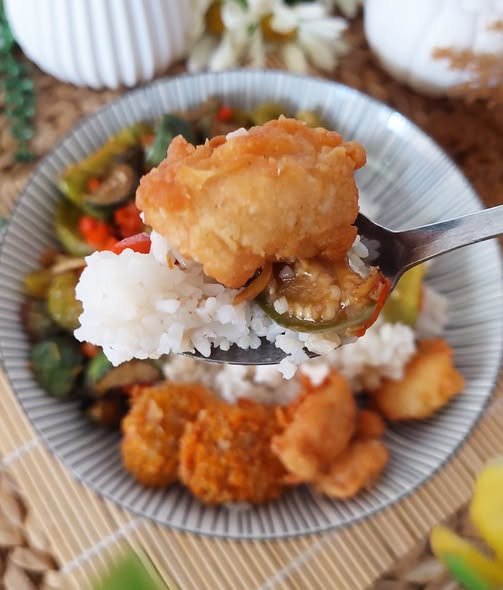
- Arrange several golden chicken balls on top of the rice.
- Spoon a healthy portion of the savory vegetable stir-fry alongside the chicken balls.
- Garnish with fresh cilantro, sliced green onions, or sesame seeds, if desired.
- Serve immediately and enjoy your homemade Rice with Chicken Balls!
Cooking Tips and Variations
Tips for Best Results:
- Don’t Overmix Chicken: When preparing the chicken ball mixture, mix just until the ingredients are combined. Overmixing can lead to a tougher texture.
- Uniform Chicken Balls: Try to make your chicken balls roughly the same size to ensure even cooking. A small ice cream scoop can help with this.
- Oil Temperature is Key: For frying, maintaining the correct oil temperature (350-375°F) is crucial. Too low, and the chicken balls will be greasy; too high, and they’ll burn on the outside before cooking through. Use a thermometer if possible.
- Don’t Overcrowd the Pan: Fry chicken balls in batches. Overcrowding cools the oil, leading to soggy, oily results.
- Prep Ahead: Chop all your vegetables and whisk together the stir-fry sauce before you start cooking the stir-fry. Stir-frying happens quickly, so having everything ready is essential.
- High Heat for Stir-Fry: Cook your stir-fry over high heat to achieve that desirable tender-crisp texture in the vegetables.
- Rinse Your Rice: Always rinse your rice thoroughly until the water runs clear to remove excess starch, which prevents the rice from becoming gluey.
Variations:
- Baked Chicken Balls: For a healthier option, you can bake the chicken balls. After dredging in flour and breadcrumbs, place them on a parchment-lined baking sheet. Lightly spray with cooking oil and bake at 400°F (200°C) for 20-25 minutes, flipping halfway, until golden brown and cooked through.
- Different Proteins: Instead of chicken, you could use ground turkey for the balls. You could also pan-sear sliced chicken breast or shrimp for the stir-fry component if you prefer.
- Vegetable Swaps: Feel free to customize your stir-fry with your favorite vegetables. Broccoli florets, snap peas, carrots (julienned), mushrooms, baby corn, or bok choy would all be excellent additions. Adjust cooking times based on the hardness of the vegetables.
- Spice It Up: Add a pinch of red pepper flakes to the stir-fry sauce or a dash of sriracha for a kick of heat.
- Gluten-Free Option: Use gluten-free soy sauce, gluten-free breadcrumbs, and ensure your oyster sauce (or substitute) is gluten-free. Use cornstarch as your thickening agent as it is naturally gluten-free.
- Sauce Variations: Experiment with different stir-fry sauces. A sweet and sour sauce, a black bean sauce, or a teriyaki glaze would also pair wonderfully with the chicken balls and rice.
- Add Nuts for Crunch: A sprinkle of toasted cashews or peanuts over the finished dish can add an extra layer of texture and flavor.
Storage and Reheating
Storage:
To store leftovers of Rice with Chicken Balls, allow all components (rice, chicken balls, and stir-fry) to cool completely to room temperature within two hours of cooking. Once cooled, store each component separately in airtight containers in the refrigerator. This helps maintain their individual textures and flavors better. Properly stored, the dish will remain fresh for 3-4 days in the refrigerator.
For longer storage, you can freeze the cooked chicken balls. After frying and cooling, arrange them in a single layer on a baking sheet and freeze until solid. Then transfer them to a freezer-safe bag or container. This prevents them from sticking together. The stir-fried vegetables and rice can also be frozen, though the texture of the vegetables may become softer upon reheating. Frozen chicken balls and rice can last for up to 2-3 months. It’s generally best to freeze the stir-fried vegetables for no more than 1 month for optimal texture.
Reheating:
Chicken Balls: For best results, reheat chicken balls in an oven or air fryer to regain some crispiness. Preheat your oven to 350°F (175°C) and bake for 10-15 minutes, or until heated through and crispy. In an air fryer, reheat at 350°F (175°C) for 5-8 minutes. Microwaving is an option for convenience, but they will lose their crispness.
Rice: Reheat rice in the microwave with a splash of water, covered, to prevent it from drying out. Alternatively, you can steam it on the stovetop by placing it in a heat-safe bowl over a pot of simmering water, covered, until heated through.
Vegetable Stir-Fry: Reheat the stir-fry in a skillet over medium heat, stirring occasionally, until warmed through. If it seems dry, add a tablespoon of water or broth. Microwaving is also acceptable for the stir-fry.
When reheating frozen components, thaw them in the refrigerator overnight before proceeding with the reheating instructions above. Always ensure food is heated to an internal temperature of 165°F (74°C) to ensure food safety.
Frequently Asked Questions
What kind of rice is best for this dish?
For this recipe, short or medium-grain white rice is recommended as it cooks up fluffy yet slightly sticky, providing a good base for the chicken balls and stir-fry. Jasmine rice is also an excellent choice for its fragrant aroma and similar texture. While brown rice can be used for a healthier option, note that it will have a different texture and require a longer cooking time.
Can I make the chicken balls ahead of time?
Absolutely! You can prepare the chicken ball mixture up to 24 hours in advance and store it covered in the refrigerator. You can also roll and dredge the chicken balls and store them on a plate covered with plastic wrap in the fridge for a few hours before frying. For longer storage, you can fry or bake the chicken balls, let them cool completely, and then freeze them as described in the “Storage and Reheating” section. This makes meal prep much easier!
What if I don’t have oyster sauce for the stir-fry sauce?
Oyster sauce adds a unique umami and slightly sweet flavor to the stir-fry. If you don’t have it, you can substitute it with a vegetarian stir-fry sauce, which often mimics the flavor profile. Alternatively, you can increase the amount of soy sauce by a tablespoon and add an extra teaspoon of brown sugar, along with a dash of fish sauce if you have it, to approximate the depth of flavor. However, the original recipe with oyster sauce will provide the most authentic taste.
How can I make this dish spicier?
There are several ways to add heat to your Rice with Chicken Balls! You can incorporate a pinch of red pepper flakes or a teaspoon of finely minced fresh chili (like bird’s eye chili) into the chicken ball mixture. For the stir-fry, add red pepper flakes along with the garlic and ginger, or stir in a tablespoon of sriracha or chili garlic sauce into the stir-fry sauce. Serving with a side of chili oil or sriracha at the table also allows individuals to customize their spice level.