Instructions
- Prepare the Pork Belly: Pat the pork belly cubes dry with paper towels. This step is crucial for achieving a good sear.
- Sear the Pork Belly: Heat 1 tablespoon of neutral oil in a large heavy-bottomed pot or Dutch oven over medium-high heat. Once hot, add the pork belly cubes in a single layer, working in batches if necessary to avoid overcrowding. Sear for 5-7 minutes on each side, until deeply golden brown and crispy. This step renders some of the fat and develops a rich flavor. Remove the seared pork belly from the pot and set aside, leaving any rendered fat in the pot.
- Sauté Aromatics: Reduce the heat to medium. Add the chopped onion to the pot and sauté for 3-5 minutes until softened and translucent. Add the minced garlic and sliced ginger, and cook for another 1-2 minutes until fragrant, being careful not to burn the garlic.
- Deglaze and Add Liquids: Pour in the apple cider vinegar. Scrape the bottom of the pot with a wooden spoon to loosen any browned bits, which are packed with flavor. Allow the vinegar to simmer for 1 minute to cook off some of its acidity.
- Assemble the Braise: Return the seared pork belly to the pot. Add the soy sauce, brown sugar, crushed black peppercorns, bay leaf, and 1 cup of water or chicken broth. Stir everything gently to combine, ensuring the pork is mostly submerged in the liquid.
- Braise the Pork: Bring the mixture to a gentle simmer. Once simmering, reduce the heat to low, cover the pot tightly, and cook for 1.5 to 2 hours, or until the pork belly is fork-tender. Check periodically and stir to prevent sticking, adding a splash more water or broth if the liquid reduces too much.
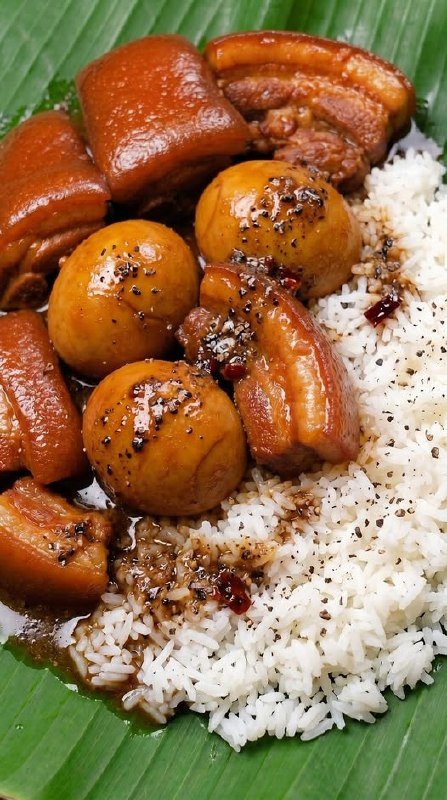
- Add the Eggs: After the pork has braised for about 1.5 hours and is nearly tender, gently add the peeled hard-boiled eggs to the pot. Stir them into the braising liquid, ensuring they are partially submerged to absorb the flavors. Continue to simmer, covered, for another 20-30 minutes, or until the eggs have taken on a rich color and the pork is incredibly tender.
- Cook the Rice: While the pork and eggs are simmering, prepare the rice. Rinse 2 cups of long-grain white rice under cold running water until the water runs clear. Combine the rinsed rice with 4 cups of water in a medium saucepan. Bring to a boil, then reduce heat to low, cover, and simmer for 15-18 minutes, or until all the water is absorbed and the rice is tender. Remove from heat and let stand, covered, for 5 minutes before fluffing with a fork.
- Finish and Serve: Once the pork is melt-in-your-mouth tender and the eggs are beautifully colored, taste the braising liquid and adjust seasoning if necessary (add more soy sauce for saltiness, sugar for sweetness, or vinegar for tang). Remove the bay leaf. Ladle generous portions of the braised pork and eggs over the freshly cooked rice. Drizzle with plenty of the rich, flavorful braising sauce. Garnish with chopped scallions, a sprinkle of sesame seeds, and red chili flakes if desired, and serve immediately.
Cooking Tips and Variations
For the most tender pork belly, don’t rush the braising process. Slow and low heat is key to breaking down the connective tissues and rendering the fat into unctuous goodness. If you have time, braising the pork belly for an even longer duration, up to 2.5-3 hours, can result in an even more fall-apart texture. For an extra layer of flavor, consider marinating the pork belly in a small amount of soy sauce, garlic, and pepper for at least 30 minutes (or overnight in the refrigerator) before searing. This pre-seasoning can deepen the savory notes.
When searing the pork belly, ensure the pieces are not overcrowded in the pot. Overcrowding will steam the meat instead of searing it, preventing that crucial golden-brown crust and flavor development. Work in batches if necessary. If you prefer a thicker sauce, remove the pork and eggs from the pot once cooked, then bring the braising liquid to a rolling boil and reduce it for 5-10 minutes, stirring occasionally, until it reaches your desired consistency. You can also add a cornstarch slurry (1 tablespoon cornstarch mixed with 2 tablespoons cold water) to thicken the sauce quickly.
For variations, try adding other vegetables to the braise during the last 30-45 minutes of cooking. Hardier vegetables like potato chunks, sweet potato, or even bell peppers can absorb the sauce beautifully. For a different flavor profile, experiment with different types of vinegar, such as white vinegar for a sharper tang or balsamic vinegar for a deeper, sweeter note. If you enjoy a bit of heat, a few dried bird’s eye chilies can be added to the braising liquid along with the peppercorns. For a healthier twist, you can use leaner cuts of pork like pork shoulder, though the cooking time may need to be adjusted, and the richness will be different. Lastly, don’t discard the rendered fat from searing the pork; a little bit can be used to cook the rice for an extra layer of flavor, or saved for other cooking applications.
Storage and Reheating
This “Rice, Pork & Egg” dish is excellent for meal prepping and often tastes even better the next day as the flavors have more time to meld. To store, allow the braised pork and eggs to cool completely to room temperature. Transfer them along with the braising sauce into an airtight container. The cooked rice should also be stored separately in its own airtight container once cooled. Refrigerate both components within two hours of cooking. They will keep well in the refrigerator for up to 3-4 days.
For longer storage, you can freeze the braised pork and eggs (without the rice). Place them in a freezer-safe airtight container or heavy-duty freezer bags. They can be frozen for up to 2-3 months. Thaw overnight in the refrigerator before reheating. Note that the texture of the eggs might change slightly after freezing and thawing, becoming a bit rubbery, but the flavor will still be delicious.
To reheat, the best method for the pork and eggs is on the stovetop. Transfer the desired portion into a saucepan or pot. Add a tablespoon or two of water or broth to loosen the sauce, if needed. Heat over medium-low heat, stirring occasionally, until heated through. Be gentle when stirring to avoid breaking apart the tender pork. You can also reheat in the microwave in a microwave-safe dish; cover loosely with a lid or microwave-safe plastic wrap and heat in 1-2 minute intervals, stirring in between, until hot. For the rice, reheat it in the microwave with a splash of water and covered, or steam it on the stovetop until fluffy and warm. Always ensure both components are heated to an internal temperature of 165°F (74°C) before serving.
Frequently Asked Questions
What kind of pork belly should I use?
For the best results in this recipe, use skin-on pork belly if you can find it. The skin adds an extra layer of richness and texture, becoming wonderfully tender during the long braise. If skin-on is unavailable, skinless pork belly will also work perfectly fine, though the final texture will be slightly different. Ensure the pork belly is cut into uniform 1.5-inch cubes for even cooking.
Can I make this dish ahead of time?
Absolutely! This dish is a fantastic make-ahead meal. In fact, many find that the flavors deepen and meld beautifully after a day or two in the refrigerator. You can prepare the entire braised pork and eggs component a day or two in advance. When ready to serve, simply reheat gently on the stovetop or in the microwave and prepare fresh rice. This makes it perfect for entertaining or busy weeknights.
Why are my hard-boiled eggs not absorbing the sauce flavor?
The key to flavorful eggs is to ensure they are added to the braising liquid while it’s still simmering and allowed to cook for a sufficient amount of time, typically 20-30 minutes. The longer they simmer in the sauce, the more flavor they will absorb. Also, make sure the eggs are peeled completely and gently stirred into the liquid so they are partially submerged. Some people even make small slits in the eggs with a knife to help them absorb more flavor, though this is not strictly necessary.
What if I don’t have apple cider vinegar?
If you don’t have apple cider vinegar, you can substitute it with other types of vinegar. Cane vinegar is a traditional choice in many Asian braises and would be excellent if available. White vinegar can also be used, but start with a slightly smaller amount and taste, as it can be sharper. Rice vinegar offers a milder tang. Avoid balsamic vinegar as its strong, sweet flavor might overpower the dish’s intended profile. The vinegar is crucial for balancing the richness of the pork and adding a tangy depth to the sauce.