Instructions
- Prepare the Pork Belly: Begin by patting the pork belly dry with paper towels. This helps achieve a crispier finish. Using a very sharp knife, slice the pork belly against the grain into thin strips, approximately 1/8 to 1/4 inch thick and about 6-8 inches long. The thinner the slices, the easier they will be to roll into tight spirals.
- Form the Spirals: Take each thin strip of pork belly and carefully roll it tightly into a spiral shape, starting from one end. Once rolled, secure the spiral with a wooden toothpick or a small skewer passed through the center to hold its shape during cooking. Repeat with all the pork belly slices.
- Prepare the Glaze: In a medium bowl, whisk together the soy sauce, honey (or brown sugar), rice vinegar, grated ginger, minced garlic, sesame oil, and sriracha. This will be your flavorful glaze.
- Braise the Pork Belly: Arrange the secured pork belly spirals in a single layer in a large, heavy-bottomed skillet or a Dutch oven. Pour the prepared glaze over the pork belly. Add 1/2 cup of water or chicken broth to the skillet. Bring the liquid to a gentle simmer over medium heat.
- Cook Until Tender: Once simmering, reduce the heat to low, cover the skillet, and let the pork belly braise for 60-90 minutes, or until it is very tender and easily pierced with a fork. Flip the spirals occasionally to ensure even cooking and glazing.
- Reduce the Glaze: Once the pork belly is tender, remove the spirals from the skillet and set them aside on a plate. Increase the heat to medium-high and bring the remaining liquid in the skillet to a vigorous boil. Cook, stirring occasionally, until the glaze has thickened to a syrupy consistency, about 5-10 minutes. Be careful not to burn it.
- Glaze and Crisp: Return the pork belly spirals to the skillet with the reduced glaze. Toss gently to coat each spiral thoroughly. For an extra crispy exterior, you have two options:
- Pan-Frying: Continue cooking over medium-high heat, turning the spirals frequently, until they are beautifully caramelized and slightly crispy on all sides.
- Broiling: Preheat your broiler to high. Arrange the glazed pork belly spirals on a baking sheet lined with parchment paper. Broil for 3-5 minutes, watching carefully, until the edges are nicely browned and slightly charred.
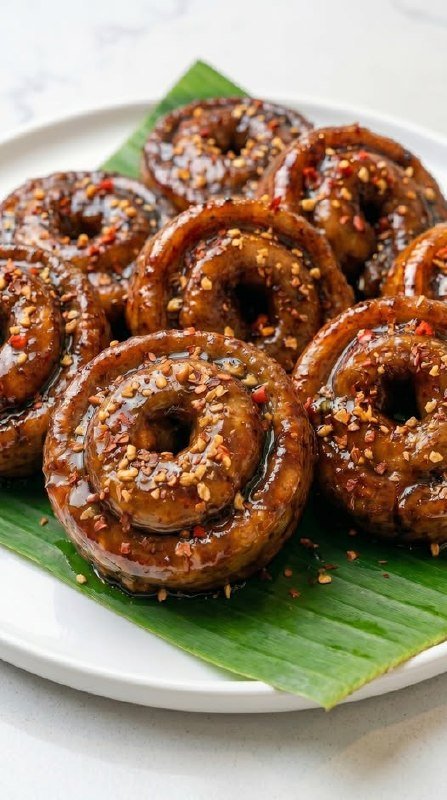
- Finish and Serve: Carefully remove the toothpicks from each spiral. If using banana leaves for presentation, arrange them on a serving platter. Place the glazed, crispy pork belly spirals on top. Sprinkle generously with chopped roasted peanuts (or cashews) and red chili flakes. Garnish with fresh cilantro or chopped scallions if desired. Serve immediately and enjoy the “yummy” explosion!
Cooking Tips and Variations
To achieve the best possible results with your Glazed Spiral Pork Belly Bites, pay close attention to the details. Firstly, the quality of your pork belly truly matters. Look for a slab with a good balance of meat and fat; too lean will result in dry bites, while too fatty might be overly rich. Ask your butcher to help you select a uniform piece, which makes slicing and rolling much easier. When slicing, aim for consistency in thickness – about 1/8 to 1/4 inch is ideal. If your slices are too thick, they won’t roll as neatly and might take longer to cook through. A very sharp knife is your best friend here, or you can even partially freeze the pork belly for 30 minutes to an hour to make it firmer and easier to slice thinly. Don’t be shy about using those wooden toothpicks or small skewers; they are essential for holding the spirals together during the initial braising stage, preventing them from unraveling and ensuring a beautiful presentation.
The glaze is the heart of this dish, so feel free to adjust it to your personal preference. For a sweeter glaze, add an extra teaspoon or two of honey or brown sugar. If you crave more heat, amp up the sriracha or add a pinch of cayenne pepper to the glaze itself. For an extra layer of umami, consider adding a splash of rice wine or mirin to the glaze mixture. If you’re out of fresh ginger, a teaspoon of ground ginger can work in a pinch, though fresh provides a more vibrant flavor. When it comes to the topping, while peanuts and cashews are classic choices, don’t hesitate to experiment with other nuts like sesame seeds, toasted almonds, or even crunchy fried shallots for a different textural and flavor dimension. To enhance the flavor of the nuts, give them a quick toast in a dry pan before chopping and sprinkling. This brings out their natural oils and deepens their taste. Lastly, serving these bites immediately after glazing and topping is key for optimal texture – the crispiness of the pork and the crunch of the nuts are best enjoyed fresh.
For variations, consider a smoky twist by adding a tiny dash of liquid smoke to the glaze, or a pinch of smoked paprika. If you prefer a less spicy kick, simply reduce or omit the chili flakes and sriracha. For a different herb profile, a sprinkle of fresh mint or basil can offer a refreshing contrast to the richness of the pork. These bites make fantastic appetizers, but they can also be served as part of a larger meal. Imagine them alongside some steamed rice and stir-fried vegetables for a complete and satisfying dinner. You can even experiment with different dipping sauces on the side, such as a sweet chili sauce or a creamy sriracha mayo, though the bites are perfectly flavorful on their own. For those who enjoy a bit of tang, a squeeze of fresh lime juice over the finished dish can brighten all the flavors beautifully. Don’t be afraid to get creative and make this recipe your own!
Storage and Reheating
These Glazed Spiral Pork Belly Bites are definitely best enjoyed fresh, when the pork is at its crispiest and the glaze is perfectly sticky. However, if you find yourself with leftovers (a rare occurrence, we predict!), they can be stored and reheated. To store, first allow the pork belly bites to cool completely to room temperature. Once cooled, transfer them to an airtight container. They will keep well in the refrigerator for up to 3-4 days. It’s important to note that the crispy texture will soften significantly once refrigerated, as the moisture in the air and glaze will affect it.
For reheating, the best method to revive some of that desirable crispiness is in an oven or air fryer. Preheat your oven to 350°F (175°C) or your air fryer to 325°F (160°C). Arrange the pork belly bites in a single layer on a baking sheet (if using an oven) or in the air fryer basket. Reheat for 8-12 minutes in the oven, or 5-8 minutes in the air fryer, flipping halfway through, until they are heated through and the edges begin to crisp up again. Be careful not to overheat, as this can dry out the pork. While the texture won’t be exactly as fresh, this method will yield the best results for leftover bites. Reheating in a microwave is generally not recommended, as it will make the pork chewy and the glaze watery, completely losing any crispness.
Frequently Asked Questions
Can I prepare the pork belly spirals in advance?
Yes, you can prepare the pork belly spirals in advance to save time. Slice and roll the pork belly, securing each spiral with a toothpick. Place them in an airtight container and refrigerate for up to 24 hours. You can then proceed with the braising and glazing steps when you’re ready to cook. This is a great tip for entertaining!
What if I don’t have skin-on pork belly? Can I use skinless?
While skin-on pork belly provides a richer flavor and the possibility of a crisper edge, you can certainly use skinless pork belly. The cooking time will remain largely the same, and the glaze will still adhere beautifully. The main difference will be in the texture of the outer layer, which won’t have the same potential for crackling crispness as skin-on. However, the tender, glazed meat will still be incredibly delicious.
My glaze isn’t thickening. What should I do?
If your glaze isn’t thickening after the pork belly has been removed, increase the heat to medium-high and continue to boil it vigorously. Make sure you’re stirring occasionally to prevent burning. The key is evaporation; the longer it boils, the more water evaporates, and the thicker the glaze becomes. If it’s still too thin after 10-15 minutes, you can create a very thin slurry of 1/2 teaspoon cornstarch mixed with 1 tablespoon cold water and whisk it into the simmering glaze. Cook for another minute until it thickens to your desired consistency. Be careful not to add too much, as it can make the glaze gummy.