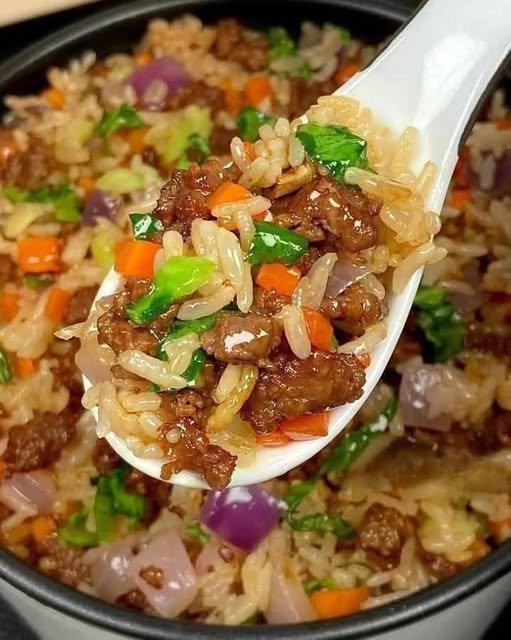
Instructions
- Prepare the Beef: In a medium bowl, toss the thinly sliced beef with 1 tablespoon soy sauce and 1 teaspoon vegetable oil. Let marinate for at least 15 minutes at room temperature, or up to 30 minutes in the refrigerator.
- Sauté the Onions: Heat 1 tablespoon of vegetable oil in a large wok or a very large skillet over medium-high heat. Add the thinly sliced yellow onion and cook, stirring occasionally, for 8-10 minutes, or until the onions are softened, translucent, and slightly caramelized. Remove the onions from the wok and set aside.
- Cook the Beef: Add 1 tablespoon of vegetable oil to the hot wok. Increase heat to high. Add the marinated beef in a single layer, ensuring not to overcrowd the pan. Cook for 1-2 minutes per side until browned and cooked through. If necessary, cook the beef in batches to ensure proper browning. Remove the beef from the wok and set aside with the onions.
- Scramble the Eggs: If needed, add a touch more vegetable oil to the wok. Pour in the lightly beaten eggs. Scramble quickly until just set but still moist. Break the eggs into small pieces with your spatula. Remove the scrambled eggs from the wok and set aside.
- Aromatics and Vegetables: Add 1 tablespoon of vegetable oil to the wok over medium-high heat. Add the minced garlic and grated ginger. Stir-fry for 30 seconds until fragrant. Add the finely diced carrots and stir-fry for 2-3 minutes until slightly tender-crisp. Add the frozen peas (and optional bok choy/Asian greens, if using) and stir-fry for another 1-2 minutes.
- Add the Rice: Add the cold, cooked rice to the wok. Break up any clumps with your spatula. Stir-fry constantly for 3-5 minutes, allowing the rice to heat through and develop a slightly toasted texture. The key here is to use high heat and keep the rice moving to prevent sticking and encourage even cooking.
- Combine and Season: Return the cooked beef, caramelized onions, and scrambled eggs to the wok with the rice and vegetables.
- Make the Sauce: In a small bowl, whisk together the remaining 2 tablespoons of soy sauce, oyster sauce, sesame oil, and white pepper. Pour the sauce mixture evenly over the fried rice.
- Final Stir-Fry: Continue to stir-fry for another 2-3 minutes, ensuring all ingredients are well combined and coated with the sauce. Taste and adjust seasoning if necessary, adding more soy sauce or white pepper to your preference.
- Garnish and Serve: Remove the fried rice from the heat. Garnish generously with chopped green onions. Serve immediately as a complete meal.
Cooking Tips and Variations
Achieving restaurant-quality fried rice at home is all about technique and a few key considerations. Firstly, always use cold, day-old rice. Freshly cooked rice has too much moisture, which will lead to a soggy, clumpy result. Spreading warm rice on a baking sheet and refrigerating it for a few hours or overnight helps dry it out, resulting in those distinct, separate grains that are characteristic of good fried rice. Secondly, high heat is your best friend. A wok is ideal for its ability to distribute heat evenly and provide ample surface area, but a large, heavy-bottomed skillet will also work. Don’t overcrowd the pan; cook ingredients in batches if necessary to ensure they sear and don’t steam.
For the beef, slicing it thinly against the grain is crucial for tenderness. You can also briefly marinate the beef with a pinch of baking soda (about 1/4 teaspoon per pound) for 15-20 minutes before cooking; this technique, known as velveting, helps to tenderize the meat even further. When cooking the beef, make sure the pan is scorching hot to get a good sear and lock in the juices. Don’t constantly stir; let it sit for a minute or two to brown before flipping.
The onions are a star here, so don’t rush their caramelization. Cooking them slowly until they’re golden and sweet adds a wonderful depth of flavor that sets this fried rice apart. If you prefer a stronger onion flavor without the sweetness, you can cook them less, just until translucent.
This recipe is incredibly versatile. Feel free to swap out the beef for chicken, shrimp, or even tofu for a vegetarian option. You can also add other vegetables like bell peppers, corn, mushrooms, or snap peas. For a spicier kick, add a dash of chili oil or a pinch of red pepper flakes along with the garlic and ginger. A touch of dark soy sauce can be added to the sauce mixture for a deeper color and slightly richer flavor. For an extra layer of umami, a teaspoon of fish sauce can also be incorporated into the sauce blend. Don’t be afraid to experiment with different sauces or seasonings to tailor it to your taste!
Storage and Reheating
Leftover Onion Beef Fried Rice can be stored in an airtight container in the refrigerator for up to 3-4 days. It’s a fantastic meal prep option or a quick lunch the next day. To reheat, the best method is to use a wok or a large skillet over medium-high heat. Add a tablespoon of water or a tiny bit of oil to the pan to help rehydrate the rice and prevent it from sticking. Stir-fry the cold fried rice for 5-7 minutes, breaking up any clumps, until it is heated through and slightly crisp again. You can also reheat it in the microwave, though it may not achieve the same crispy texture. If using the microwave, cover the dish with a damp paper towel to help retain moisture and prevent the rice from drying out. Heat in 1-minute intervals, stirring in between, until hot. Ensure the fried rice is piping hot (165°F / 74°C) before serving to ensure food safety.
Frequently Asked Questions
Why is cold, day-old rice recommended for fried rice?
Cold, day-old rice is crucial for making excellent fried rice because it has less moisture content than freshly cooked rice. When rice is cooked and then refrigerated, it dries out, and the individual grains become firmer and separate. This prevents the fried rice from becoming soggy, sticky, or clumpy in the wok, allowing each grain to toast and absorb the flavors of the sauces and other ingredients properly, resulting in a superior texture.
Can I use a different cut of beef for this recipe?
Yes, absolutely! While sirloin and flank steak are excellent choices for their tenderness and flavor when thinly sliced, you can also use other cuts. Skirt steak, tenderloin, or even thinly sliced round steak can work. The key is to slice the beef very thinly against the grain to ensure it cooks quickly and remains tender. If using a tougher cut, a slightly longer marinade or the velveting technique with baking soda can help.
What if I don’t have a wok?
No wok? No problem! A large, heavy-bottomed skillet or a cast-iron pan can be an excellent substitute. The most important factor is to use a pan that is large enough to accommodate all your ingredients without overcrowding. This allows for proper stir-frying and browning rather than steaming. Ensure your pan is very hot before adding ingredients, and cook in batches if necessary to maintain a high temperature and achieve the desired texture.
How can I make this fried rice vegetarian or vegan?
To make this recipe vegetarian, simply omit the beef and replace it with a plant-based protein such as firm tofu or tempeh, cut into small cubes and pan-fried until golden. For a vegan version, in addition to omitting the beef, you’ll also need to omit the eggs and replace the oyster sauce with a vegetarian oyster sauce or mushroom-based stir-fry sauce. You can also add more vegetables like mushrooms, edamame, or water chestnuts to boost the texture and nutrient content.