Instructions
- Preheat your oven to 375°F (190°C). If your pan is oven-safe, you can use it directly.
- Season the pounded chicken breasts generously on both sides with 1/2 teaspoon of salt and 1/4 teaspoon of black pepper.
- Heat 1 tablespoon of olive oil in a large oven-safe skillet (cast iron or other heavy-bottomed skillet works best) over medium-high heat.
- Once the oil is shimmering, add the chicken breasts to the hot skillet. Sear for 3-4 minutes per side, until golden brown. The chicken does not need to be cooked through at this point, just nicely browned. Remove the chicken from the skillet and set aside on a plate.
- Reduce the heat to medium. Add the butter to the same skillet, allowing it to melt.
- Once the butter is melted, sprinkle in the flour. Whisk continuously for 1-2 minutes, creating a roux. This will help thicken the sauce.
- Slowly pour in the chicken broth, whisking constantly to prevent lumps. Bring the mixture to a gentle simmer, continuing to whisk until the sauce begins to thicken slightly.
- Stir in the heavy cream, remaining 1/2 teaspoon of salt, and 1/4 teaspoon of black pepper. Bring to a gentle simmer again.
- Add the uncooked egg noodles to the skillet, stirring to ensure they are fully submerged in the sauce.
- Carefully place the seared chicken breasts back into the skillet, nestling them among the noodles.
- Transfer the skillet to the preheated oven. Bake for 15-20 minutes, or until the chicken is cooked through (internal temperature reaches 165°F/74°C) and the noodles are tender, absorbing most of the sauce.
- Remove the skillet from the oven. Let it rest for 5 minutes. The sauce will continue to thicken as it cools slightly.
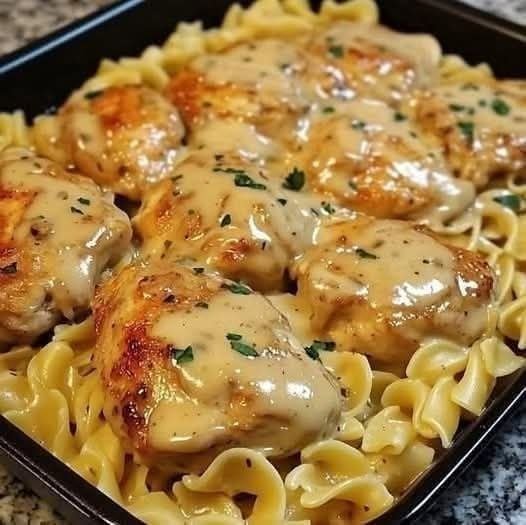
- Garnish with fresh chopped parsley and, if desired, a sprinkle of grated Parmesan cheese before serving.
Cooking Tips and Variations
For the best results with your One-Pan Chicken with Creamy Buttered Noodles, paying attention to a few key details can make all the difference. First and foremost, ensure your chicken breasts are pounded to an even 1/2-inch thickness. This is crucial for uniform cooking, preventing some parts from drying out while others are still undercooked. If you don’t have a meat mallet, the bottom of a heavy skillet or a rolling pin can work wonders between two sheets of plastic wrap. When searing the chicken, make sure your pan is adequately hot and the oil is shimmering. This creates that beautiful, flavorful golden-brown crust that adds depth to the entire dish. Don’t overcrowd the pan; if necessary, sear the chicken in batches to ensure proper browning. When making the roux, whisk continuously to prevent lumps and cook it for at least a minute or two to cook out the raw flour taste. Slowly adding the broth while whisking is also key to a smooth sauce. For the noodles, wide egg noodles are ideal as they have a wonderful texture and absorb the creamy sauce beautifully. Avoid overcooking the noodles in the oven; they should be tender but not mushy.
This recipe is also incredibly versatile and can be adapted to your preferences and what you have on hand. If chicken breasts aren’t your preference, boneless, skinless chicken thighs can be used instead. They offer a richer flavor and tend to stay even juicier during cooking. Just be sure to adjust the searing and baking times slightly, as thighs may take a little longer to cook through. For those avoiding gluten, gluten-free egg noodles or other gluten-free pasta varieties can be substituted; just be mindful of their specific cooking times, as they can vary. The sauce itself is a fantastic canvas for additional flavors. Sautéed mushrooms, fresh spinach wilted in at the end, or even a handful of sun-dried tomatoes can be added to the creamy sauce for extra depth and nutrition. A clove or two of minced garlic added with the butter before the flour can also elevate the aroma and taste. For a cheesier finish, experiment with different cheeses beyond Parmesan, such as Gruyere or white cheddar, stirred into the sauce or sprinkled on top during the last few minutes of baking. Don’t be afraid to make this recipe your own!
Storage and Reheating
Storing your One-Pan Chicken with Creamy Buttered Noodles properly is key to enjoying delicious leftovers. Once cooled to room temperature, transfer any remaining chicken and noodles to an airtight container. It will keep well in the refrigerator for up to 3-4 days. While technically freezable, creamy pasta dishes can sometimes change texture upon thawing, with the sauce becoming a bit grainy or separating. For the best quality, it’s generally recommended to consume this dish within the refrigerated timeframe.
When it comes to reheating, there are a couple of good options to maintain moisture and flavor. The microwave is the quickest method: place a single serving in a microwave-safe dish, add a splash of milk or chicken broth (about 1-2 tablespoons) to help rehydrate the sauce, and cover loosely. Heat on medium power for 1-2 minutes, stirring halfway through, until heated through. For a larger portion or if you prefer the stovetop, transfer the leftovers to a skillet over medium-low heat. Again, add a splash of milk or broth and stir gently and frequently until the dish is warmed through. Avoid high heat, as this can cause the sauce to break or the noodles to become mushy. If the sauce seems too thick after reheating, a little extra cream or broth can help bring it back to the desired consistency.
Frequently Asked Questions
Can I use different types of pasta?
While wide egg noodles are highly recommended for their texture and ability to absorb the creamy sauce, you can certainly experiment with other pasta shapes. Medium-sized pasta like penne, rotini, or even fettuccine would work well. Keep in mind that cooking times may vary, so keep an eye on the pasta in the oven to ensure it cooks through without becoming mushy.
What if my sauce is too thin or too thick?
If your sauce is too thin after baking, you can place the skillet back on the stovetop over medium heat and simmer gently for a few minutes, stirring occasionally, until it thickens to your desired consistency. Be careful not to overcook the chicken or noodles during this step. If the sauce is too thick, simply stir in a splash more chicken broth or heavy cream until it reaches the perfect consistency.
Can I prepare this dish ahead of time?
This dish is best enjoyed fresh, as the noodles can absorb a lot of the sauce and become softer over time. However, you can do some prep work in advance. You can pound and season the chicken, and even make the sauce base (steps 5-8) and store it separately in the refrigerator. When you’re ready to cook, just sear the chicken, combine the sauce, noodles, and chicken, and bake as directed.
Is this recipe freezer-friendly?
While technically possible to freeze, creamy pasta dishes don’t always hold up perfectly in the freezer. The sauce can sometimes separate or become grainy upon thawing and reheating, and the noodles might become a bit soft. For the best quality and texture, it’s recommended to enjoy this dish fresh or refrigerate leftovers for up to 3-4 days.