Instructions
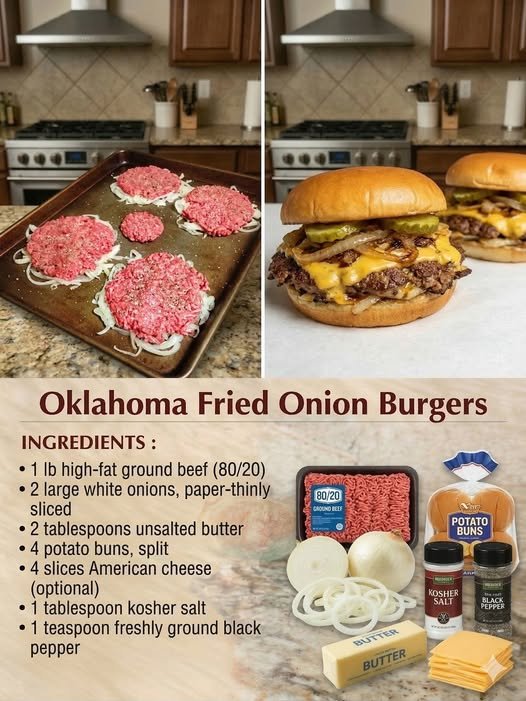
- Prepare the Onions: Peel and very thinly slice the white onions. The thinner, the better, as this allows them to cook down and meld with the burger patty. A mandoline slicer set to its thinnest setting is ideal for achieving paper-thin slices. Set aside.
- Prepare the Beef: Divide the 1.5 pounds of 80/20 ground beef into 6 equal portions, each weighing about 4 ounces. Gently roll each portion into a loose ball. Do not overwork the meat, as this can lead to tough burgers. Place the beef balls on a plate or baking sheet and refrigerate until ready to cook.
- Preheat the Griddle: Place a large cast-iron griddle or heavy-bottomed skillet over medium-high heat. Allow it to preheat for at least 5-7 minutes until it’s smoking hot. This high heat is crucial for achieving a good crust on the burgers.
- Toast the Buns: While the griddle is heating, lightly butter the cut sides of the potato buns. Once the griddle is hot, place the buns, butter-side down, on the griddle. Toast for 30 seconds to 1 minute, or until golden brown and slightly crispy. Remove the toasted buns and set aside.
- Cook the Burgers: Add 1 tablespoon of neutral oil to the hot griddle. Place 2-3 beef balls on the griddle, ensuring not to overcrowd the pan. Immediately place a generous mound of the thinly sliced onions (about 1/4 cup per burger) directly on top of each beef ball.
- Smash the Burgers: Using a sturdy, flat metal spatula (or a burger press), firmly press down on each beef ball and onion mound, smashing it into a thin patty, about 1/4-inch thick. You want to press hard enough to incorporate the onions into the beef and create a wide, thin patty. Hold the pressure for a few seconds to ensure good contact with the griddle.
- Season and Cook First Side: Season the smashed patties generously with kosher salt and freshly ground black pepper. Let them cook undisturbed for 2-3 minutes, or until the edges are crispy and browned, and you can see a deep crust forming on the bottom.
- Flip and Add Cheese: Using your sturdy metal spatula, carefully scrape under each patty to release it from the griddle. Flip the patties over. Immediately place a slice of American cheese on top of each patty, if using.
- Finish Cooking: Continue to cook for another 1-2 minutes, or until the cheese is melted and bubbly, and the patties are cooked through. The onions should be softened, slightly caramelized, and integrated into the patty.
- Assemble the Burgers: Place a cooked burger patty (with melted cheese and onions) onto the bottom half of a toasted potato bun. Top with a generous handful of dill pickle chips. Add a dollop of ketchup and mustard if desired. Place the top bun on and serve immediately.
- Repeat: Cook the remaining burgers in batches, adding more oil to the griddle as needed, until all patties are cooked and assembled. Do not overcrowd the griddle, as this will lower the temperature and prevent proper browning.
Cooking Tips and Variations
Achieving the perfect Oklahoma Fried Onion Burger is all about technique and a few clever tricks. For starters, the **onions are paramount**. Use white or yellow onions, and slice them as thinly as humanly possible. A mandoline is your best friend here, creating translucent, almost see-through slices that will practically melt into the beef. If you don’t have one, take your time with a sharp knife; consistency in thickness is key for even cooking. Don’t be shy with the quantity either – a generous mound of onions per patty is what defines this burger.
The **heat of your cooking surface** is another non-negotiable. A searing hot cast-iron griddle or heavy-bottomed skillet is essential. This high heat creates that beautiful, crispy crust (the Maillard reaction!) on the beef and quickly caramelizes the onions without making them mushy. Let your pan preheat for a solid 5-7 minutes until it’s smoking slightly before adding any oil or beef. When it comes to **smashing**, be confident! Use a sturdy, flat metal spatula and press down firmly and quickly. The goal is a thin, wide patty with maximum surface contact with the hot griddle. Don’t press too early or too late; smash immediately after placing the beef and onions on the griddle.
For **variations**, while American cheese is traditional and melts wonderfully, feel free to experiment. Sharp cheddar, Monterey Jack, or even a pepper jack can add a different flavor profile. If you’re feeling adventurous, a thin smear of spicy mayo (mayonnaise mixed with a dash of hot sauce or sriracha) on the bun can add a pleasant kick. For those who love extra texture, a slice of crispy cooked bacon can be a delicious addition, though purists might argue it detracts from the onion-beef focus. You can also play with the type of bun; while potato buns are classic for their soft texture and slight sweetness, a brioche bun can also work well. Just be sure to always toast your buns – it prevents sogginess and adds another layer of flavor and texture.
Finally, **don’t overcrowd your pan**. Cooking in batches is crucial to maintain that high heat. If you put too many patties on at once, the temperature of your griddle will drop, leading to steamed burgers rather than beautifully seared ones. A thin metal spatula is also your best friend for flipping; its thin edge allows you to get under the crispy crust without tearing the patty. And remember to season generously with salt and pepper right after smashing – it’s your only chance to season that side effectively.
Storage and Reheating
While Oklahoma Fried Onion Burgers are undoubtedly best enjoyed immediately after cooking, you can store leftovers if necessary. To store, allow the cooked patties (without the bun or condiments) to cool completely to room temperature. This is important to prevent condensation, which can make them soggy. Once cooled, place the patties in an airtight container or wrap them individually in plastic wrap, then place them in an airtight container. Store in the refrigerator for up to 2-3 days.
The buns, pickles, and condiments should always be stored separately. If you have any leftover toasted buns, you can store them in a paper bag at room temperature for a day, but they will likely lose their crispness when reheated.
For reheating the patties, the best method is to use a skillet or griddle. Place the cold patties on a lightly oiled skillet over medium heat. Cook for 2-3 minutes per side, or until heated through. This method helps to re-crisp the edges of the patty and onions. You can also reheat them in a toaster oven or conventional oven set to 300°F (150°C) for about 10-15 minutes, or until warmed through. Avoid using a microwave for reheating, as it tends to make the patties rubbery and the onions soft and mushy, losing their desirable texture. If you’re reheating a patty with cheese, add a fresh slice of cheese during the last minute of reheating to ensure it melts properly. Always toast fresh buns when serving reheated patties for the best experience.
Frequently Asked Questions
What kind of onions are best for Oklahoma Fried Onion Burgers?
White or yellow onions are traditionally used and highly recommended for Oklahoma Fried Onion Burgers. Their sharp, slightly pungent flavor mellows and sweetens beautifully as they cook, becoming an integral part of the patty. Red onions tend to have a stronger, more assertive flavor that might overpower the beef, and their color can look less appealing when cooked down. Sweet onions like Vidalia can also work, but they may not offer the same depth of flavor once caramelized.
Can I make these burgers without a griddle?
Absolutely! While a flat-top griddle or a large cast-iron griddle provides the most authentic experience and the best surface for smashing, a heavy-bottomed cast-iron skillet or any sturdy non-stick skillet can work just as well. The key is to ensure your pan is very hot before adding the beef and onions, and that you don’t overcrowd it. Work in batches if necessary to maintain a high cooking temperature, which is crucial for achieving that crispy crust and properly cooked onions.
Why is it important to slice the onions so thin?
The thinness of the onion slices is critical for several reasons. Firstly, paper-thin onions cook down and integrate seamlessly into the beef patty, almost becoming one with it, rather than remaining as distinct, chewy pieces. Secondly, thin slices caramelize more quickly and evenly, developing a sweet, slightly crispy texture that complements the beef perfectly. If the onions are too thick, they will either remain raw and crunchy or become unpleasantly soft and watery, failing to achieve the signature “fried onion” aspect of the burger. A mandoline is highly recommended for achieving the desired thinness.