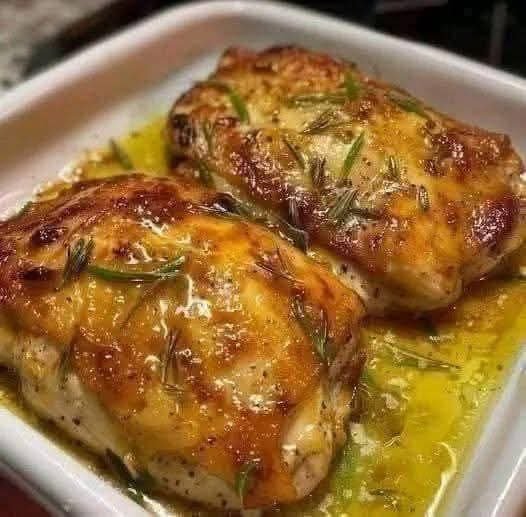
Instructions
- Preheat your oven to 400°F (200°C). If you have a cast-iron skillet that can go from stovetop to oven, have it ready. Otherwise, prepare an oven-safe baking dish.
- Pat the chicken breasts thoroughly dry with paper towels. This is a crucial step for achieving crispy skin. Season both sides of the chicken generously with sea salt and freshly ground black pepper.
- In a small bowl, combine the melted butter, olive oil, minced garlic, and chopped fresh rosemary. If using, add the dried thyme and red pepper flakes here as well. Whisk until well combined.
- Place the chicken breasts in your oven-safe baking dish or cast-iron skillet. Pour half of the butter-herb mixture over the chicken, ensuring to coat the skin side well. Tuck the fresh rosemary sprigs around the chicken in the dish.
- If using a cast-iron skillet, place it over medium-high heat on the stovetop. Once hot, sear the chicken breasts skin-side down for 4-5 minutes, until the skin is deeply golden brown and crispy. This step is optional but highly recommended for superior skin texture.
- Transfer the baking dish or skillet with the chicken to the preheated oven. Roast for 20-25 minutes, or until an internal temperature of 165°F (74°C) is reached in the thickest part of the chicken breast, away from the bone.
- About halfway through the cooking time (around 10-12 minutes), carefully remove the dish from the oven. Pour the remaining butter-herb mixture over the chicken. Add the chicken broth and optional lemon juice to the bottom of the pan, around the chicken. This will create a delicious pan sauce and help keep the chicken moist.
- Continue roasting until the chicken is cooked through. The skin should be beautifully golden brown and the juices should run clear.
- Once cooked, remove the chicken from the oven. Tent it loosely with aluminum foil and let it rest for at least 5-10 minutes before slicing. This resting period is vital for the juices to redistribute, ensuring the chicken remains incredibly moist and tender.
- Serve the chicken breast whole or sliced, spooning the flavorful pan juices and herbs over the top. Enjoy your perfectly Melt-In-Your-Mouth Chicken Breast!
Cooking Tips and Variations
To truly achieve that sought-after “melt-in-your-mouth” texture, preventing overcooking is paramount. Chicken breast, being lean, can dry out quickly. Investing in a reliable instant-read meat thermometer is the single best tip for consistent results. Cook until the internal temperature reaches precisely 165°F (74°C) in the thickest part of the breast, then remove it immediately from the heat. Remember, the chicken will continue to cook slightly (carryover cooking) as it rests. Pounding the chicken breast to an even thickness, especially if you’re using boneless, skinless cuts, ensures uniform cooking. This prevents thinner edges from drying out while the thicker parts finish cooking, leading to a much more tender and consistent piece of meat.
High-quality ingredients make a noticeable difference in this simple recipe. Fresh rosemary provides a much more vibrant and aromatic flavor than dried, though dried can be used in a pinch (use about 1 teaspoon for every tablespoon of fresh). Good quality olive oil and unsalted butter contribute significantly to the richness and depth of the pan sauce. Don’t skimp on these staples. Basting the chicken frequently during the last half of the cooking process with the pan juices is another secret weapon. This not only infuses the meat with more flavor but also helps to keep the skin moist, preventing it from drying out and enhancing that beautiful golden crust.
For variations, this recipe is incredibly adaptable. Experiment with other fresh herbs like thyme, oregano, or a blend of “Herbes de Provence” for a different aromatic profile. If you love a citrusy kick, increase the lemon juice or add thin slices of lemon directly into the baking dish to roast alongside the chicken. Orange zest and juice can also provide a delightful sweetness and tang. For those who enjoy a bit of heat, a pinch of red pepper flakes added to the butter-herb mixture or a dash of cayenne pepper will give it a nice zing. You can also vary the fat: try using clarified butter (ghee) for a nuttier flavor or a combination of butter and a good quality avocado oil. For an extra layer of richness, consider adding a tablespoon of white wine or vermouth to the pan juices during the last few minutes of cooking.
If you’re using boneless, skinless chicken breasts, you might want to consider a quick brine (15-30 minutes in a solution of 1 tablespoon salt per cup of water) before patting dry and seasoning. This helps the chicken retain moisture and makes it even more tender. When searing the chicken, ensure your pan is adequately hot before adding the chicken, and don’t overcrowd the pan. This allows for proper browning and a crispy skin. Lastly, don’t forget the importance of resting the chicken. This crucial step, often overlooked, allows the muscle fibers to relax and reabsorb the flavorful juices, resulting in a significantly more tender and moist final product. Always rest for at least 5-10 minutes under loose foil.
Storage and Reheating
Proper storage is key to maintaining the quality and safety of your delicious Melt-In-Your-Mouth Chicken Breast leftovers. Once cooled to room temperature (within two hours of cooking), transfer any remaining chicken and pan juices to an airtight container. Store the container in the refrigerator for up to 3-4 days. For longer storage, you can freeze the cooked chicken in an airtight freezer-safe container or heavy-duty freezer bag for up to 2-3 months. When freezing, it’s a good idea to include some of the pan juices to help keep the chicken moist upon reheating.
When it comes to reheating, the goal is to warm the chicken through without drying it out, which can easily happen with lean poultry. If reheating from the refrigerator, the best method is usually in the oven. Preheat your oven to 300-325°F (150-160°C). Place the chicken breasts in an oven-safe dish, adding a tablespoon or two of chicken broth or water to the bottom of the dish, and cover it loosely with aluminum foil. This creates a steamy environment that helps retain moisture. Reheat for 15-20 minutes, or until warmed through, checking the internal temperature to ensure it reaches 165°F (74°C).
Alternatively, you can reheat smaller portions on the stovetop. Place the chicken in a skillet over medium-low heat with a splash of broth or water, and cover. Cook gently, flipping once, until heated through. The microwave is the quickest option but can be the most detrimental to texture, often leading to dry spots. If using a microwave, reheat in short bursts (30-60 seconds) at a lower power setting, flipping the chicken and adding a tiny bit of liquid if needed, until just warm. Avoid overheating. If reheating from frozen, thaw the chicken in the refrigerator overnight before using one of the reheating methods described above.
Frequently Asked Questions
Can I use boneless, skinless chicken breasts for this recipe?
Yes, you can absolutely use boneless, skinless chicken breasts. However, the cooking time will be shorter, typically 15-20 minutes, as they are leaner and cook faster. To ensure they remain melt-in-your-mouth tender, consider pounding them to an even thickness (about 3/4 inch) before seasoning. This helps them cook uniformly and prevents the edges from drying out. You’ll still get wonderful flavor from the herb-butter mixture, but the crispy skin element will be absent.
How do I know when the chicken is perfectly cooked and not overcooked?
The most reliable way to ensure perfectly cooked chicken is to use an instant-read meat thermometer. Insert the thermometer into the thickest part of the chicken breast, avoiding the bone. The chicken is fully cooked and safe to eat when it reaches an internal temperature of 165°F (74°C). Remove it from the oven as soon as it hits this temperature. Overcooking even by a few degrees can lead to dry chicken, so precise temperature monitoring is key for that “melt-in-your-mouth” texture.
What are some good side dishes to pair with this chicken?
This versatile Melt-In-Your-Mouth Chicken Breast pairs beautifully with a variety of side dishes. For a classic meal, consider creamy mashed potatoes, roasted asparagus, sautéed green beans with garlic, or a simple garden salad with a light vinaigrette. If you’re looking for something heartier, a side of fluffy couscous, quinoa, or a flavorful rice pilaf would be excellent. The rich pan juices are fantastic drizzled over any starchy side, soaking up all the delicious flavors.
Can I prepare the chicken ahead of time?
You can do some preparation ahead of time to make dinner even quicker. The butter-herb-garlic mixture can be made up to a day in advance and stored in the refrigerator; just warm it slightly before using if the butter has solidified. You can also season the chicken breasts with salt and pepper about 30 minutes before cooking, or even overnight if you’re comfortable with a dry brine (pat dry thoroughly before cooking). However, for the best texture and juiciness, it’s recommended to cook the chicken fresh rather than partially cooking and reheating.