Instructions
- Prepare the Omelette Fillings: Heat 1 teaspoon of olive oil or butter in a small non-stick skillet over medium heat. Add the sliced mushrooms and sauté for 3-5 minutes, or until softened and lightly browned. Remove from the skillet and set aside.
- Whisk the Eggs: In a medium bowl, whisk together the 2 large eggs, milk or water (if using), 1/4 teaspoon salt, and 1/8 teaspoon black pepper until the yolks and whites are fully combined and slightly frothy.
- Cook the Omelette: Return the same non-stick skillet to medium-low heat (no need to clean it). If desired, add another tiny drop of olive oil or butter to coat the pan. Pour the egg mixture into the skillet. As the edges begin to set, gently push the cooked egg from the edges toward the center with a spatula, tilting the pan to allow the uncooked egg to flow underneath.
- Add Fillings: When the omelette is mostly set but still slightly moist on top, sprinkle the sautéed mushrooms and half of the chopped chives evenly over one half of the omelette.
- Fold and Finish: Gently fold the other half of the omelette over the filling. Cook for another 30 seconds to 1 minute, or until the omelette is cooked to your desired doneness (it should be soft and lightly browned, not crispy). Slide the omelette onto a serving plate.
- Prepare the Salad: In a medium bowl, combine the mixed greens, halved cherry tomatoes, diced cucumber, thinly sliced red onion, pitted black olives, and chopped fresh parsley.
- Dress the Salad: Drizzle the salad with 1 tablespoon of extra virgin olive oil and 1 tablespoon of fresh lemon juice. Season with a pinch of salt and black pepper. Toss gently to combine all ingredients and ensure even coating.
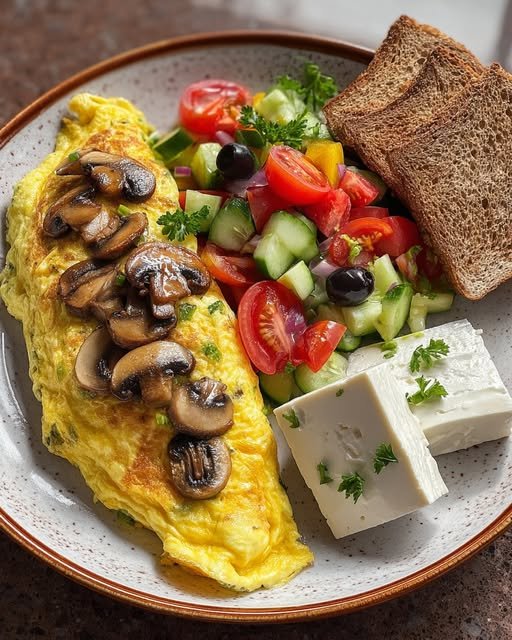
- Assemble the Power Plate: Arrange the dressed Mediterranean salad on the serving plate next to the cooked omelette.
- Add Feta and Toast: Sprinkle the crumbled feta cheese over both the omelette and the salad. Toast the slice of whole-wheat bread and place it on the plate.
- Serve: Garnish the omelette with the remaining fresh chives. Serve immediately, optionally with an extra drizzle of olive oil over the salad or omelette for added richness.
Cooking Tips and Variations
For the fluffiest omelette, whisk your eggs vigorously for about 30 seconds until they are light and airy. Adding a tablespoon of milk or water can also contribute to a softer texture. Remember that a perfect omelette is cooked over medium-low heat; too high, and it will brown too quickly without setting through properly. Don’t overcook your omelette; it should be just set and still slightly moist in the center when folded, allowing for residual heat to finish cooking it beautifully. A non-stick pan is your best friend here, ensuring easy flipping and no sticking.
To elevate your Mediterranean salad, always use the freshest, highest-quality produce you can find. The vibrant flavors of ripe tomatoes and crisp cucumber are key. For an extra punch of flavor, consider adding a pinch of dried oregano or sumac to your salad dressing. You can also toast the whole-wheat bread lightly before serving to enhance its texture and flavor. If you prefer a different type of bread, a hearty sourdough or a multigrain bread would also be excellent choices.
This “power plate” is incredibly versatile, allowing for numerous delicious variations. For the omelette, feel free to experiment with other fillings such as chopped spinach, bell peppers, sun-dried tomatoes, or even a sprinkle of fresh basil. If you’re not a fan of feta, goat cheese or even a small amount of halloumi (grilled or pan-fried) would make a fantastic substitute. To boost the protein content of your salad, consider adding a handful of chickpeas or cannellini beans. For a more substantial meal, a few slices of grilled chicken breast or flaked salmon could be added alongside the salad. For those who enjoy a bit of heat, a pinch of red pepper flakes in the omelette or salad dressing can add a delightful kick. Don’t be afraid to customize this meal to suit your personal taste and what fresh ingredients you have on hand!
Storage and Reheating
While this Mediterranean Omelette Power Plate is best enjoyed fresh, you can certainly prepare some components ahead of time or store leftovers. The Mediterranean salad, without dressing, can be prepared and stored in an airtight container in the refrigerator for up to 2-3 days. Keep the dressing separate and add it just before serving to prevent the greens from wilting. The cooked omelette can be stored in an airtight container in the refrigerator for up to 1-2 days. However, the texture of reheated eggs can change, often becoming a bit firmer.
To reheat the omelette, the best method is to gently warm it in a non-stick skillet over low heat until heated through, about 2-3 minutes per side. You can also microwave it on a low setting for 30-60 seconds, but be mindful not to overcook it, as this can make the eggs rubbery. The toast should always be prepared fresh just before serving to ensure its crispness. When assembling a stored plate, simply combine the reheated omelette with the fresh (or pre-prepped, undressed) salad, fresh feta, and freshly toasted bread for the best experience.
Frequently Asked Questions
Can I make the omelette ahead of time for meal prep?
While you can cook the omelette ahead of time and store it in the refrigerator for 1-2 days, it’s generally best to cook eggs fresh. Reheated omelettes can sometimes lose their fluffy texture and become a bit rubbery. However, if convenience is key, it’s still a viable option. For best results, reheat gently in a skillet.
What if I don’t have all the salad ingredients?
The beauty of a Mediterranean salad is its flexibility! Feel free to substitute or omit ingredients based on what you have. For example, if you don’t have cherry tomatoes, use chopped regular tomatoes. Bell peppers, artichoke hearts, or even chickpeas can be great additions if you’re missing cucumber or olives. The core idea is fresh, colorful vegetables with a simple olive oil and lemon dressing.
Is this dish suitable for vegetarians?
Yes, absolutely! This Mediterranean Omelette Power Plate is inherently vegetarian. It provides excellent protein from the eggs and feta, along with a wealth of nutrients from the vegetables and whole-wheat toast, making it a complete and satisfying meat-free meal.
Can I use a different type of cheese instead of feta?
While feta is a cornerstone of Mediterranean flavors and adds a unique salty tang, you can certainly experiment with other cheeses. Goat cheese would offer a creamy, slightly tart alternative. A sprinkle of grated Parmesan or even a mild white cheddar could work, though they would alter the traditional Mediterranean profile. For a dairy-free option, look for a plant-based feta alternative.