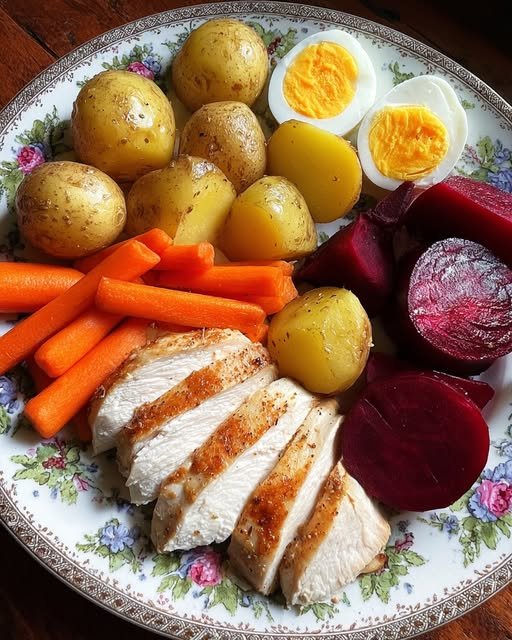
Instructions
- Prepare the Vegetables:
- Place the scrubbed new potatoes in a large pot and cover with cold water by about an inch. Add a generous pinch of salt. Bring to a boil over high heat, then reduce heat to medium-low and simmer until fork-tender, about 15-20 minutes depending on size. Drain well.
- While the potatoes are cooking, place the quartered beets in a separate small saucepan. Cover with cold water and bring to a boil. Reduce heat and simmer until tender, about 25-35 minutes. Drain, let cool slightly, then peel off the skins (they should slip off easily). Slice or chop as desired.
- Add the peeled and cut carrots to a medium saucepan. Cover with cold water and bring to a boil. Reduce heat and simmer until tender-crisp, about 5-7 minutes. Drain well.
- Hard-Boil the Eggs:
- Carefully place the eggs in a single layer in a medium saucepan. Cover with cold water by about an inch.
- Bring the water to a rolling boil over high heat. Once boiling, immediately remove the pan from the heat, cover it, and let stand for 10-12 minutes for perfectly hard-boiled eggs.
- Immediately transfer the eggs to an ice bath (a bowl of ice water) and let them cool completely for at least 5 minutes. This stops the cooking process and helps with easier peeling. Peel the eggs under cold running water.
- Cook the Chicken:
- Pat the chicken breasts dry with paper towels. Season generously on both sides with salt and freshly ground black pepper.
- Heat 1 tablespoon of olive oil in a large skillet (cast iron or non-stick works well) over medium-high heat.
- Once the oil is shimmering, add the chicken breasts to the skillet. Cook for 5-7 minutes per side, or until golden brown and cooked through. The internal temperature should reach 165°F (74°C) when measured with a meat thermometer at the thickest part.
- Remove the chicken from the skillet and let it rest on a cutting board for 5 minutes before slicing. This helps keep the chicken juicy.
- Assemble the Plate:
- While the chicken is resting, lightly toss the drained potatoes with the remaining 1 tablespoon of olive oil, a pinch of salt, pepper, and dried thyme (if using).
- Arrange the sliced chicken, potatoes, carrots, beets, and halved hard-boiled eggs neatly on individual plates.
- Garnish with fresh parsley or dill, if desired. Serve immediately with lemon wedges on the side for a bright, fresh finish.
Cooking Tips and Variations
For the juiciest chicken, always ensure you don’t overcook it. A meat thermometer is your best friend here; remove the chicken from the heat as soon as it hits 165°F (74°C). Allowing it to rest for a few minutes before slicing is also crucial for retaining its moisture and tenderness. If you prefer a different texture for your vegetables, consider roasting them instead of boiling. Toss the potatoes, carrots, and beets with a tablespoon of olive oil, salt, pepper, and your favorite herbs (rosemary and thyme work wonderfully) and roast at 400°F (200°C) for 20-30 minutes, or until tender and slightly caramelized. Roasting brings out a deeper, sweeter flavor and a more appealing texture than boiling.
To prepare this meal even faster, consider some strategic meal prepping. You can hard-boil the eggs and cook the beets a day or two in advance and store them in the refrigerator. This significantly cuts down on active cooking time on the day you plan to eat. When it comes to seasoning, don’t be shy! A simple sprinkle of salt and pepper is good, but a dash of garlic powder or paprika on the chicken can elevate its flavor. For the vegetables, a light drizzle of a simple vinaigrette made with olive oil, lemon juice, and a touch of Dijon mustard can add a delightful tang and freshness.
Want to mix things up? The beauty of this “plate” concept is its incredible flexibility. Instead of chicken breast, try grilled salmon, pan-seared turkey cutlets, or even a firm white fish for a different lean protein. Swap out the potatoes for sweet potatoes, quinoa, or brown rice for an alternative complex carbohydrate source. Experiment with other seasonal vegetables like green beans, broccoli, asparagus, or bell peppers. Quickly steam or sauté them to maintain their vibrant color and nutrients. Adding a sprinkle of chili flakes to the chicken or a dash of cumin to the roasted potatoes can introduce exciting new flavor profiles. For a creamy element, a dollop of Greek yogurt mixed with fresh herbs can serve as a light and healthy dressing for the chicken or vegetables.
Storage and Reheating
This Lean Chicken Plate is excellent for meal prepping. Once cooked, allow all components to cool completely before storing. Store the chicken, potatoes, carrots, beets, and hard-boiled eggs in separate airtight containers in the refrigerator. This helps maintain the individual textures and flavors and prevents them from becoming soggy or mixing undesirable flavors. Properly stored, the meal components will last for 3-4 days in the refrigerator.
When it comes to reheating, it’s best to reheat the chicken and vegetables separately if possible, especially if you prefer specific textures. To reheat the chicken, you can gently warm it in a microwave on a lower power setting to prevent it from drying out, or briefly pan-sear it in a lightly oiled skillet over medium heat until just warmed through. Add a splash of water or broth to the pan while reheating to help keep the chicken moist. The potatoes, carrots, and beets can be reheated in the microwave or gently warmed in a skillet. Avoid over-reheating the vegetables, as they can become mushy. The hard-boiled eggs are best enjoyed cold or at room temperature, so there’s no need to reheat them. For the best flavor and texture, assemble your plate with freshly reheated components (excluding the eggs) just before serving.
Frequently Asked Questions
How can I ensure my chicken breast stays moist and tender?
The key to moist chicken breast is not to overcook it. Use a meat thermometer and remove the chicken from the heat as soon as it reaches an internal temperature of 165°F (74°C). Additionally, always let the chicken rest for at least 5 minutes after cooking before slicing. This allows the juices to redistribute throughout the meat, resulting in a more tender and flavorful bite. Pounding the chicken breast to an even thickness before cooking can also help it cook more uniformly and prevent drying out.
Can I use different vegetables for this plate?
Absolutely! This recipe is incredibly versatile. Feel free to substitute the carrots and beets with any of your favorite seasonal vegetables. Broccoli, asparagus, green beans, bell peppers, zucchini, or even Brussels sprouts would all be delicious additions. Adjust cooking times according to the vegetable you choose; most will benefit from steaming, roasting, or a quick sauté until tender-crisp.
What’s the best way to peel hard-boiled eggs easily?
For easy peeling, it’s crucial to transfer the hard-boiled eggs immediately from the hot water to an ice bath (a bowl of ice water) and let them cool completely for at least 5-10 minutes. This rapid cooling causes the egg white to contract, separating it from the shell membrane. Once cooled, gently tap the egg on a hard surface to crack the shell all around, then peel under cold running water. Starting the peel from the wider end of the egg, where an air pocket usually forms, can also help.