Instructions
- Prepare the Pork Belly: If using skin-on pork belly, you can blanch it first for 5-10 minutes in boiling water to clean and firm up the skin, then drain and pat dry. This step is optional but can improve skin texture. Cut the pork belly into roughly 1.5-inch cubes.
- Sear the Pork: Heat the vegetable oil in a large Dutch oven or heavy-bottomed pot over medium-high heat. Add the pork belly cubes in a single layer, working in batches if necessary to avoid overcrowding. Sear until well browned on all sides, about 5-7 minutes per batch. This step is crucial for developing deep flavor and color. Once browned, remove the pork and set aside, leaving a little rendered fat in the pot.
- Sauté Aromatics: Reduce the heat to medium. Add the minced garlic and sliced ginger to the pot. Sauté for 1-2 minutes until fragrant, being careful not to burn the garlic.
- Deglaze and Add Liquids: Pour in the rice wine, scraping the bottom of the pot with a wooden spoon to loosen any browned bits. Let it simmer for 1 minute until partially evaporated.
- Build the Braising Liquid: Return the browned pork belly to the pot. Add the light soy sauce, dark soy sauce, brown sugar, hot water (or chicken broth), star anise, and cinnamon stick. Stir everything together to combine, ensuring the pork is mostly submerged in the liquid. If needed, add a little more hot water to just cover the pork.
- Braise the Pork: Bring the liquid to a gentle boil, then reduce the heat to low, cover the pot tightly, and simmer for 1.5 to 2 hours, or until the pork is fork-tender. Check periodically to ensure there’s enough liquid; if it’s reducing too much, add a little more hot water. The goal is a slow, gentle braise that breaks down the connective tissues and renders the fat into lusciousness.
- Cook the Rice: While the pork is braising, prepare the jasmine rice. Rinse the rice thoroughly under cold running water until the water runs clear. Combine the rinsed rice and 4.5 cups of water in a medium saucepan. Bring to a boil, then reduce heat to low, cover, and simmer for 15-18 minutes, or until all the water is absorbed. Remove from heat and let stand, covered, for 10 minutes before fluffing with a fork.
- Thicken the Sauce (Optional): Once the pork is tender, remove the star anise and cinnamon stick. If you prefer a thicker sauce, remove the pork belly from the pot and set aside. Bring the braising liquid to a boil. Slowly whisk in the cornstarch slurry, stirring constantly, until the sauce thickens to your desired consistency. Return the pork to the thickened sauce and stir to coat.
- Prepare for Serving: If using banana leaves, gently wilt them over a low flame or dip them in hot water for a few seconds to make them pliable. Lay them on serving plates.
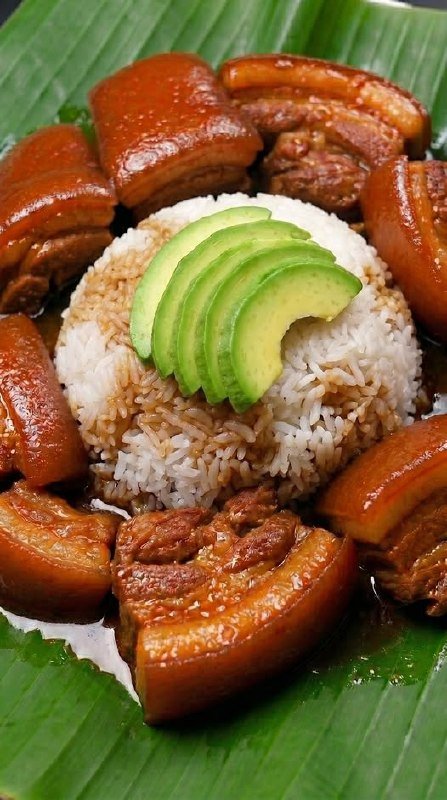
- Serve: Scoop a generous portion of soft jasmine rice onto the banana leaf or plate. Arrange several pieces of the juicy braised pork belly alongside the rice, spooning plenty of the rich, glossy sauce over both. Garnish with sliced avocado, and a sprinkle of fresh cilantro or chopped scallions, if desired. Serve immediately and enjoy!
Cooking Tips and Variations
For truly exceptional braised pork, the key is patience. Do not rush the searing process; a good sear locks in flavor and creates a beautiful crust. Similarly, resist the urge to crank up the heat during braising. A low and slow simmer is essential for breaking down the tough connective tissues in the pork belly, resulting in that coveted melt-in-your-mouth texture. If your pot doesn’t have a very tight-fitting lid, you can place a piece of parchment paper directly on top of the liquid before covering with the lid to create an even better seal, preventing too much evaporation. When cooking the rice, use the absorption method for the best results: rinse thoroughly, use the correct water ratio (typically 1:1.5 rice to water for jasmine), bring to a boil, then reduce to a low simmer and do not lift the lid until the cooking time is complete and it has rested. This ensures fluffy, perfectly cooked grains.
To ensure maximum tenderness, consider using a pressure cooker for the braising step. After searing the pork and sautéing aromatics, add all braising liquid ingredients and pork to the pressure cooker. Cook on high pressure for 30-40 minutes, then allow for a natural release. This significantly cuts down cooking time while still achieving incredible tenderness. For an even richer sauce, you can add a tablespoon of oyster sauce or a splash of fish sauce to the braising liquid. To introduce a touch of heat, a few dried chilies or a pinch of red pepper flakes can be added along with the star anise and cinnamon. If you prefer a less fatty dish, you can choose leaner cuts of pork like pork shoulder, though the texture will be different. However, if using pork belly, don’t be afraid of the fat; it renders down into deliciousness and moisturizes the meat. Just ensure you trim any excessively thick pieces of fat before cooking.
Beyond the classic preparation, there are many ways to vary this dish. For aromatics, consider adding a few dried shiitake mushrooms (rehydrated and sliced) to the braising liquid for an extra layer of umami. A spoonful of fermented bean paste can also add depth. For a slightly different flavor profile, you could swap out the brown sugar for rock sugar, which gives a beautiful sheen to the sauce. In terms of vegetables, blanched bok choy, steamed broccoli florets, or even some sautéed mushrooms can be added to the plate as a healthy and colorful accompaniment. For a more substantial meal, consider serving alongside a simple cucumber salad dressed with rice vinegar and sesame oil to cut through the richness of the pork. The avocado garnish is a wonderful addition, offering a creamy counterpoint to the savory pork and rice, but feel free to experiment with other fresh garnishes like toasted sesame seeds, a squeeze of lime juice, or even a sprinkle of crispy fried shallots for added texture.
Storage and Reheating
This braised pork and rice dish is excellent for meal prepping and often tastes even better the next day as the flavors have more time to meld. To store, allow the pork and sauce to cool completely to room temperature. Transfer the pork and sauce to an airtight container. The cooked rice should be stored separately in its own airtight container. Both the pork and rice can be refrigerated for up to 3-4 days. For longer storage, the braised pork (without the rice) can be frozen for up to 2-3 months. If freezing, make sure the pork is fully submerged in the sauce to prevent freezer burn.
When reheating, the best method for the pork is to gently warm it in a saucepan over low to medium heat on the stovetop, adding a splash of water or broth if the sauce has become too thick. Stir occasionally until heated through. Alternatively, you can reheat it in the microwave in short bursts, stirring in between, until hot. For the rice, sprinkle a tablespoon or two of water over it before reheating in the microwave, covered, to restore its moisture and fluffiness. If you have a steamer, reheating the rice in a steamer basket is also an excellent way to bring it back to its original soft texture. Avoid reheating the avocado; it’s best to add fresh avocado slices just before serving to maintain its texture and color.
Frequently Asked Questions
What kind of pork is best for this dish?
Pork belly is highly recommended for this recipe due to its ideal fat-to-meat ratio. The fat renders beautifully during the slow braising process, keeping the meat incredibly moist and tender while infusing the sauce with richness. If you can’t find pork belly, a well-marbled pork shoulder (Boston butt) can be used, but it will result in a slightly leaner dish with a different texture.
Can I make this dish ahead of time?
Absolutely! This dish is fantastic for making ahead. In fact, many find that the flavors deepen and improve after a day or two in the refrigerator. Prepare the pork and sauce as instructed, then cool and store in an airtight container in the fridge. Reheat gently on the stovetop or in the microwave when ready to serve. Cook the fresh rice just before serving for the best results.
How do I make the sauce thicker or thinner?
To thicken the sauce, after the pork is tender, remove the pork and bring the sauce to a simmer. Mix 1 tablespoon of cornstarch with 2 tablespoons of cold water to create a slurry. Gradually whisk the slurry into the simmering sauce until it reaches your desired consistency. If the sauce is too thick, simply add a bit more hot water or chicken broth until it thins out to your liking.
What if I don’t have rice wine?
Shaoxing wine is a traditional Chinese rice wine that adds a unique depth of flavor. If you don’t have it, a dry sherry is the best substitute. In a pinch, you can use sake, or even a dry white wine, though the flavor profile will be slightly different. For an alcohol-free option, a mixture of chicken broth with a dash of rice vinegar can work, but you will miss some of the authentic taste.