Instructions
1. Prepare the Meat:
- In a large pot, combine the beef cubes, pork hock (if using), chopped onion, smashed garlic, sliced ginger, allspice, thyme, black pepper, and salt.
- Add enough water to cover the meat by at least 2 inches.
- Bring to a boil, then reduce heat, cover, and simmer for 1.5 to 2 hours, or until the meat is very tender. If using pork hock, it may take longer (up to 2.5-3 hours).
- Once cooked, carefully remove the meat from the broth using a slotted spoon. Reserve at least 1/4 cup of the flavorful meat stock for the Jollof rice.
- Heat about 1/2 cup of oil in a large frying pan over medium-high heat.
- Fry the boiled meat in batches until golden brown and slightly crispy on all sides. Set aside.
2. Prepare the Hard-Boiled Eggs:
- Place the eggs in a saucepan and cover with cold water by about an inch.
- Bring the water to a rolling boil over high heat.
- Once boiling, immediately remove the pan from the heat, cover, and let stand for 10-12 minutes for perfectly hard-boiled eggs.
- Transfer the eggs to an ice bath to stop the cooking process.
- Once cooled, peel and set aside. You can leave them whole or halve them for serving.
3. Prepare the Jollof Base (Ata Din Din):
- In a blender, combine the roughly chopped plum tomatoes, red bell pepper, Scotch bonnet peppers, minced garlic, and grated ginger. Blend until smooth. This is your pepper mix.
- Heat 1/2 cup of vegetable oil in a large, heavy-bottomed pot or Dutch oven over medium-high heat.
- Add the finely chopped red onion and sauté until softened and translucent, about 5-7 minutes.
- Stir in the tomato paste and cook for 5-7 minutes, stirring frequently, until it darkens in color and loses its raw tomato taste. This step is crucial for deep flavor.
- Pour in the blended pepper mix. Bring to a boil, then reduce heat to medium-low and simmer, stirring occasionally, for 20-30 minutes, or until the sauce has thickened considerably and the oil starts to float to the top. This indicates the sauce is well-cooked and the water has evaporated.
4. Cook the Jollof Rice:
- Add the reserved 1/4 cup meat stock, chicken/beef broth, bay leaves, dried thyme, curry powder, and smoked paprika to the cooked tomato base. Stir well.
- Season with salt and black pepper to taste. The sauce should be well-seasoned, as the rice will absorb some of the salt.
- Bring the mixture to a rolling boil.
- Add the rinsed parboiled rice to the boiling sauce. Stir gently once or twice to combine, ensuring the rice is fully submerged. Do not over-stir, as this can make the rice mushy.
- Reduce the heat to low, cover the pot tightly with aluminum foil first, then with a lid. This creates a tight seal to trap steam.
- Cook for 25-35 minutes without lifting the lid. The steam is essential for cooking the rice evenly and creating that smoky “bottom pot” flavor.
- After 25-35 minutes, check the rice. If it’s still hard, add a splash more broth or water (about 1/4 cup), cover again, and cook for another 5-10 minutes.
- Once the rice is tender and the liquid has been absorbed, gently fluff the rice with a fork. If using, dot the rice with small pieces of unsalted butter and cover for a few more minutes to melt.
5. Fry the Plantains:
- While the rice is cooking, heat 1/4 cup of vegetable oil in a frying pan over medium heat.
- Add the sliced plantains in a single layer (work in batches if necessary).
- Fry for 2-3 minutes per side, until golden brown and caramelized. Sprinkle with a pinch of salt.
- Remove and drain on paper towels.
6. Assemble and Serve:
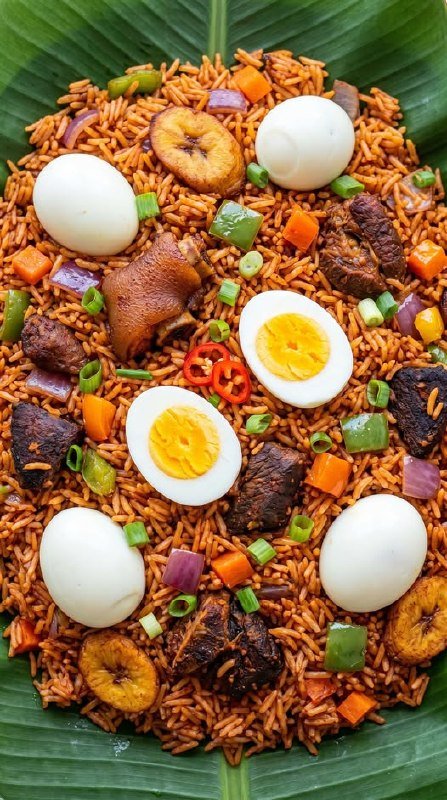
- Once the Jollof rice is ready, gently incorporate the fried meats into the rice, or arrange them on top.
- Arrange the hard-boiled eggs and fried plantains around or on top of the Jollof rice.
- Garnish generously with thinly sliced green bell pepper, carrots, red onion rings, chopped scallions, and fresh red chili slices (if using).
- For an authentic touch, serve the Jollof on a banana leaf if available.
Cooking Tips and Variations
To achieve that coveted smoky flavor in your Jollof rice, a key technique is to allow a thin layer of rice at the bottom of the pot to slightly toast, but not burn. This is often referred to as the “bottom pot” effect. To encourage this, ensure your heat is low during the final cooking stage and resist the urge to stir. The tight seal created by the foil and lid helps trap the steam and evenly cook the rice, while also allowing the very bottom to develop that subtle char. For an extra boost of smokiness without the risk of burning, a pinch of smoked paprika or a tablespoon of smoked turkey broth can be added to the sauce. The type of rice is also crucial; parboiled long-grain rice is preferred as it holds its shape better and is less likely to become mushy than regular white rice. Rinsing the rice thoroughly before cooking helps remove excess starch, contributing to a fluffier texture.
For the meats, marinating them overnight before boiling and frying will significantly deepen their flavor profile. A simple marinade of garlic, ginger, onion, thyme, and a touch of curry powder works wonders. While beef and pork hock are suggested, feel free to experiment with other proteins. Chicken pieces (thighs or drumsticks) can be boiled and then fried or baked until crispy. Goat meat is another popular and flavorful option for Jollof. For a vegetarian variation, you can omit the meat and eggs, increasing the amount of vegetables like mushrooms, green beans, or sweet potatoes. You can also add smoked tofu or tempeh for a protein boost. To adjust the spice level, increase or decrease the number of Scotch bonnet peppers. For less heat, you can remove the seeds and veins, or even substitute with a milder red bell pepper. For a richer, deeper color, some cooks like to add a tiny amount of red food coloring, though a well-cooked tomato paste should provide ample color. Always taste your sauce before adding the rice and adjust seasonings as needed, remembering that the rice will absorb some of the salt and spices.
Storage and Reheating
Jollof rice often tastes even better the next day, as the flavors have more time to meld and deepen. To store leftover Jollof with Eggs & Meat, allow the dish to cool completely to room temperature within two hours of cooking. Once cooled, transfer the Jollof rice, meat, and eggs to an airtight container. It can be stored in the refrigerator for up to 3-4 days. For longer storage, Jollof rice can be frozen. Place cooled Jollof (without the eggs, as they can become rubbery when frozen and reheated) in freezer-safe bags or containers, ensuring to press out any excess air to prevent freezer burn. It can be stored in the freezer for up to 2-3 months. Thaw frozen Jollof in the refrigerator overnight before reheating.
When reheating Jollof rice, there are several effective methods. The best way to maintain its moisture and texture is to reheat it on the stovetop. Place the desired portion of Jollof rice in a saucepan or skillet. Add a splash of water or broth (about 1-2 tablespoons per cup of rice) to prevent it from drying out. Cover the pan and heat over low to medium heat, stirring occasionally, until it is heated through. The steam created by the added liquid will help rehydrate the rice. Alternatively, you can reheat Jollof in the microwave. Place a single serving in a microwave-safe dish, add a tablespoon of water, cover with a microwave-safe lid or damp paper towel, and heat on high for 1-2 minutes, stirring halfway through, until hot. If you’re reheating meat and eggs with the Jollof, it’s best to reheat them separately or add them to the rice during the last few minutes of stovetop reheating to avoid overcooking the eggs or drying out the meat. Always ensure food is piping hot (165°F or 74°C) before serving.
Frequently Asked Questions
What is the “Jollof Wars”?
The “Jollof Wars” is a friendly, yet passionate, rivalry among West African countries, most notably Nigeria and Ghana, over which nation makes the best Jollof rice. It’s a lighthearted debate that highlights the cultural significance and deep pride people have in their version of this iconic dish. Each country has subtle variations in ingredients and cooking methods that they believe make their Jollof superior. It’s all in good fun and a testament to how beloved Jollof rice is across the region.
Can I make Jollof rice less spicy?
Absolutely! The spice level in Jollof rice is entirely customizable. To make it less spicy, simply reduce the number of Scotch bonnet or habanero peppers used in the pepper mix. You can also remove the seeds and white membranes from the peppers, as these contain most of the capsaicin (the compound responsible for the heat). For a very mild version, you can omit the hot peppers altogether and rely on bell peppers for flavor and color.
What is parboiled rice and why is it recommended for Jollof?
Parboiled rice is rice that has been partially boiled in its husk before milling. This process helps to retain more nutrients and, more importantly for Jollof, makes the grains firmer and less sticky. It’s recommended for Jollof rice because it holds its shape better during the long cooking process, preventing the rice from becoming mushy or clumpy. It allows the rice to absorb the rich tomato sauce without breaking down, resulting in perfectly separate and fluffy grains.
Can I prepare parts of this dish in advance?
Yes, many components of Jollof with Eggs & Meat can be prepared ahead of time, which is perfect for entertaining or busy weekdays. You can cook and fry the meats a day or two in advance and store them in the refrigerator. The hard-boiled eggs can also be prepared ahead of time and stored peeled in the fridge. The pepper mix (blended tomatoes, peppers, etc.) can be made and stored in the refrigerator for up to 3 days. Even the full Jollof rice can be cooked a day before and reheated, as its flavors often deepen overnight. Just fry the plantains fresh before serving for the best texture.