Instructions
- Prepare the Rice: Rinse the rice thoroughly under cold water until the water runs clear. In a medium saucepan, combine the rinsed rice and 2 cups of water. Bring to a boil, then reduce heat to low, cover, and simmer for 15-18 minutes, or until all the water is absorbed and the rice is tender. Remove from heat and let stand, covered, for 5 minutes. Fluff with a fork and set aside.
- Prepare the Honey Glaze: In a small bowl, whisk together the honey, soy sauce, rice vinegar, grated ginger, garlic powder, and red pepper flakes (if using). Set aside.
- Roast the Asparagus: Preheat your oven to 400°F (200°C). On a baking sheet, toss the trimmed asparagus with a drizzle of olive oil, salt, and black pepper. Spread in a single layer. Roast for 10-12 minutes, or until tender-crisp and slightly browned.
- Cook the Salmon: While the asparagus roasts, pat the salmon fillets dry with paper towels. Season both sides lightly with salt and black pepper. Heat 1 tablespoon of olive oil in a large non-stick skillet over medium-high heat. Once hot, add the salmon fillets, skin-side down if applicable. Cook for 4-5 minutes until the skin is crispy and golden.
- Glaze the Salmon: Flip the salmon fillets. Pour about half of the prepared honey glaze over the salmon. Continue cooking for another 3-5 minutes, basting occasionally with the glaze, until the salmon is cooked through and the glaze has caramelized slightly. The internal temperature should reach 145°F (63°C). Remove from heat.
- Cook the Soft-Boiled Eggs: While the salmon is cooking, bring a small pot of water to a rolling boil. Carefully lower the eggs into the boiling water using a slotted spoon. Cook for exactly 6-7 minutes for a jammy, soft-boiled yolk. Immediately transfer the eggs to an ice bath (a bowl of ice water) to stop the cooking process. Once cooled, carefully peel the eggs and slice them in half.
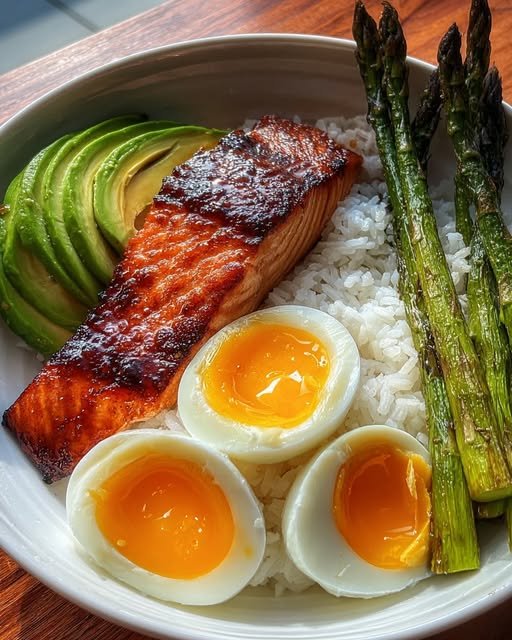
- Assemble the Power Bowls: Divide the cooked rice among two serving bowls. Arrange half of the roasted asparagus, half of the sliced avocado, and one glazed salmon fillet in each bowl. Place two soft-boiled egg halves next to the other components.
- Finish and Serve: Drizzle any remaining honey glaze from the skillet over the salmon and rice. Garnish with sesame seeds and sliced green onions, if desired. Serve immediately and enjoy your vibrant Honey Glazed Salmon Power Bowl!
Cooking Tips and Variations
Achieving the perfect Honey Glazed Salmon Power Bowl is all about attention to detail and a willingness to experiment. For the salmon, the key is not to overcook it. Salmon is best when it’s still slightly translucent in the center, ensuring a moist and flaky texture. A good rule of thumb is to cook it until it easily flakes with a fork. Using a meat thermometer can help ensure it reaches an internal temperature of 145°F (63°C) without drying out. When glazing, keep an eye on the heat; honey can burn quickly, so adjust your stove’s temperature as needed to get a beautiful caramelization without charring. If you prefer a crispier skin, start with the skin-side down in a hot pan and press gently with a spatula for the first minute to ensure full contact with the pan.
The honey glaze itself is incredibly versatile. For an extra layer of complexity, consider adding a splash of sriracha or a pinch of gochujang to the glaze for a sweet and spicy kick. A teaspoon of toasted sesame oil can also add a wonderfully nutty aroma. If you don’t have fresh ginger, a half teaspoon of ground ginger can be substituted, though fresh always offers a brighter flavor. For those who enjoy a more pungent garlic flavor, a clove of minced fresh garlic can replace the garlic powder. Don’t be afraid to taste the glaze before applying it to the salmon and adjust the sweetness or saltiness to your liking.
When it comes to the other components, precision with the soft-boiled eggs is paramount. The 6-7 minute cooking time is crucial for that perfect jammy yolk. Immediately plunging them into an ice bath stops the cooking and makes them easier to peel. For peeling, crack the egg gently all around and peel under cold running water; this helps the shell slide off more easily. For the rice, while white rice is traditional, feel free to substitute with brown rice, quinoa, or even cauliflower rice for a lower-carb option. Adjust cooking times according to the package directions for your chosen grain.
The asparagus can also be swapped out for other quick-cooking vegetables. Broccoli florets, snap peas, or even bell pepper strips would work beautifully. Simply toss them with olive oil, salt, and pepper and roast until tender-crisp. For an added layer of flavor and texture, consider topping your power bowl with toasted nuts like cashews or almonds, a sprinkle of fresh cilantro or mint, or a drizzle of a creamy sriracha mayo or a tahini-lemon dressing. This bowl is inherently customizable, allowing you to tailor it to your dietary needs or whatever fresh ingredients you have on hand.
For those interested in meal prepping, this power bowl is a fantastic candidate. Cook the rice, roast the asparagus, and prepare the salmon ahead of time. Store each component separately in airtight containers in the refrigerator. When ready to eat, gently reheat the salmon and asparagus, then assemble your bowl with freshly sliced avocado and a freshly boiled egg if preferred (as eggs are best when cooked fresh). This ensures that each component retains its optimal texture and flavor, making healthy eating convenient throughout the week.
Storage and Reheating
Proper storage is key to maintaining the freshness and flavor of your Honey Glazed Salmon Power Bowl components, especially if you’re planning to enjoy leftovers or meal prep for the week. It’s best to store the individual components separately to preserve their optimal textures. The cooked salmon, rice, and roasted asparagus should be placed in airtight containers and refrigerated within two hours of cooking. The avocado is best sliced fresh just before serving, as it tends to brown quickly once exposed to air. If you must slice it ahead of time, a squeeze of lemon or lime juice can help slow down the oxidation process, but it’s still preferable to cut it fresh. Soft-boiled eggs, when peeled, can be stored in an airtight container in the refrigerator for up to two days, but for the best texture and taste, it’s often recommended to cook them fresh for each meal.
The cooked salmon will last for 2-3 days in the refrigerator. The cooked rice and roasted asparagus can be stored for up to 3-4 days. When it comes to reheating, the goal is to warm everything through without overcooking or drying out the salmon. For the salmon, the best method is to gently reheat it in a skillet over medium-low heat with a tablespoon of water or broth, covered, until just warmed through. This helps to create steam and prevent it from drying out. Alternatively, you can reheat it in the microwave on a low setting, covered, in 30-second intervals until warm, being careful not to blast it with too much heat. Over-microwaving can make salmon rubbery and diminish its flavor.
The roasted asparagus can be reheated in the microwave or briefly tossed in a hot skillet for a minute or two to regain some crispness. The rice can be reheated in the microwave with a tablespoon of water, covered, or in a saucepan with a splash of water, stirring occasionally, until hot. Avoid reheating the avocado or soft-boiled eggs, as their textures will suffer. Instead, add them fresh to your reheated bowl. By following these storage and reheating tips, you can enjoy your delicious and healthy Honey Glazed Salmon Power Bowl for several days without sacrificing quality or taste, making it an excellent option for a convenient and nutritious meal.
Frequently Asked Questions
Can I use frozen salmon for this recipe?
Yes, you can absolutely use frozen salmon fillets for this recipe. Just be sure to thaw them completely before cooking. The best way to thaw frozen salmon is to transfer it from the freezer to the refrigerator the night before you plan to cook it. If you need a quicker method, you can place the vacuum-sealed salmon under cold running water for about 30-60 minutes until thawed. Pat the fillets very dry with paper towels before seasoning and cooking, as excess moisture can prevent a good sear and crispy skin.
How can I make this power bowl vegetarian or vegan?
To make this power bowl vegetarian, you can substitute the salmon with pan-fried or baked tofu, tempeh, or a portobello mushroom. Ensure your chosen protein is marinated in a similar sweet and savory glaze to match the flavor profile. For a vegan version, in addition to the protein substitution, omit the soft-boiled eggs and ensure your honey glaze uses a vegan alternative to honey, such as maple syrup or agave nectar. You can also add extra vegetables like roasted sweet potatoes, chickpeas, or edamame for added protein and substance.
What other vegetables can I add to this power bowl?
This power bowl is incredibly flexible when it comes to vegetables! Beyond asparagus, excellent additions include roasted broccoli florets, green beans, bell pepper strips, or even thinly sliced carrots. For a touch of sweetness, roasted sweet potato cubes or butternut squash would be delicious. Leafy greens like spinach or kale can also be added raw to the bowl for extra nutrients and crunch. Feel free to experiment with whatever seasonal vegetables you have on hand, ensuring they are cooked to a tender-crisp perfection.
Can I prepare components of this bowl in advance for meal prep?
Absolutely! This recipe is fantastic for meal prepping. You can cook the rice, roast the asparagus, and prepare the honey-glazed salmon up to 3-4 days in advance and store them in separate airtight containers in the refrigerator. When you’re ready to eat, simply reheat the salmon, rice, and asparagus, and then add fresh avocado and a freshly cooked soft-boiled egg (or a pre-cooked one if you don’t mind a slightly firmer yolk). This makes for quick and healthy lunches or dinners throughout the week.