Instructions
- Prepare the Steak: Pat the steak dry with paper towels. Season generously on both sides with salt, black pepper, and garlic powder (if using). Heat 1 tablespoon of olive oil in a heavy-bottomed skillet or cast-iron pan over medium-high heat until shimmering. Carefully place the steak in the hot pan. For medium-rare, sear for 3-4 minutes per side. For medium, sear for 4-5 minutes per side. Adjust cooking time for desired doneness. Once cooked, transfer the steak to a cutting board, tent loosely with foil, and let it rest for at least 5-10 minutes before slicing against the grain into thin strips. This resting period is crucial for juicy steak.
- Cook the Eggs: While the steak is cooking or resting, prepare the hard-boiled eggs. Place eggs in a small saucepan and cover with cold water by about an inch. Bring the water to a rolling boil over high heat. Once boiling, immediately remove the pan from the heat, cover, and let stand for 9-12 minutes for perfectly hard-boiled eggs (9 minutes for slightly jammy yolks, 12 minutes for fully firm). Once time is up, transfer the eggs to an ice bath for 5 minutes to stop the cooking process and make them easier to peel. Peel and halve lengthwise.
- Steam the Vegetables: Bring a small pot of water to a boil. Place the broccoli and cauliflower florets in a steamer basket over the boiling water. Cover and steam for 3-5 minutes, or until tender-crisp. You want them cooked through but still vibrant and slightly firm. Alternatively, you can blanch them in boiling water for 2-3 minutes. Season lightly with salt and pepper.
- Cook the Plantains: Heat 1-2 tablespoons of olive oil in a non-stick skillet over medium heat. Add the sliced plantains in a single layer. Cook for 3-5 minutes per side, or until golden brown and slightly caramelized. They should be soft in the center. Remove from the skillet and lightly season with a pinch of salt.
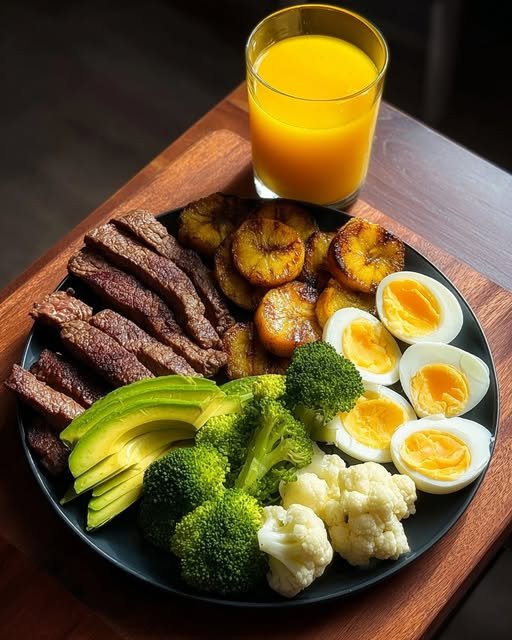
- Assemble the Power Plate: On a large plate, arrange the sliced steak, halved hard-boiled eggs, sliced avocado, cooked plantains, and steamed broccoli and cauliflower. If desired, sprinkle the avocado with a squeeze of lemon or lime juice to prevent browning and add a touch of brightness. Garnish with fresh parsley or cilantro and a pinch of red pepper flakes, if using.
- Serve Immediately: Enjoy your freshly prepared High-Protein Power Plate!
Cooking Tips and Variations
Achieving a perfect power plate is all about mastering each component. For the steak, always bring it to room temperature for about 30 minutes before cooking; this ensures more even cooking. Don’t overcrowd your pan when searing, as this will steam the meat instead of giving it a beautiful crust. Use a meat thermometer for precise doneness: 130-135°F for medium-rare, 135-140°F for medium. Resting the steak is non-negotiable; it allows the juices to redistribute, resulting in a more tender and flavorful bite. For the hard-boiled eggs, adding a teaspoon of baking soda to the boiling water can sometimes make them easier to peel, especially if the eggs are very fresh. When cooking plantains, make sure they are ripe (yellow with plenty of black spots) for the best natural sweetness and soft texture; green plantains are starchy and require different cooking methods. Don’t overcook your vegetables; they should retain a slight bite for optimal texture and nutrient preservation. A quick toss with a drizzle of olive oil, salt, and pepper after steaming can enhance their flavor.
This recipe is incredibly versatile and can be adapted to suit your preferences or dietary needs. For protein variations, consider using grilled chicken breast, baked salmon, or pan-seared shrimp instead of steak. If you’re vegetarian, grilled halloumi cheese, a hearty black bean burger patty, or extra-firm tofu could be excellent protein substitutes. For different healthy fats, you could add a sprinkle of toasted nuts or seeds (like pumpkin or sunflower) or a drizzle of tahini sauce. To switch up the carbohydrates, try roasted sweet potatoes, quinoa, brown rice, or even a small serving of roasted corn. The vegetable components are also highly customizable: asparagus, green beans, spinach, bell peppers, or zucchini would all be fantastic additions or substitutions. If you’re looking for a low-carb or keto-friendly option, simply omit the plantains and increase the portions of non-starchy vegetables and healthy fats, perhaps adding some extra avocado or a sprinkle of cheese. For a paleo version, this recipe is already largely compliant; just ensure any sauces or seasonings used don’t contain non-paleo ingredients. Feel free to experiment with different spice blends for the steak and vegetables, such as a smoky paprika rub or a zesty lemon-herb seasoning. A homemade chimichurri, pesto, or a simple vinaigrette can also elevate the entire dish.
Storage and Reheating
This High-Protein Power Plate is excellent for meal prepping, as many of its components store and reheat well. To store leftovers, allow all cooked components to cool completely to room temperature before packing. Place each component in separate airtight containers in the refrigerator. The sliced steak, cooked eggs, plantains, and steamed vegetables will keep fresh for 3-4 days. The avocado is best sliced fresh just before serving, as it tends to brown quickly once cut. If you must store pre-sliced avocado, squeeze a little lemon or lime juice over it and press plastic wrap directly onto the surface to minimize air exposure.
When reheating, it’s best to reheat components separately to maintain their optimal texture and flavor. For the steak, gently warm it in a skillet over medium-low heat with a tablespoon of water or broth to prevent it from drying out, or briefly microwave it until just warm. Overheating steak can make it tough. The plantains can be reheated in a dry skillet over medium heat until warmed through and slightly crisped, or in a microwave for 30-60 seconds. The steamed vegetables can be microwaved or quickly sautéed in a pan until heated. Hard-boiled eggs can be eaten cold or gently warmed in the microwave for a few seconds if preferred. Assemble your plate with fresh avocado after reheating. This careful approach to reheating will ensure your meal prep tastes almost as good as freshly cooked.
Frequently Asked Questions
Can I use a different cut of steak for this recipe?
Absolutely! While sirloin, flank, or ribeye are excellent choices for their flavor and tenderness, you can certainly use other cuts. New York strip, flat iron, or even a tenderloin would work wonderfully. Adjust cooking times based on the thickness and type of steak to achieve your desired doneness. Thinner cuts like skirt steak cook very quickly.
How can I make this recipe vegetarian or vegan?
To make this recipe vegetarian, replace the steak with grilled halloumi cheese, a firm plant-based protein patty, or extra-firm tofu that has been pressed and pan-fried or baked until crispy. For a vegan version, omit the steak and eggs. Instead, use a plant-based protein source like seasoned and baked tempeh, grilled portobello mushrooms, or a hearty portion of roasted chickpeas. Ensure any sauces or seasonings used are also vegan-friendly. The avocado, plantains, broccoli, and cauliflower are already vegan.
What if I don’t have plantains?
No problem! If plantains aren’t available or you prefer an alternative, roasted sweet potato cubes or slices are an excellent substitute. They offer a similar natural sweetness and provide complex carbohydrates. You could also use roasted regular potatoes, quinoa, or brown rice as your carbohydrate component. Another option is grilled corn on the cob or a small serving of black beans for a different flavor profile.
How can I prevent the avocado from browning if I’m meal prepping?
The best way to prevent avocado browning is to slice it fresh right before serving. However, if you need to prep it ahead, squeeze a generous amount of lemon or lime juice over the slices. Then, place the slices in an airtight container and press a piece of plastic wrap directly onto the surface of the avocado, removing as much air as possible before sealing the container. This limits oxygen exposure, which is what causes oxidation and browning. It might still brown slightly, but the lemon/lime juice will help significantly.