Instructions
- Prepare the Fish: Begin by thoroughly rinsing the whole Tilapia fish under cold running water, both inside and out. Pat them completely dry with paper towels; this step is crucial for achieving crispy skin and allowing the rub to adhere properly. Using a sharp knife, make 3-4 diagonal scores on both sides of each fish, cutting about 1/4 to 1/2 inch deep. These scores help the fish cook more evenly and allow the marinade to penetrate deeper, infusing every part with flavor.
- Make the Rub: In a small bowl, combine the 3 tablespoons of olive oil, smoked paprika, garlic powder, onion powder, chili powder (or cayenne pepper), ground cumin, dried oregano, 1 teaspoon of sea salt, 1/2 teaspoon of black pepper, and the optional 1/2 teaspoon of brown sugar. Mix all these ingredients thoroughly until they form a thick, cohesive paste. The brown sugar, if used, will aid in caramelization and add a subtle sweetness that balances the savory and spicy notes.
- Marinate: Generously apply the prepared spice rub all over each fish. Make sure to rub it into the scored cuts, inside the cavity, and over the entire surface of the skin. Don’t be shy – a good coating is key to a flavorful result. Once coated, place the fish on a plate or in a shallow dish, cover loosely, and let it marinate at room temperature for at least 30 minutes. If you have more time, you can refrigerate it for up to 1 hour, but allow it to come back to room temperature for about 15-20 minutes before grilling for best results.
- Prepare the Relish: While the fish is marinating, prepare the vibrant relish. In a separate small bowl, combine the finely diced red onion, the finely diced fresh red chilies (adjust the quantity based on your preference for heat), and the fresh lime juice. Add a small pinch of salt and stir everything together. This relish will provide a fresh, tangy, and spicy contrast to the rich grilled fish, and its acidity will help “cook” the diced red onion slightly, mellowing its raw bite.
- Preheat Grill: Preheat your grill to medium-high heat (around 400-450°F or 200-230°C). It’s essential to have a hot grill to prevent sticking and achieve those beautiful char marks. Once hot, use a stiff wire brush to thoroughly clean the grill grates. After cleaning, lightly oil the grates by dipping a wadded paper towel in cooking oil (or using a cooking spray) and carefully wiping it over the hot grates with tongs. This creates a non-stick surface, which is crucial for grilling delicate fish.
- Grill the Fish: Carefully place the marinated Tilapia directly onto the hot, oiled grill grates. Close the lid and cook for 5-7 minutes per side. Resist the urge to move or flip the fish too soon, as this can cause it to stick and break apart. Allow it to cook undisturbed until the skin develops a beautiful char and easily releases from the grates. Once it’s ready, gently flip the fish using a wide spatula and cook for another 5-7 minutes on the second side, or until the internal temperature reaches 145°F (63°C) and the flesh is opaque and flakes easily with a fork.
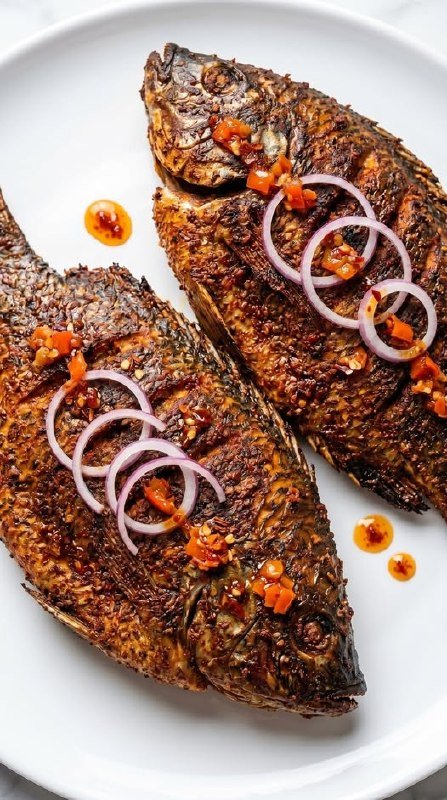
- Serve: Once cooked, carefully transfer the Grilled Tilapia from the grill to a serving platter. Garnish generously with the reserved thinly sliced red onion rings, artfully arranging them around and on top of the fish. Spoon the prepared spicy red onion relish over the fish. If desired, drizzle a little sweet chili sauce or chili oil over the top for an extra layer of glossy color and a subtle kick. Serve immediately and enjoy your flavorful feast!
Cooking Tips and Variations
Choosing Your Fish: Always opt for fresh whole Tilapia. Look for fish with clear, bright, bulging eyes, not sunken or cloudy ones. The skin should be shiny and moist, and the flesh should be firm to the touch, springing back when pressed. Avoid any fish with a strong “fishy” odor; fresh fish should smell like clean ocean water, or have a very mild scent. If whole Tilapia isn’t available, you can use thick Tilapia fillets, adjusting cooking time to about 3-4 minutes per side, but ensure the skin is on for grilling to help prevent sticking and add flavor.
Scoring for Success: Scoring the fish isn’t just for aesthetics; it serves several practical purposes. The cuts allow the marinade to penetrate deeper into the flesh, enhancing the overall flavor. They also help the fish cook more evenly, especially thicker parts, and prevent the skin from shrinking and tearing during grilling, ensuring a beautifully intact presentation.
Preventing Sticking: This is perhaps the most common challenge when grilling fish. The key is a clean, hot, and well-oiled grill. Ensure your grates are spotless before preheating. Once hot, oil them thoroughly right before placing the fish down. Don’t flip the fish too early; wait until a good crust has formed and the fish naturally releases from the grates. If it’s sticking, it’s not ready to be flipped.
Doneness: The best way to tell if your fish is perfectly cooked is by its internal temperature (145°F or 63°C). If you don’t have a thermometer, visual cues are reliable: the flesh should be opaque throughout, and it should flake easily with a fork at its thickest part. Be careful not to overcook, as this will result in dry, tough fish.
Alternative Cooking Methods: No grill? No problem! You can achieve delicious results using other methods. For pan-frying, heat 1-2 tablespoons of oil in a large, oven-safe skillet over medium-high heat. Cook the fish for 5-7 minutes per side, or until golden brown and cooked through. For baking, preheat your oven to 400°F (200°C). Place the marinated fish on a parchment-lined baking sheet and bake for 15-20 minutes, or until cooked through and flaky. For a broiler, place fish on a broiler-safe pan and broil 6-8 inches from heat for 8-12 minutes, flipping once, until cooked.
Spice Rub Variations: Feel free to customize the spice rub to your liking. For an extra smoky flavor, add a pinch of chipotle powder. For a more herbaceous profile, incorporate dried thyme or rosemary. If you prefer less heat, reduce the chili powder and use sweet paprika instead of smoked. A dash of cayenne pepper can amp up the heat significantly.
Relish Customization: The red onion relish is wonderfully adaptable. For a milder version, use less chili or opt for finely diced bell pepper instead. For an added layer of flavor, you can briefly pickle the red onions in lime juice and a pinch of sugar for 15-20 minutes before dicing. A touch of fresh cilantro or parsley can also be added for extra freshness and color. For a sweeter and tangier relish, consider adding a teaspoon of honey or agave nectar to the lime juice mixture.
Marinade Time: While 30 minutes is sufficient for flavor, marinating for up to an hour will allow the flavors to deepen even further. Avoid marinating for much longer than an hour, especially with acidic ingredients like lime juice, as it can start to “cook” the delicate fish and change its texture.
Grill Temperature Control: Maintaining a consistent medium-high heat is crucial. If your grill is too hot, the outside will burn before the inside cooks. If it’s too cool, the fish will stick and take too long to develop a crust. Use a grill thermometer if available, and adjust burners as needed to maintain the target temperature.
Resting the Fish: Like meat, fish benefits from a brief rest after cooking. Once off the grill, let the Tilapia rest for 3-5 minutes before serving. This allows the juices to redistribute throughout the flesh, ensuring a moister and more tender result.
Side Dish Pairings: This vibrant Grilled Tilapia pairs beautifully with a variety of sides. Consider serving it with fluffy white rice, brown rice, or even a flavorful jollof rice for a more substantial meal. Roasted vegetables like asparagus, broccoli, or bell peppers complement the smoky flavors. A simple fresh salad with a light vinaigrette provides a refreshing contrast. For a touch of sweetness and starch, fried or grilled plantains are an excellent choice. Corn on the cob, either grilled or boiled, also makes a classic and delicious accompaniment.
Presentation Matters: The visual appeal of this dish is a big part of its charm. Take a moment to artfully arrange the grilled fish on a platter, placing the red onion rings and relish carefully. The optional drizzle of sweet chili sauce or chili oil can add a professional, glossy finish and an extra pop of color. A sprinkle of fresh cilantro or parsley can also enhance the presentation.
Storage and Reheating
Storage: Leftover grilled tilapia should be stored in an airtight container in the refrigerator within two hours of cooking. It will stay fresh for up to 2-3 days. While you can freeze cooked tilapia, it’s generally not recommended as the texture can become mushy and dry upon thawing and reheating. If you must freeze, wrap individual portions tightly in plastic wrap, then place in a freezer-safe bag or container for up to 1 month. Thaw overnight in the refrigerator before reheating.
Reheating: The key to reheating grilled fish is to do so gently to prevent it from drying out. Avoid microwaving if possible, as it can make the fish tough and rubbery.
Oven Method: Preheat your oven to 275°F (135°C). Place the tilapia on a baking sheet, cover loosely with foil to retain moisture, and reheat for 10-15 minutes, or until just warmed through.
Skillet Method: Heat a small amount of oil or butter in a non-stick skillet over medium-low heat. Add the tilapia and cover. Reheat gently for 5-7 minutes, flipping once, until warmed through. A splash of water or broth can be added to the pan to create steam and prevent drying.
Air Fryer Method: Preheat your air fryer to 300°F (150°C). Place the tilapia in the air fryer basket in a single layer. Cook for 5-7 minutes, checking halfway, until warmed through. This method can help retain some crispiness.
Frequently Asked Questions
Can I use fish fillets instead of whole fish for this recipe?
Yes, absolutely! While whole fish makes for a stunning presentation and often retains more moisture, Tilapia fillets work beautifully with this recipe. If using fillets, ensure they are skin-on for grilling to help prevent sticking and add flavor. Adjust the grilling time to about 3-4 minutes per side, or until the fillets are opaque and flake easily with a fork.
How do I prevent the fish from sticking to the grill grates?
Preventing fish from sticking is crucial for perfect grilled results. The most important steps are to ensure your grill grates are thoroughly clean before heating, then preheat the grill to medium-high heat (around 400-450°F). Once hot, oil the grates generously right before placing the fish down. Use a wadded paper towel dipped in cooking oil and tongs to wipe the hot grates. Additionally, resist the urge to move or flip the fish too soon; wait until a good crust has formed, and the fish naturally releases from the grates.
What if I don’t have smoked paprika? Can I substitute it?
Smoked paprika contributes a unique, deep, smoky flavor that is a key component of this recipe. If you don’t have it, you can substitute regular sweet paprika, but the smoky depth will be missed. To compensate slightly, you could add a tiny pinch of liquid smoke to your marinade (use very sparingly, as it’s potent) or opt for a different chili powder that has smoky notes. However, for the authentic “smoky” flavor promised in the title, smoked paprika is highly recommended.
Can I prepare the relish ahead of time?
Yes, the spicy red onion relish can be prepared ahead of time. You can mix all the ingredients (diced red onion, chilies, lime juice, and salt) and store it in an airtight container in the refrigerator for up to 24 hours. The lime juice will slightly “pickle” the onions, which can actually enhance their flavor and mellow their raw bite. Just give it a good stir before serving.