Instructions
- Prepare the Chicken Quarters: Pat the chicken quarters dry with paper towels. In a small bowl, combine 2 tbsp olive oil, smoked paprika, garlic powder, onion powder, dried oregano, cayenne pepper (if using), 1 tsp salt, and 1/2 tsp black pepper. Rub the seasoning mixture generously all over the chicken quarters, ensuring they are well coated. For best results, let the chicken marinate in the refrigerator for at least 30 minutes, or up to 4 hours.
- Preheat the Grill: Preheat your grill to medium-high heat (around 400-425°F or 200-220°C). Clean the grill grates thoroughly and lightly oil them to prevent sticking.
- Grill the Chicken: Place the chicken quarters skin-side down on the preheated grill. Close the lid and cook for 5-7 minutes, until you have nice grill marks and the skin is starting to crisp. Flip the chicken and reduce the heat to medium-low (around 325-350°F or 160-175°C). Continue grilling, flipping every 8-10 minutes, for a total cooking time of 35-45 minutes, or until an internal thermometer inserted into the thickest part of the thigh (avoiding the bone) reads 165°F (74°C). If the skin starts to burn, move the chicken to a cooler part of the grill. Once cooked, transfer the chicken to a cutting board, tent loosely with foil, and let rest for 10 minutes before serving.
- Prepare the Fries (Soaking): While the chicken is grilling, prepare the potatoes. After cutting, place the potato fries in a large bowl and cover them with cold water. Let them soak for at least 30 minutes (or up to a few hours in the refrigerator). This helps remove excess starch, leading to crispier fries. Drain the potatoes thoroughly and pat them completely dry with paper towels or a clean kitchen towel. This step is crucial for crispy fries.
- First Fry (Blanching): Heat 8 cups of vegetable or peanut oil in a large, heavy-bottomed pot or Dutch oven over medium-high heat to 325°F (160°C). Work in batches to avoid overcrowding the pot, which can lower the oil temperature and result in soggy fries. Carefully add a batch of dried fries to the hot oil. Fry for 5-7 minutes, or until the fries are cooked through but still pale and soft. They should not be browned at this stage. Remove the fries with a slotted spoon or spider and transfer them to a wire rack set over a baking sheet to drain. Repeat with the remaining batches. Let the blanched fries cool for at least 15 minutes, or up to several hours at room temperature.
- Second Fry (Crisping): Increase the oil temperature to 375°F (190°C). Carefully return the blanched fries to the hot oil in batches. Fry for 2-4 minutes, or until golden brown and crispy. Remove with a slotted spoon and transfer back to the wire rack. Immediately season with 1 tsp salt, 1/2 tsp black pepper, 1/4 tsp garlic powder, and 1/4 tsp paprika, tossing gently to coat.
- Prepare the Fresh Tomato Salad: In a medium bowl, combine the diced tomatoes, thinly sliced red onion, and chopped fresh parsley. In a small bowl, whisk together 2 tbsp olive oil, 1 tbsp red wine vinegar, 1/4 tsp salt, and 1/8 tsp black pepper. Pour the dressing over the salad ingredients and toss gently to combine. Let sit for a few minutes for the flavors to meld.
- Prepare the Creamy Herb Dip: In a small bowl, combine sour cream, mayonnaise, finely chopped fresh dill, finely chopped fresh chives, minced garlic, lemon juice, 1/4 tsp salt, and 1/8 tsp black pepper. Stir well until all ingredients are thoroughly combined and the dip is smooth. Taste and adjust seasoning as needed. For best flavor, cover and refrigerate for at least 15 minutes to allow the flavors to meld.
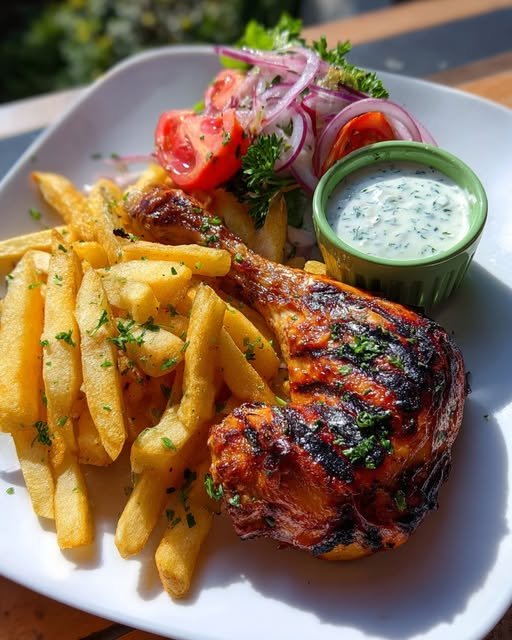
- Assemble and Serve: Arrange the rested grilled chicken quarters on plates. Serve immediately with a generous portion of crispy fries, a side of the fresh tomato salad, and a dollop of the creamy herb dip. Garnish with extra fresh herbs if desired.
Cooking Tips and Variations
Chicken Tips:
- Internal Temperature is Key: Always use a meat thermometer to ensure the chicken reaches 165°F (74°C). This guarantees safety and prevents overcooking.
- Prevent Sticking: Make sure your grill grates are clean and well-oiled before placing the chicken down.
- Flavor Boost: For an extra layer of flavor, consider brining the chicken quarters for a few hours before marinating. A simple brine of water, salt, sugar, and bay leaves works wonders for moisture and seasoning.
- Alternative Cooking Method: If you don’t have a grill, you can roast the chicken quarters in an oven preheated to 400°F (200°C) for 45-60 minutes, or until they reach 165°F (74°C) internal temperature, flipping halfway. You can finish them under the broiler for crispy skin.
Fries Tips:
- Soaking is Non-Negotiable: Don’t skip the cold water soak! It removes starch, which is the secret to truly crispy fries. Pat them bone-dry before frying.
- Temperature Control: Use a kitchen thermometer to monitor your oil temperature. Maintaining the correct temperatures for both fries (325°F for the first fry, 375°F for the second) is crucial for texture.
- Don’t Overcrowd: Frying in small batches is essential. Overcrowding drops the oil temperature, leading to soggy, greasy fries.
- Alternative Fries: For a healthier option, you can bake your fries. Toss the dried potato sticks with 2 tbsp olive oil and seasonings. Spread them in a single layer on a baking sheet lined with parchment paper. Bake at 425°F (220°C) for 25-35 minutes, flipping halfway, until golden and crispy.
Salad Tips:
- Ripe Tomatoes: The success of this salad hinges on ripe, flavorful tomatoes. Use in-season tomatoes for the best taste.
- Reduce Onion Sharpness: If you find red onion too pungent, slice it thinly and soak it in a bowl of cold water for 10-15 minutes before draining and adding to the salad.
- Herb Variations: Feel free to experiment with other fresh herbs like basil, mint, or even a touch of fresh oregano in your tomato salad.
Dip Tips:
- Make Ahead: The creamy herb dip tastes even better if made a few hours in advance, allowing the flavors to meld and deepen in the refrigerator.
- Base Variations: For a lighter dip, use Greek yogurt instead of or in addition to sour cream and mayonnaise.
- Herb Combinations: Don’t be limited to dill and chives. Parsley, cilantro, tarragon, or even a tiny amount of finely minced rosemary can be delicious additions.
- Garlic Intensity: For a milder garlic flavor, use garlic powder instead of fresh minced garlic. For a bolder taste, you can add an extra clove.
Storage and Reheating
Chicken Quarters:
- Storage: Leftover grilled chicken quarters should be stored in an airtight container in the refrigerator for up to 3-4 days.
- Reheating: For best results, reheat chicken in an oven or toaster oven. Preheat to 350°F (175°C). Place chicken on a baking sheet and heat for 15-20 minutes, or until warmed through. You can also microwave, but the skin may not be as crispy.
Crispy Fries:
- Storage: Cooked fries are best eaten fresh. If you have leftovers, store them in an airtight container in the refrigerator for up to 1-2 days.
- Reheating: Reheating fries to their original crispness can be challenging. The best method is to spread them in a single layer on a baking sheet and bake at 400°F (200°C) for 5-10 minutes, or until crispy. An air fryer also works well at 375°F (190°C) for 3-5 minutes. Microwaving is not recommended as it will make them soggy.
Fresh Tomato Salad:
- Storage: This salad is best enjoyed fresh. If you have leftovers, store them in an airtight container in the refrigerator for up to 1-2 days. The tomatoes may release more liquid, making it a bit watery.
- Reheating: Do not reheat the salad. Serve chilled or at room temperature.
Creamy Herb Dip:
- Storage: Store the creamy herb dip in an airtight container in the refrigerator for up to 3-5 days.
- Reheating: Do not reheat the dip. Serve chilled.
Frequently Asked Questions
Can I prepare any components of this meal ahead of time?
Absolutely! The chicken can be seasoned and marinated for several hours or even overnight in the refrigerator. The potatoes for the fries can be cut and soaked in cold water in the fridge for up to 24 hours (just remember to dry them thoroughly before frying). The creamy herb dip is best made ahead of time, at least 30 minutes, to allow the flavors to meld, and it can be stored in the fridge for several days. The tomato salad is best assembled just before serving, although you can chop the ingredients a few hours in advance.
What’s the best way to ensure my grilled chicken is juicy and not dry?
Several factors contribute to juicy grilled chicken. First, don’t skip the marinating step; the olive oil and seasonings help tenderize and flavor the meat. Second, start with higher heat to get a good sear and grill marks, then reduce the heat to medium-low to allow the chicken to cook through slowly without drying out the exterior. Most importantly, use a meat thermometer to cook the chicken to precisely 165°F (74°C) internal temperature and no higher. Finally, always let the chicken rest for 10 minutes after grilling; this allows the juices to redistribute throughout the meat.
My homemade fries aren’t as crispy as I’d like. What am I doing wrong?
The most common reasons for non-crispy fries are not soaking the potatoes, not drying them thoroughly, or overcrowding the pot during frying. Always soak your cut potatoes in cold water for at least 30 minutes to remove excess starch, then pat them completely dry. Fry in small batches to maintain a consistent oil temperature, and ensure you’re using the two-stage frying method: a lower temperature (325°F/160°C) first fry to cook through, followed by a higher temperature (375°F/190°C) second fry to crisp and brown them. Don’t forget to season immediately after the second fry!
Can I substitute the chicken quarters with other cuts of chicken?
Yes, you can. Chicken thighs or drumsticks would work very well with similar grilling times, though you might need to adjust slightly. Chicken breasts can also be used, but they are leaner and can dry out more easily. If using breasts, consider pounding them to an even thickness for uniform cooking, and reduce grilling time to prevent overcooking. Always use a meat thermometer to ensure proper doneness for any cut.