Instructions
- Preheat your oven to 400°F (200°C).
- Prepare the potatoes: In a large bowl, toss the halved or quartered potatoes with 1 tablespoon olive oil, 0.5 teaspoon dried rosemary or thyme, 0.5 teaspoon salt, and 0.25 teaspoon black pepper until evenly coated.
- Spread the seasoned potatoes in a single layer on a large baking sheet. Ensure they are not overcrowded to allow for optimal browning and crisping.
- Roast the potatoes in the preheated oven for 25-35 minutes, or until they are golden brown, tender on the inside, and crispy on the outside. Flip them halfway through cooking for even browning.
- While the potatoes are roasting, prepare the salmon glaze: In a small bowl, whisk together the soy sauce, honey or maple syrup, rice vinegar, grated ginger, minced garlic, and optional sesame oil until well combined. Set aside.
- Pat the salmon fillets dry with paper towels. Season both sides lightly with salt and pepper.
- Heat 1 tablespoon of olive oil in a large oven-safe skillet (cast iron works great) over medium-high heat. Once hot, place the salmon fillets skin-side down (if applicable) in the skillet.
- Sear the salmon for 3-4 minutes until the skin is crispy and golden brown.
- Flip the salmon fillets. Brush about half of the prepared glaze generously over the top of the salmon.
- Transfer the skillet to the preheated oven (if using an oven-safe skillet) or transfer the salmon to a baking sheet. Bake for 8-12 minutes, or until the salmon is cooked through and flakes easily with a fork. During the last 2-3 minutes of baking, brush the remaining glaze over the salmon. If not using an oven-safe skillet, you can finish cooking the salmon on the stovetop over medium heat, brushing with glaze and covering until cooked through.
- While the salmon finishes cooking, prepare the garlic spinach: In a large pan or skillet, heat 1 tablespoon of olive oil over medium heat.
- Add the 3 minced garlic cloves to the pan and sauté for about 30 seconds until fragrant, being careful not to burn it.
- Add the fresh spinach to the pan in batches if necessary, stirring constantly. Cook until the spinach wilts down, which usually takes 2-4 minutes.
- Season the wilted spinach with 0.25 teaspoon salt and 0.125 teaspoon black pepper. Remove from heat.
- Once the salmon and potatoes are done, carefully remove them from the oven.
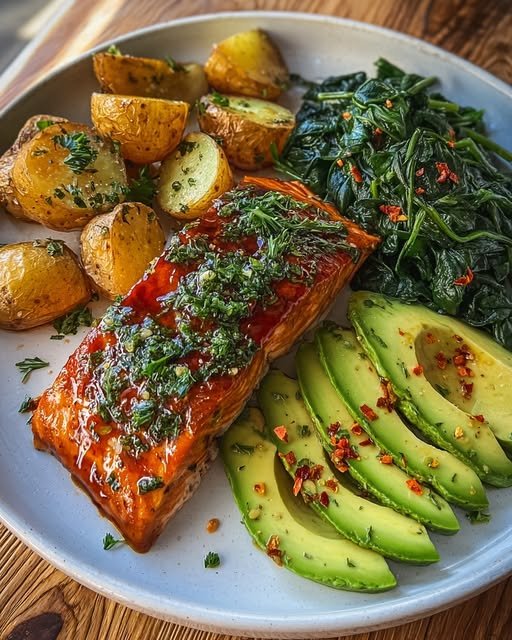
- To assemble the dish, arrange the glazed salmon, roasted potatoes, and garlic spinach on individual plates.
- Slice the ripe avocado and artfully arrange the slices alongside the other components.
- Garnish with fresh chopped parsley or dill and a sprinkle of red pepper flakes, if desired, for an extra pop of color and a hint of heat. Serve immediately and enjoy!
Cooking Tips and Variations
For the crispiest roasted potatoes, ensure your oven is fully preheated and don’t overcrowd the baking sheet. Give them space to breathe and roast, otherwise, they will steam instead of crisp. Flipping them halfway through cooking is crucial for even browning. If you like a little extra flavor, consider adding a pinch of smoked paprika or garlic powder to your potato seasoning.
When preparing the salmon, patting the fillets dry before searing is a key step for achieving that beautiful, crispy skin. If you prefer a less sweet glaze, reduce the amount of honey or maple syrup and consider adding a touch more rice vinegar or a squeeze of lime juice for brightness. For a spicier kick, a dash of sriracha or extra red pepper flakes can be added to the glaze. If you don’t have fresh ginger, 0.5 teaspoon of ground ginger can be used as a substitute, though fresh offers a more vibrant flavor.
Don’t overcook the spinach! It wilts quickly, and overcooking can make it mushy and diminish its vibrant color and nutrient content. Sautéing it just until it’s tender-crisp is ideal. For an extra layer of flavor, a squeeze of fresh lemon juice over the cooked spinach just before serving can brighten the dish beautifully. You can also add a pinch of nutmeg to the spinach for a classic touch.
This recipe is incredibly adaptable. Feel free to swap out the spinach for other quick-cooking greens like kale or Swiss chard, just be aware they might need a minute or two longer to cook down. Instead of potatoes, you could roast other root vegetables like sweet potatoes or carrots. For a different texture, serve the salmon and spinach over a bed of fluffy quinoa or brown rice. If you’re not a fan of avocado, a dollop of Greek yogurt or a fresh tomato salsa could offer a similar creamy or fresh contrast.
Experiment with different herbs! While parsley and dill are classic choices for salmon, fresh cilantro or chives can also offer a delightful aromatic finish. For a truly hands-off approach to the salmon, you can bake it entirely in the oven. Simply bake at 400°F (200°C) for 12-15 minutes, brushing with the glaze during the last 5 minutes of cooking. This is particularly useful if you don’t have an oven-safe skillet or prefer not to pan-sear.
Storage and Reheating
To store any leftovers of the Glazed Salmon with Garlic Spinach, Roasted Potatoes & Avocado, it’s best to allow all components to cool completely to room temperature before refrigerating. This prevents condensation and helps maintain the quality of the food. Once cooled, transfer the salmon, potatoes, and spinach to separate airtight containers. The avocado is best consumed fresh, as it tends to brown and soften significantly when stored, but if you must store it, squeeze a little lemon juice over it before placing it in an airtight container with minimal air exposure.
Properly stored, the salmon, potatoes, and spinach will remain fresh in the refrigerator for up to 2-3 days. While the flavors may meld a bit more, the quality will still be good. Freezing is generally not recommended for this entire dish, especially the spinach and potatoes, as their texture can become unappealingly mushy upon thawing. Cooked salmon can be frozen for up to 1 month, but it’s best to consume it fresh for optimal taste and texture.
When it comes to reheating, gentle methods are key to preserve the texture and prevent the salmon from drying out. For the salmon, the best way to reheat is in the oven. Preheat your oven to 275°F (135°C). Place the salmon fillet on a baking sheet, cover it loosely with foil, and heat for about 10-15 minutes, or until just warmed through. Be careful not to overheat it, as this can make the salmon dry and tough.
The roasted potatoes can be reheated in the oven or an air fryer for best results. Place them on a baking sheet or in the air fryer basket at 375°F (190°C) for 5-10 minutes, or until crispy and heated through. This will help them regain some of their original crispness. Reheating them in the microwave will make them soft. The garlic spinach can be gently reheated in a skillet over medium-low heat for a few minutes, stirring occasionally, or quickly in the microwave. Avoid reheating the spinach too vigorously, as it can quickly become overcooked and watery. If you stored the avocado, it’s best to add fresh avocado to your reheated meal for the best taste and texture.
Frequently Asked Questions
Can I prepare the salmon glaze ahead of time?
Absolutely! The salmon glaze can be prepared up to 2-3 days in advance. Simply whisk all the glaze ingredients together and store it in an airtight container in the refrigerator. This can be a great time-saver on busy weeknights, allowing you to quickly brush it onto the salmon just before or during cooking.
What’s the best way to ensure my salmon doesn’t dry out?
The key to moist, flaky salmon is not to overcook it. Salmon is done when it reaches an internal temperature of 145°F (63°C) or when it flakes easily with a fork. Using a meat thermometer is the most accurate way to check. Additionally, searing it first to lock in juices and then finishing it in the oven, or baking it covered loosely with foil, helps retain moisture.
Can I use frozen spinach instead of fresh?
Yes, you can use frozen spinach, but you’ll need to adjust the preparation. Thaw the frozen spinach completely and then squeeze out as much excess water as possible. Frozen spinach contains a lot of moisture, and failing to remove it can make your dish watery. Once squeezed dry, you can proceed with sautéing it with garlic as directed in the recipe.
Are there any other vegetables I can roast with the potatoes?
Definitely! Roasting other vegetables alongside the potatoes is a fantastic way to add more nutrients and variety. Good options include chopped bell peppers, red onion wedges, broccoli florets, or even Brussels sprouts. Just ensure they are cut into similar-sized pieces to the potatoes for even cooking, and they might need to go in slightly later if they cook faster than potatoes.