Instructions
- Preheat your oven to 400°F (200°C). Line a large baking sheet with parchment paper for easy cleanup.
- Prepare the potatoes: Wash and thoroughly dry the potatoes. Cut them into uniform bite-sized pieces (quarters for larger baby potatoes, halves for smaller ones) to ensure even cooking.
- Season the potatoes: In a large bowl, toss the cut potatoes with 1 tablespoon of olive oil, 1 teaspoon of chopped fresh thyme, 0.5 teaspoon of dried oregano, 0.5 teaspoon of salt, and 0.25 teaspoon of black pepper. Spread the seasoned potatoes in a single layer on the prepared baking sheet, ensuring they are not overcrowded.
- Roast the potatoes: Place the baking sheet with the potatoes in the preheated oven. Roast for 25-30 minutes, or until the potatoes are golden brown and tender when pierced with a fork, flipping them halfway through to ensure even browning.
- Prepare the salmon: While the potatoes are roasting, pat the salmon fillets dry with paper towels. This helps achieve a nice crust.
- Season the salmon: In a small bowl, combine 2 cloves of minced garlic, 1 tablespoon of chopped fresh parsley, 0.5 teaspoon of salt, and 0.25 teaspoon of black pepper. Rub both sides of each salmon fillet with this garlic herb mixture.
- Cook the salmon (pan-searing method): Heat 1 tablespoon of olive oil in a large oven-safe skillet (preferably cast iron) over medium-high heat. Once the oil is shimmering, carefully place the salmon fillets skin-side down (if skin-on) or presentation-side down into the hot skillet. Sear for 3-4 minutes until a beautiful golden-brown crust forms.
- Flip the salmon: Carefully flip the salmon fillets. If your salmon fillets are thicker (over 1 inch), transfer the skillet to the preheated oven with the potatoes for the remaining cooking time, about 5-8 minutes, or until the internal temperature reaches 145°F (63°C). If your fillets are thinner, you can finish cooking them on the stovetop for another 3-5 minutes, reducing the heat to medium-low.
- Sauté the vegetables (optional): While the salmon finishes cooking, or immediately after removing the salmon from the skillet, add a little extra olive oil to a separate pan or the same skillet. Add the remaining 2 cloves of minced garlic, the zucchini half-moons, and halved cherry tomatoes. Sauté over medium heat for 5-7 minutes, or until the zucchini is tender-crisp and the tomatoes have slightly softened, stirring occasionally. Season with a pinch of salt and pepper.
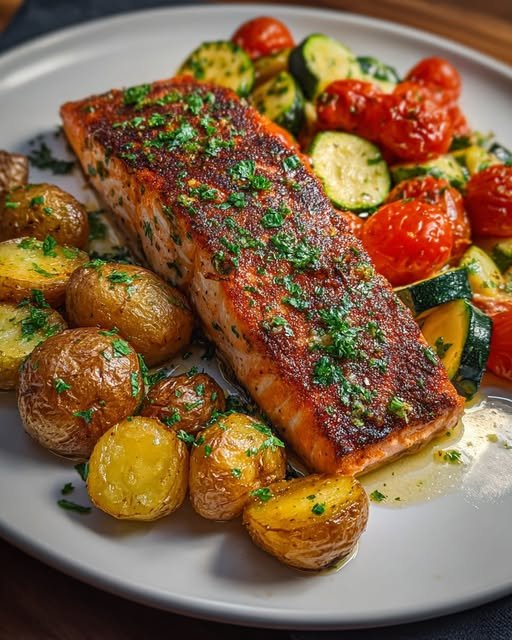
- Assemble and serve: Once the potatoes are crispy and the salmon is cooked through, remove everything from the oven. Arrange the roasted potatoes, salmon fillets, and sautéed vegetables on plates.
- Garnish and serve: Garnish with the remaining fresh chopped parsley. A squeeze of fresh lemon juice over the salmon and vegetables before serving adds a wonderful bright finish. Serve immediately and enjoy!
Cooking Tips and Variations
To achieve truly crispy roasted potatoes, ensure your potatoes are completely dry before tossing them in oil and seasonings. Moisture is the enemy of crispiness! Also, avoid overcrowding the baking sheet; if the potatoes are too close together, they’ll steam instead of roast. Use two baking sheets if necessary to give them enough space. For an extra layer of flavor, you can parboil the potatoes for about 5-7 minutes before roasting; this helps create a fluffier interior and a crispier exterior.
The beauty of this dish lies in its versatility. Feel free to experiment with different herbs based on your preference or what you have on hand. Rosemary and dill are excellent choices that pair wonderfully with salmon. For a touch of heat, a pinch of red pepper flakes can be added to the garlic herb mixture. If you prefer a different cooking method for the salmon, baking is a great alternative. Simply place the seasoned salmon on a separate baking sheet or alongside the potatoes during the last 15-20 minutes of roasting, depending on fillet thickness, until it reaches an internal temperature of 145°F (63°C). Grilling the salmon is another fantastic option, imparting a smoky flavor that complements the dish beautifully.
When selecting salmon, look for fillets that are firm, moist, and have a vibrant color. Both wild-caught and farmed salmon work well, with wild-caught often having a richer flavor. For the potatoes, baby potatoes or small red or yellow potatoes are ideal as their size makes them perfect for roasting without needing extensive chopping. Don’t be afraid to add other vegetables to your roasting pan or sauté alongside the zucchini and tomatoes; asparagus, bell peppers, or broccoli florets would all be delicious additions, adding more color and nutrients to your meal. Remember to cut all vegetables to a similar size to ensure they cook evenly.
Another tip for perfectly cooked salmon is to use an instant-read thermometer. Insert it into the thickest part of the fillet; once it reads 145°F (63°C), your salmon is done. Overcooked salmon can be dry and unappealing, so precise timing or temperature checking is key. If you’re using skin-on salmon, searing it skin-side down first helps to render the fat and create a delicious, crispy skin, which many find to be a delightful textural contrast.
Storage and Reheating
To store any leftover Garlic Herb Salmon with Roasted Potatoes, allow the dish to cool completely to room temperature. Once cooled, transfer the salmon, potatoes, and vegetables to an airtight container. Refrigerate promptly within two hours of cooking. Properly stored, the leftovers will remain fresh and delicious for up to 2-3 days in the refrigerator. It’s always best to consume seafood leftovers sooner rather than later for optimal taste and safety.
When it comes to reheating, the goal is to warm the food through without overcooking the salmon or making the potatoes soggy. For best results, especially with the salmon, avoid using a microwave if possible, as it can dry out the fish and make the potatoes rubbery. The preferred method for reheating is in the oven or an air fryer.
To reheat in the oven, preheat your oven to 300°F (150°C). Place the salmon fillets, potatoes, and vegetables on a baking sheet, ideally in a single layer. You can lightly tent the salmon with foil to help retain moisture. Reheat for about 10-15 minutes, or until everything is warmed through. The lower temperature helps to gently reheat the salmon without drying it out, and the potatoes should crisp up nicely.
An air fryer is another excellent option for reheating, particularly for the potatoes and vegetables, as it can help restore some of their crispiness. Place the potatoes and vegetables in the air fryer basket and reheat at 350°F (175°C) for 5-7 minutes, shaking the basket halfway through. For the salmon, you can add it for the last 3-4 minutes of reheating, or gently warm it in a skillet over low heat with a splash of water or broth to prevent drying. Always ensure food is piping hot (165°F / 74°C internal temperature) before serving.
Frequently Asked Questions
Can I prepare any components of this dish in advance?
Yes, you can definitely do some prep work ahead of time! The potatoes can be washed, cut, and even seasoned a few hours in advance, then stored in the refrigerator. The garlic and herbs can be minced and chopped and kept in an airtight container. However, it’s best to season the salmon just before cooking, as salt can draw moisture out of the fish if left on for too long, potentially affecting its texture.
What kind of salmon is best for this recipe?
Any type of salmon fillet will work well for this recipe. Sockeye, Coho, and Atlantic salmon are all popular choices. Sockeye tends to be leaner with a stronger flavor, while Atlantic and Coho are fattier and have a milder taste. Choose fillets that are about 1-inch thick for even cooking. You can use skin-on or skinless; skin-on often provides a crispier texture if pan-seared properly.
Can I make this recipe dairy-free or gluten-free?
Absolutely! This recipe is naturally gluten-free as long as you don’t add any gluten-containing ingredients (which are not present in the original recipe). To make it dairy-free, simply ensure you are using olive oil for cooking and not butter. The recipe as written already uses olive oil, so it’s inherently dairy-free. This makes it a fantastic option for those with dietary restrictions.
How do I know when the salmon is perfectly cooked?
The best way to tell if salmon is perfectly cooked is by using an instant-read thermometer. Insert it into the thickest part of the fillet; the target internal temperature is 145°F (63°C). Visually, cooked salmon will flake easily with a fork and its flesh will turn from translucent to opaque. Be careful not to overcook it, as salmon can dry out quickly.