Instructions
- Preheat your oven to 400°F (200°C). Line two large baking sheets with parchment paper for easy cleanup.
- Prepare the Crispy Potatoes: In a large bowl, toss the cubed potatoes with 2 tablespoons of olive oil, 1/2 teaspoon salt, 1/4 teaspoon black pepper, and optional paprika. Spread the potatoes in a single layer on one of the prepared baking sheets, ensuring they are not overcrowded. Roast for 20 minutes.
- While the potatoes are roasting, prepare the salmon and asparagus.
- Prepare the Garlic Herb Salmon: In a small bowl, combine 2 tablespoons olive oil, minced garlic, chopped parsley, chopped thyme, dried oregano, 1/4 teaspoon black pepper, and 1/4 teaspoon salt. Stir well to create a fragrant herb mixture.
- Pat the salmon fillets dry with paper towels. Place them on the second prepared baking sheet. Spoon the garlic herb mixture evenly over the top of each salmon fillet.
- Prepare the Roasted Asparagus: In a medium bowl, toss the trimmed asparagus spears with 1 tablespoon olive oil, 1/4 teaspoon salt, and 1/8 teaspoon black pepper.
- After the potatoes have roasted for 20 minutes, carefully remove the baking sheet from the oven. Gently flip the potatoes to ensure even browning.
- Add the seasoned asparagus to the same baking sheet as the potatoes, arranging them in a single layer. Return the baking sheet with potatoes and asparagus to the oven.
- Place the baking sheet with the salmon fillets in the oven alongside the potatoes and asparagus. Continue to roast all three components for another 12-15 minutes, or until the salmon is cooked through (it should flake easily with a fork and reach an internal temperature of 145°F/63°C), the potatoes are golden brown and crispy, and the asparagus is tender-crisp. Cooking times may vary depending on the thickness of your salmon and the size of your potato cubes.
- While everything is roasting, prepare the Avocado Salad. In a medium bowl, combine the diced avocado, mixed greens, thinly sliced red onion, and halved cherry tomatoes.
- In a small separate bowl, whisk together the extra virgin olive oil, 1 tablespoon lemon juice, a pinch of salt, and a pinch of black pepper to create a simple dressing. Pour the dressing over the salad ingredients and gently toss to combine.
- Once cooked, remove all baking sheets from the oven. Squeeze 1 tablespoon of fresh lemon juice over the cooked salmon fillets.
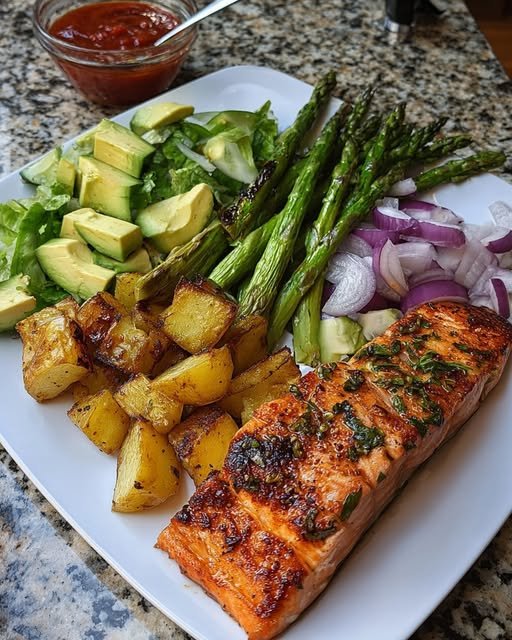
- To serve, arrange the garlic herb salmon, crispy potatoes, and roasted asparagus on individual plates. Add a generous portion of the avocado salad to each plate. Serve immediately with extra lemon wedges on the side, if desired.
Cooking Tips and Variations
For truly crispy potatoes, ensure they are thoroughly dry before tossing with oil and spices. You can even parboil them for 5-7 minutes before roasting; drain them well, let them steam dry for a few minutes, then proceed with tossing and roasting. This creates a fluffy interior and extra crispy exterior. Don’t overcrowd the baking sheet, as this steams the potatoes instead of roasting them. Use two baking sheets if necessary.
Achieving perfectly cooked salmon is key. Use an instant-read thermometer to check for an internal temperature of 145°F (63°C) at the thickest part. Overcooked salmon can be dry, so keeping a close eye on it is crucial. The cooking time will vary based on the thickness of your fillet. For a different texture, you can pan-sear the salmon in an oven-safe skillet for 3-4 minutes per side, then transfer the skillet to the oven to finish cooking with the vegetables.
For the roasted asparagus, avoid overcooking; it should be bright green and tender-crisp, not limp. A little charring adds wonderful flavor. If you prefer, you can air fry the potatoes for an even crispier result. Toss them as directed, then air fry at 375°F (190°C) for 15-20 minutes, shaking the basket every 5 minutes, until golden brown and crispy.
To vary the salmon’s flavor profile, try different fresh herbs like dill, rosemary, or chives. A pinch of red pepper flakes can add a subtle kick. For a smoky flavor, consider grilling the salmon. Simply prepare the fillets with the garlic herb mixture and grill over medium-high heat for 4-6 minutes per side, depending on thickness.
The avocado salad is incredibly versatile. Add crumbled feta or goat cheese for a tangy touch, toasted nuts or seeds for extra crunch (like pumpkin seeds or slivered almonds), or other vegetables such as sliced cucumber, bell peppers, or corn. A squeeze of lime juice instead of lemon juice can also add a different citrus note. For a creamier dressing, whisk in a teaspoon of Dijon mustard or a dollop of Greek yogurt to the olive oil and lemon juice mixture.
This meal lends itself wonderfully to meal prepping. Cook all components, then portion them into airtight containers. Reheat the salmon, potatoes, and asparagus gently. Keep the avocado salad separate and dress it just before serving to maintain freshness and prevent the avocado from browning. This dish pairs beautifully with a crisp Sauvignon Blanc or a light-bodied Pinot Noir. For a non-alcoholic option, sparkling water with a slice of lemon or cucumber is a refreshing choice.
Storage and Reheating
To store leftovers of your Garlic Herb Salmon Plate, allow all components to cool completely to room temperature before transferring them to airtight containers. It’s best to store the salmon, crispy potatoes, and roasted asparagus in separate containers from the avocado salad. This separation helps maintain the texture and freshness of each element. Properly stored, the cooked salmon, potatoes, and asparagus will last for up to 3 days in the refrigerator. The avocado salad is best consumed fresh due to the avocado’s tendency to brown, but if stored separately with a good squeeze of lemon juice, it can last for up to 1-2 days.
When reheating, for the best results, avoid using the microwave for the salmon if possible, as it can dry out quickly. Reheat the salmon, potatoes, and asparagus in an oven or toaster oven at 300°F (150°C) for about 10-15 minutes, or until heated through. This method helps the potatoes regain some of their crispness and prevents the salmon from becoming rubbery. If using a microwave, reheat the salmon and vegetables on a microwave-safe plate for 1-2 minutes, checking frequently to avoid overcooking. Add a splash of water or broth to the plate before microwaving to help create steam and keep the salmon moist. Always ensure food is heated to an internal temperature of 165°F (74°C) for safety.
Frequently Asked Questions
Can I prepare any components of this meal ahead of time for quicker dinner prep?
Absolutely! You can wash and chop the potatoes and asparagus a day in advance, storing them separately in airtight containers in the refrigerator. The garlic herb mixture for the salmon can also be prepared ahead of time and stored in a small sealed container in the fridge. For the avocado salad, chop the red onion and cherry tomatoes in advance; however, it’s best to dice the avocado and toss the salad components with dressing just before serving to prevent browning and maintain freshness.
What if I don’t have fresh herbs? Can I use dried herbs instead?
Yes, you can definitely use dried herbs as a substitute for fresh ones. A good general rule of thumb is to use about one-third the amount of dried herbs compared to fresh, as dried herbs are more concentrated in flavor. So, for 1 tablespoon of fresh parsley, use 1 teaspoon of dried parsley. Adjust to your taste preferences. While fresh herbs offer a brighter, more vibrant flavor, dried herbs will still provide a delicious aromatic profile to the salmon.
My potatoes aren’t getting crispy. What am I doing wrong?
There are a few common culprits for non-crispy roasted potatoes. First, ensure your potatoes are completely dry after washing and before tossing with oil. Moisture is the enemy of crispiness. Second, don’t overcrowd your baking sheet; the potatoes need space to roast, not steam. If they’re too close together, they’ll release steam and become soft. Use two baking sheets if necessary. Third, ensure your oven is fully preheated to the correct temperature. You can also try parboiling the potatoes for 5-7 minutes before roasting; this helps create a fluffy interior and a better surface for crisping.
How can I prevent the avocado in the salad from turning brown?
To best prevent avocado from browning, prepare the salad just before serving. However, if you need to prepare it a little in advance, immediately after dicing the avocado, toss it generously with fresh lemon or lime juice. The acid helps to slow down the oxidation process. You can also press a piece of plastic wrap directly onto the surface of the salad (ensuring it touches the avocado) before refrigerating to minimize air exposure. While these methods won’t prevent browning entirely over a long period, they will help keep it looking fresh for several hours.