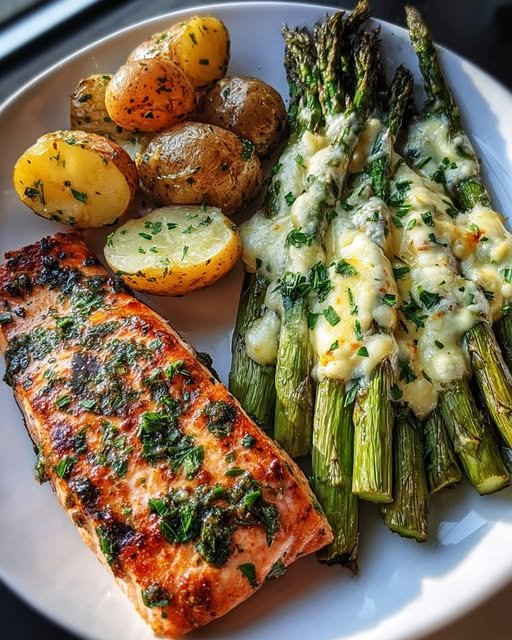
Instructions
- Preheat your oven to 400°F (200°C). Line a large baking sheet with parchment paper for easy cleanup. If using a second smaller baking sheet for the asparagus, line that one too.
- Prepare the Potatoes: On the prepared large baking sheet, spread out the quartered or halved small potatoes in a single layer. Drizzle with 2 tablespoons of olive oil, season generously with salt and black pepper. Toss to coat evenly. Roast for 20-25 minutes, or until they are starting to become tender and lightly golden.
- Prepare the Salmon Marinade & Herbs: While the potatoes are roasting, in a small bowl, combine the minced garlic, chopped fresh parsley, chopped fresh dill (if using), dried oregano, smoked paprika (if using), 1 tablespoon of olive oil, and fresh lemon juice. Stir until well combined. This is your garlic herb mixture.
- Prepare the Salmon: Pat the salmon fillets dry with paper towels. Season both sides with salt and black pepper. Evenly spread the garlic herb mixture over the top side of each salmon fillet.
- Add Salmon to Baking Sheet: Once the potatoes have roasted for 20-25 minutes, carefully make space on the same baking sheet (or a separate one if preferred) and add the salmon fillets, skin-side down (if skin-on).
- Prepare the Asparagus: On a separate small baking sheet or directly on the large baking sheet if space allows, arrange the trimmed asparagus spears in a single layer. Drizzle with the remaining 1 tablespoon of olive oil, season with salt and pepper, and toss gently to coat.
- Continue Roasting: Place both the baking sheet with salmon and potatoes, and the baking sheet with asparagus (if separate) back into the oven. Roast for an additional 10 minutes.
- Add Cheese to Asparagus: After 10 minutes, remove the asparagus from the oven. Sprinkle the shredded mozzarella cheese evenly over the asparagus spears. Return the asparagus to the oven.
- Final Roast: Continue to roast all components for another 5-8 minutes, or until the salmon is cooked through (it should be opaque and flake easily with a fork, reaching an internal temperature of 145°F/63°C), the potatoes are tender and crispy, and the cheese on the asparagus is melted and bubbly with a slight golden hue. Be careful not to overcook the salmon or asparagus.
- Serve: Carefully remove everything from the oven. Plate the garlic herb salmon, cheesy asparagus, and roasted potatoes. Garnish with extra fresh parsley if desired, and serve immediately with fresh lemon wedges for squeezing over the salmon and asparagus.
Cooking Tips and Variations
For truly crispy potatoes, ensure they are spread in a single layer and not overcrowded on the baking sheet. If your baking sheet is too small, use two. Flipping them halfway through their first roasting period can also aid in even browning. For the salmon, avoid overcooking; it can go from perfectly flaky to dry in a matter of minutes. A meat thermometer is your best friend here, aiming for 145°F (63°C) at the thickest part. If you don’t have a thermometer, the salmon should easily flake with a fork and be opaque throughout.
To prevent the cheese on the asparagus from burning, you can add it in the last 3-5 minutes of cooking, or if your oven has a broiler, you can melt the cheese under the broiler for 1-2 minutes after the asparagus is cooked, watching it very carefully to prevent burning. Trimming asparagus properly involves snapping off the tough, woody ends; they will naturally break where the tender part begins. You can also use a knife to cut off the bottom inch or two if you prefer a cleaner look.
This recipe is highly adaptable! For cheese, feel free to experiment with other good melting cheeses like Gruyere, white cheddar, or even a sprinkle of Parmesan for a sharper flavor. If you’re not a fan of mozzarella, you can omit the cheese entirely for a lighter option. For herbs, thyme, rosemary, or even a touch of chives would be excellent additions or substitutions to the garlic herb mixture. If you don’t have fresh herbs, use a bit more dried, but remember that fresh herbs offer a brighter flavor.
For the potatoes, sweet potatoes or even cubed butternut squash could be a delicious alternative. You can also add other vegetables to the roasting pan alongside the potatoes, such as bell peppers or red onion, for more variety. For those who prefer a different cooking method for salmon, you can pan-sear it on the stovetop for a crispy skin, then finish it in the oven, or even grill it. Just adjust cooking times accordingly to ensure everything finishes around the same time.
To make this meal even quicker, you can prepare the garlic herb mixture in advance and store it in the refrigerator for up to 2 days. You can also pre-chop your potatoes. If you’re short on time, using quick-cooking vegetables like snap peas or green beans instead of asparagus can shave off a few minutes. Always remember to adjust seasoning to your personal preference; a little extra salt or a squeeze of lemon at the end can truly make the flavors pop.
Storage and Reheating
This Garlic Herb Salmon & Cheesy Asparagus Plate is best enjoyed fresh, as salmon and asparagus can tend to dry out upon reheating. However, leftovers can be safely stored and reheated. Allow any cooked leftovers to cool completely to room temperature within two hours of cooking. Transfer the salmon, asparagus, and potatoes to airtight containers. Store them in the refrigerator for up to 2-3 days.
When reheating, it’s best to do so gently to maintain as much moisture and flavor as possible. For the salmon, reheating in the microwave can often dry it out. A better method is to place the salmon and potatoes on a baking sheet, cover loosely with foil, and reheat in an oven preheated to 275°F (135°C) for about 10-15 minutes, or until just warmed through. The low temperature helps prevent further drying. For the asparagus, you can add it to the baking sheet during the last few minutes, or quickly warm it in a microwave or a small pan on the stovetop until heated through.
Avoid reheating salmon multiple times, as its quality will significantly diminish. If you prefer, the potatoes and asparagus can be reheated in a microwave or a pan on the stovetop until hot. For best results, consider making only enough salmon for one meal, and storing the potatoes and asparagus separately if you anticipate leftovers, as they tend to reheat better than the fish.
Frequently Asked Questions
How do I know when the salmon is perfectly cooked?
The best way to tell if salmon is perfectly cooked is by using a meat thermometer. Insert it into the thickest part of the fillet; the internal temperature should reach 145°F (63°C). Visually, cooked salmon will be opaque throughout and flake easily with a fork. Be careful not to overcook, as it can become dry and tough quickly.
Can I use frozen salmon or asparagus?
Yes, you can use frozen salmon and asparagus. For salmon, ensure it is fully thawed before cooking. Pat it very dry to remove excess moisture, which can affect texture and browning. Frozen asparagus can be cooked directly from frozen, but it might release more water and be slightly less crisp than fresh; adjust cooking time as needed.
What if I don’t have all the fresh herbs listed?
No problem! The beauty of this dish is its flexibility. You can use any combination of fresh herbs you enjoy, such as thyme, rosemary, or chives. If you only have dried herbs, use about 1/3 the amount of fresh herbs specified, as dried herbs are more concentrated in flavor. A good quality Italian seasoning blend can also work in a pinch.
Can I make this dish vegetarian?
Absolutely! To make this dish vegetarian, simply omit the salmon. You can replace it with a plant-based protein like pan-seared halloumi cheese, a large portobello mushroom cap (marinated in a similar garlic-herb mixture and roasted), or even a hearty serving of chickpeas roasted alongside the potatoes. The cheesy asparagus and roasted potatoes make a fantastic base for a vegetarian meal.