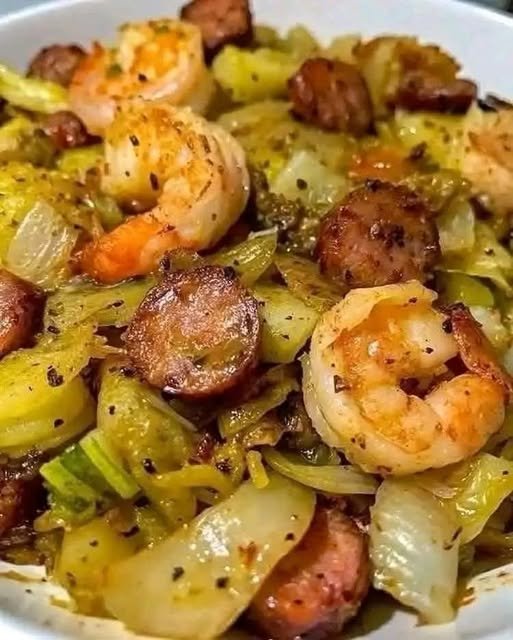
Instructions
- Heat the olive oil in a large skillet or Dutch oven over medium-high heat. Add the sliced smoked sausage and cook for 5-7 minutes, stirring occasionally, until browned and slightly crispy. Remove the sausage from the skillet with a slotted spoon and set aside, leaving the rendered fat in the pan.
- Add the chopped onion and green bell pepper to the skillet. Sauté for 5-7 minutes, stirring frequently, until the vegetables begin to soften and become translucent.
- Stir in the minced garlic, smoked paprika, black pepper, cayenne pepper (if using), and dried thyme. Cook for 1 minute more, stirring constantly, until fragrant.
- Add the chopped cabbage to the skillet. It will look like a lot, but it will cook down significantly. Stir well to combine with the other vegetables and seasonings.
- Pour in the chicken broth or water. Cover the skillet and reduce the heat to medium-low. Let the cabbage cook for 10-15 minutes, stirring occasionally, until it has softened to your desired tenderness. You want it tender-crisp, not mushy.
- Once the cabbage has reached your desired tenderness, uncover the skillet and increase the heat back to medium-high. Add the broccoli florets and cooked sausage back into the pan. Stir to combine.
- Add the peeled and deveined shrimp to the skillet. Cook for 3-5 minutes, stirring occasionally, until the shrimp turn pink and opaque. Be careful not to overcook the shrimp, as they can become rubbery.
- Taste the dish and adjust seasoning with salt as needed.
- Remove the skillet from the heat, sprinkle with fresh chopped parsley, and serve immediately.
Cooking Tips and Variations
For the best results, always ensure your skillet is hot before adding ingredients, especially the sausage, to get a good sear. When sautéing the cabbage, don’t overcrowd the pan; if your skillet isn’t large enough, you might need to cook the cabbage in two batches to ensure it fries rather than steams. A large cast-iron skillet or a wide Dutch oven works beautifully for this recipe. To prevent the cabbage from becoming soggy, cook it until it’s tender-crisp, and if there’s excess liquid at the end, you can crank up the heat for a minute or two to evaporate it before adding the shrimp.
To add more heat to the dish, consider increasing the amount of cayenne pepper or adding a pinch of red pepper flakes along with the other seasonings. A dash of your favorite hot sauce at the table is also a great option. For a richer flavor, you can add a tablespoon of butter to the pan along with the oil when you start cooking the sausage. A splash of apple cider vinegar or lemon juice stirred in at the very end can also brighten up the flavors and add a pleasant tang.
The beauty of this dish lies in its adaptability. If you’re not a fan of shrimp, you can easily substitute it with diced chicken breast or even extra sausage for a meatier meal. Instead of smoked sausage, try spicy Italian sausage or a leaner turkey sausage. For additional vegetables, consider adding sliced carrots, diced zucchini, or even a handful of spinach towards the end of cooking. This dish is hearty enough to be a standalone meal, but it also pairs wonderfully with a side of fluffy white rice, creamy grits, or a slice of warm cornbread to soak up all the delicious juices.
Storage and Reheating
This Fried Cabbage with Shrimp and Sausage makes for excellent leftovers, though the texture of the shrimp might soften slightly upon reheating. To store, allow the dish to cool completely to room temperature. Transfer the leftovers to an airtight container and refrigerate for up to 3-4 days. It’s best to consume within this timeframe to ensure the best quality and safety of the seafood components.
When reheating, you have a few options. For best results and to help maintain some of the texture, reheat the dish in a skillet on the stovetop over medium heat. Add a splash of water or chicken broth to prevent drying out, and stir occasionally until heated through. This method usually takes about 5-8 minutes. You can also reheat individual portions in the microwave. Place the desired amount in a microwave-safe dish, cover loosely, and heat on high for 1-2 minutes, stirring halfway through, until thoroughly warmed. Be careful not to overheat, especially the shrimp, to avoid making it rubbery.
Frequently Asked Questions
How do I prevent my cabbage from becoming mushy?
The key to tender-crisp cabbage is not to overcook it. After adding the cabbage and liquid, cover the pan and cook only until it reaches your desired tenderness, usually 10-15 minutes. Uncover and increase heat to evaporate any excess moisture towards the end. Also, ensure your pan isn’t overcrowded, as this can cause the cabbage to steam rather than fry.
Can I use different types of sausage?
Absolutely! While smoked sausage like Andouille or kielbasa adds a wonderful depth of flavor, you can experiment with other varieties. Spicy Italian sausage, chicken sausage, or even a vegetarian sausage alternative would work well. Adjust cooking times as needed for different sausage types.
What if I don’t have fresh shrimp? Can I use frozen?
Yes, frozen shrimp works perfectly! Make sure to thaw them completely before adding them to the dish. You can thaw them overnight in the refrigerator or by placing them in a colander under cold running water for about 10-15 minutes. Pat them dry before adding to the pan to prevent excess water from lowering the pan temperature.
Can I make this dish ahead of time?
You can prepare some components ahead of time. You can chop the cabbage, onions, and bell peppers, and slice the sausage a day in advance. However, for the best texture, especially for the shrimp and cabbage, it’s recommended to cook the entire dish fresh just before serving. If you must make it ahead, store it as directed and reheat gently.