Instructions
- Prepare the Coleslaw (preferably an hour or more in advance):
- Finely shred the green and red cabbage and grate the carrot. You can use a food processor with a shredding attachment or a sharp knife.
- In a large bowl, combine the shredded cabbage and carrots.
- In a separate small bowl, whisk together the mayonnaise, apple cider vinegar, sugar, celery seed, salt, and black pepper until smooth.
- Pour the dressing over the cabbage mixture and toss well to coat everything evenly.
- Cover the bowl and refrigerate for at least 30 minutes, or up to several hours, to allow the flavors to meld and the cabbage to soften slightly. Stir again before serving.
- Prepare the Potatoes for Fries:
- Peel the russet potatoes and cut them into 1/4 to 1/2-inch thick sticks. Try to keep them as uniform as possible for even cooking.
- Place the cut potatoes in a large bowl and cover them completely with cold water. Let them soak for at least 30 minutes (or up to 2 hours) to remove excess starch, which helps achieve crispiness.
- After soaking, drain the potatoes thoroughly and pat them very dry with paper towels or a clean kitchen towel. This step is crucial to prevent oil splattering and ensure crispiness.
- First Fry the Potatoes:
- In a large, heavy-bottomed pot or Dutch oven, pour 6-8 cups of frying oil, ensuring it’s at least 3 inches deep. Heat the oil over medium-high heat to 325°F (160°C). Use a candy/deep-fry thermometer for accuracy.
- Working in batches to avoid overcrowding, carefully add a portion of the dried potato sticks to the hot oil. Do not add too many at once, as this will drop the oil temperature too much.
- Fry for 5-7 minutes, stirring occasionally, until the fries are soft, slightly cooked through, and just starting to turn a very pale blonde color. They should not be brown at this stage.
- Using a slotted spoon or spider, remove the fries from the oil and transfer them to a wire rack set over a baking sheet lined with paper towels. Allow them to cool completely for at least 15-20 minutes. This can be done up to an hour in advance.
- Prepare the Chicken Tenders:
- Pat the chicken tenderloins dry with paper towels.
- Set up a dredging station with three shallow dishes:
- Dish 1 (Flour Mixture): Combine all-purpose flour, 1 teaspoon salt, 1/2 teaspoon black pepper, 1/2 teaspoon paprika, and 1/4 teaspoon garlic powder. Mix well.
- Dish 2 (Egg Wash): Whisk the eggs and milk together until well combined.
- Dish 3 (Breadcrumb Mixture): Combine panko breadcrumbs, 1/2 teaspoon onion powder, and 1/4 teaspoon cayenne pepper (if using). Mix well.
- Working one tender at a time, first dredge the chicken in the flour mixture, shaking off any excess.
- Next, dip the floured chicken into the egg wash, ensuring it’s fully coated, then let any excess drip off.
- Finally, press the chicken firmly into the panko breadcrumb mixture, ensuring it’s completely coated on all sides. Pressing helps the breadcrumbs adhere well.
- Place the coated tenders on a clean plate or wire rack. Repeat with the remaining chicken.
- Fry the Chicken Tenders:
- Increase the oil temperature (use the same oil from the fries if it’s clean enough, otherwise use fresh oil) to 350-375°F (175-190°C). It’s crucial to maintain this temperature for crispy, evenly cooked chicken.
- Carefully add 3-4 chicken tenders to the hot oil, ensuring not to overcrowd the pot.
- Fry for 4-6 minutes, flipping once halfway through, until the chicken is golden brown, crispy, and cooked through. An instant-read thermometer inserted into the thickest part of the tender should register 165°F (74°C).
- Remove the cooked tenders with a slotted spoon and place them on a wire rack set over a baking sheet to drain excess oil. Sprinkle lightly with a pinch of salt if desired.
- Repeat with the remaining chicken tenders, allowing the oil to come back up to temperature between batches.
- Second Fry the Potatoes (for ultimate crispiness):
- Once all chicken tenders are fried, ensure your oil temperature is back up to 375°F (190°C).
- Working in batches, return the partially cooked fries to the hot oil.
- Fry for another 2-4 minutes, stirring frequently, until the fries are deeply golden brown and very crispy.
- Remove from oil with a slotted spoon and immediately transfer to a clean wire rack set over a baking sheet. Season generously with salt while still hot.
- Assemble and Serve:
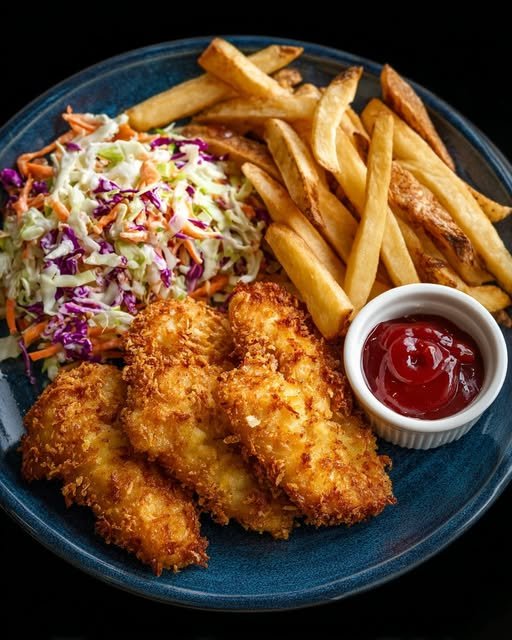
- Arrange the hot, crispy chicken tenders and golden french fries on serving plates.
- Serve immediately with a generous side of the creamy coleslaw and your favorite dipping sauces like ketchup, honey mustard, or BBQ sauce. Enjoy!
Cooking Tips and Variations
Achieving that perfect “Crispy Chicken Tenders Plate” isn’t just about following the steps; it’s about understanding the nuances and having a few tricks up your sleeve. Here are some essential tips and exciting variations to elevate your homemade comfort food.
Tips for Maximum Crispiness:
- Panko is Your Best Friend: While regular breadcrumbs work, panko breadcrumbs are a game-changer for crispiness. Their larger, flakier texture creates a much crunchier coating.
- Double Dredging (Optional, but Recommended): For an extra thick and crispy coating, after the initial flour, egg, and panko dredge, you can dip the tender back into the egg wash and then into the panko again. This creates a formidable crust.
- Dry Chicken is Key: Always pat your chicken tenders thoroughly dry with paper towels before dredging. Moisture on the chicken can prevent the coating from adhering properly and lead to a less crispy result.
- Oil Temperature is Crucial: Use a deep-fry thermometer and maintain the recommended oil temperatures. If the oil is too cool, the chicken and fries will absorb too much oil and become greasy. If it’s too hot, the outside will burn before the inside cooks through.
- Don’t Overcrowd the Pot: Frying in batches is essential. Overcrowding drops the oil temperature significantly, leading to soggy results. Give your chicken and fries space to swim and crisp up properly.
- Rest on a Wire Rack: After frying, always place your chicken and fries on a wire rack set over a baking sheet, not directly on paper towels. This allows air to circulate around them, preventing condensation and helping them stay crispy.
Tips for Tender Chicken:
- Brine for Juiciness: For incredibly tender and moist chicken, consider a quick brine. Soak the chicken tenders in a solution of 1 quart water, 2 tablespoons salt, and 1 tablespoon sugar for 30 minutes to an hour before drying and breading. Rinse well and pat dry before proceeding.
- Don’t Overcook: Chicken tenders cook relatively quickly. Use an instant-read thermometer to check for an internal temperature of 165°F (74°C). Overcooking will dry them out.
Tips for Flavorful Sides:
- Soak Potatoes for Starch Removal: Soaking cut potatoes in cold water before frying removes excess starch, which is key for achieving that perfect crispy exterior and fluffy interior. Don’t skip this step!
- Double Fry Your Fries: The two-stage frying method (first at a lower temperature to cook through, then at a higher temperature to crisp up) is the secret to truly excellent, crispy fries.
- Make Coleslaw Ahead: Coleslaw benefits greatly from sitting in the fridge for at least 30 minutes, or even a few hours, before serving. This allows the flavors to meld and the cabbage to soften slightly, improving both taste and texture.
- Adjust Coleslaw Dressing: Taste and adjust the sweetness and tanginess of your coleslaw dressing. Some prefer it sweeter, others tangier. A pinch of celery seed adds that classic deli coleslaw flavor.
Variations and Substitutions:
- Chicken Seasoning Swap: Experiment with different spice blends for your chicken tenders. Try adding Italian seasoning, Cajun seasoning, or a smoky BBQ rub to the flour mixture.
- Spicy Tenders: Increase the cayenne pepper in the panko mixture, or add a dash of hot sauce to your egg wash for a fiery kick.
- Baked/Air-Fried Chicken Tenders: For a lighter option, bake or air-fry the breaded chicken tenders. Spray generously with cooking spray before baking at 400°F (200°C) for 15-20 minutes, flipping halfway, or air-fry at 375°F (190°C) for 10-15 minutes, shaking the basket occasionally, until golden and cooked through.
- Oven-Baked Fries: If deep-frying isn’t an option, you can bake your fries. Toss the dried potato sticks with 2 tablespoons of oil, salt, and pepper. Spread in a single layer on a baking sheet and bake at 425°F (220°C) for 25-35 minutes, flipping halfway, until golden and crispy.
- Sweet Potato Fries: Substitute russet potatoes with sweet potatoes for a different flavor profile. Adjust cooking times as sweet potatoes cook faster.
- Coleslaw Variations:
- Creamy Dill Coleslaw: Add fresh chopped dill to the dressing.
- Vinegar Coleslaw: Reduce mayonnaise and increase vinegar for a lighter, tangier slaw.
- Broccoli Slaw: Use a pre-packaged broccoli slaw mix instead of cabbage for a different texture and flavor.
- Dipping Sauce Extravaganza: Don’t limit yourself to ketchup! Offer a variety of dipping sauces like homemade ranch, honey mustard, spicy sriracha mayo, BBQ sauce, or a tangy dill sauce.
Storage and Reheating
While this Crispy Chicken Tenders Plate is best enjoyed fresh, sometimes leftovers happen! Here’s how to store and reheat your components to maintain as much of their deliciousness as possible.
Storage:
- Chicken Tenders: Allow the fried chicken tenders to cool completely to room temperature. This is crucial to prevent sogginess. Once cool, transfer them to an airtight container and refrigerate for up to 3-4 days.
- French Fries: Cooked french fries are notorious for losing their crispness quickly. For best results, it’s recommended to only make as many fries as you plan to eat immediately. If you do have leftovers, cool them completely and store them in an airtight container in the refrigerator for 1-2 days. Be aware they will lose their crisp texture.
- Coleslaw: Store the coleslaw in an airtight container in the refrigerator for up to 3-4 days. The cabbage will continue to soften slightly over time, but the flavor should remain good. If it becomes too watery, drain any excess liquid before serving.
Reheating:
- Chicken Tenders (Best Method for Crispiness): The best way to regain crispiness is to reheat them in an oven or air fryer.
- Oven: Preheat your oven to 375°F (190°C). Place the chicken tenders on a wire rack set over a baking sheet (this helps air circulate and keeps them crispy). Heat for 10-15 minutes, or until heated through and crispy.
- Air Fryer: Preheat your air fryer to 350°F (175°C). Place the tenders in a single layer in the air fryer basket. Heat for 5-8 minutes, shaking the basket halfway through, until crispy and hot.
- Microwave (Not Recommended for Crispiness): While you can microwave chicken tenders, they will become soft and lose their crispy texture. Only use this method if crispiness is not a priority. Heat in 30-second intervals until warmed through.
- French Fries (Best Method for Crispiness): Reheating fries to their original glory can be challenging, but the oven or air fryer are your best bets.
- Oven: Preheat your oven to 400°F (200°C). Spread the fries in a single layer on a baking sheet. Heat for 5-10 minutes, flipping halfway, until hot and somewhat crispy.
- Air Fryer: Preheat your air fryer to 375°F (190°C). Place fries in a single layer in the basket. Heat for 3-6 minutes, shaking the basket frequently, until hot and crisp.
- Skillet: Heat a small amount of oil in a skillet over medium-high heat. Add the fries in a single layer and cook, stirring occasionally, until hot and re-crisped. This works well for smaller portions.
- Coleslaw: Coleslaw does not require reheating. Simply stir well before serving cold directly from the refrigerator. If it’s been stored for a few days, you might want to give it a quick taste and adjust the seasoning if needed.
Frequently Asked Questions
What kind of chicken is best for tenders?
Boneless, skinless chicken tenderloins are, as the name suggests, the ideal cut for chicken tenders. They are naturally shaped and tender, requiring minimal prep. If you can’t find tenderloins, you can easily slice boneless, skinless chicken breasts lengthwise into 1-inch wide strips. Just make sure the strips are uniform in thickness for even cooking.
Can I prepare the chicken tenders ahead of time?
Yes, you can prepare the breaded chicken tenders a few hours in advance. After breading, place them on a baking sheet lined with parchment paper, ensuring they don’t touch, and refrigerate them uncovered for up to 2-3 hours. This can actually help the breading adhere better and achieve a crispier crust. Do not store them breaded overnight, as the breading can become soggy. The coleslaw can also be made a day in advance.
What’s the secret to truly crispy fries?
There are two main secrets: soaking the potatoes and double-frying. Soaking removes excess starch, which prevents the fries from becoming gummy and promotes crispiness. Double-frying involves a first fry at a lower temperature to cook the potatoes through, and a second fry at a higher temperature to achieve that golden, shatteringly crisp exterior. Patting the potatoes very dry before frying is also crucial to prevent splattering and ensure crispness.
What are some other dipping sauce recommendations?
While ketchup is a classic, there are many delicious options! Honey mustard is always a hit, combining sweetness with a tangy kick. BBQ sauce, whether smoky or sweet, offers a rich flavor contrast. Ranch dressing is a creamy, herbaceous choice that pairs wonderfully. For those who like heat, a spicy mayo (mayonnaise mixed with sriracha or hot sauce) or a sweet chili sauce can add an exciting element to your crispy chicken tenders.