Instructions
- Prepare the Rice: In a medium saucepan, combine 1 cup white rice and 2 cups water or chicken broth. Bring to a boil, then reduce heat to low, cover, and simmer for 15-18 minutes, or until all liquid is absorbed and rice is tender. Fluff with a fork and set aside, keeping warm.
- Prepare the Asparagus: While the rice cooks, prepare the asparagus. You can either steam, roast, or blanch it.
- To Steam: Place asparagus in a steamer basket over 1 inch of boiling water. Cover and steam for 3-5 minutes, or until crisp-tender.
- To Roast: Toss asparagus with 1 tablespoon olive oil, salt, and pepper. Spread on a baking sheet and roast at 400°F (200°C) for 10-15 minutes, or until tender and slightly charred.
Set aside, keeping warm.
- Prepare the Spinach Filling: In a medium skillet, melt 1 tablespoon butter over medium heat. Add minced shallot and cook until softened, about 2-3 minutes. Add 1 clove of minced garlic and cook for another minute until fragrant. Add the chopped fresh spinach to the skillet in batches, if necessary, and cook until wilted, about 3-5 minutes. Squeeze out any excess liquid from the spinach using a fine-mesh sieve or paper towels.
- Return the spinach to the skillet (off the heat). Add the softened cream cheese, Parmesan cheese, heavy cream, nutmeg, a pinch of salt, and a dash of black pepper. Mix until well combined and creamy. Taste and adjust seasoning as needed.
- Prepare the Salmon: Preheat your oven to 400°F (200°C). Pat the salmon fillets dry with paper towels. Using a sharp knife, carefully slice a pocket into the thickest part of each salmon fillet, starting from one side and cutting about two-thirds of the way through, creating a pocket without cutting all the way through to the other side.
- Generously stuff each salmon pocket with the creamy spinach mixture. You may have a little extra filling, which can be served alongside the salmon. Season the outside of the stuffed salmon fillets with salt and black pepper.
- Sear the Salmon: In a large oven-safe skillet (preferably cast iron), heat 1 tablespoon olive oil over medium-high heat until shimmering. Carefully place the stuffed salmon fillets, skin-side down (if applicable), in the hot skillet. Sear for 3-4 minutes until the skin is crispy and golden brown.
- Finish Salmon in Oven: Flip the salmon fillets to the flesh side and immediately transfer the skillet to the preheated oven. Bake for 8-12 minutes, or until the salmon is cooked through and flakes easily with a fork. The internal temperature should reach 145°F (63°C). Remove from oven and transfer salmon to a plate, tent with foil to keep warm.
- Cook the Shrimp: While the salmon is baking, in a separate clean skillet, heat 1 tablespoon olive oil over medium-high heat. Add the peeled and deveined shrimp in a single layer. Cook for 1-2 minutes per side, or until pink and opaque. Do not overcrowd the pan; cook in batches if necessary. Remove shrimp from skillet and set aside.
- Make the Lemon-Butter Sauce: In the same skillet used for the salmon (or a clean one if preferred), over medium heat, add the dry white wine or chicken broth. Bring to a simmer, scraping up any browned bits from the bottom of the pan with a wooden spoon. Let it reduce slightly, about 2 minutes.
- Reduce the heat to low. Whisk in the remaining 4 tablespoons of cold unsalted butter, one tablespoon at a time, until fully incorporated and the sauce is emulsified and slightly thickened. Stir in the remaining 1 clove of minced garlic and the fresh lemon juice. Season the sauce with salt and pepper to taste.
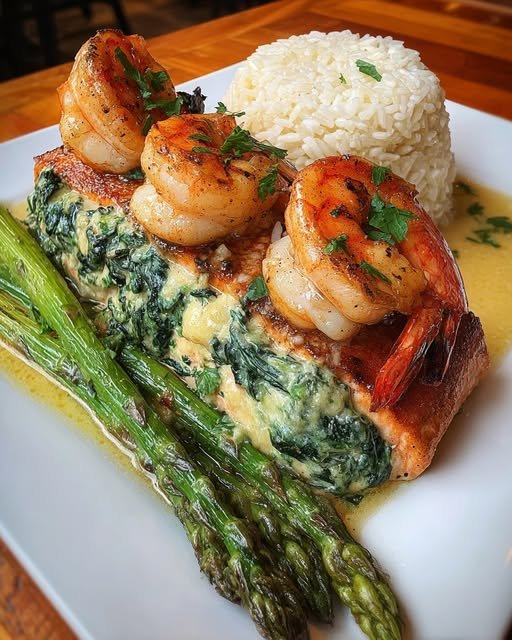
- Assemble and Serve: On each serving plate, place a portion of the fluffy white rice. Arrange a stuffed salmon fillet and a generous serving of cooked shrimp alongside the rice. Add a portion of the cooked asparagus. Drizzle the warm lemon-butter sauce generously over the salmon, shrimp, and asparagus. Garnish with fresh chopped parsley. Serve immediately and enjoy your luxurious meal!
Cooking Tips and Variations
Perfectly Cooked Salmon: The key to juicy salmon is not to overcook it. Use an instant-read thermometer inserted into the thickest part of the fillet; it should reach 145°F (63°C). Remember that salmon will continue to cook slightly after being removed from the heat, so you can pull it out a degree or two before it reaches the target temperature. Resting the salmon for 5 minutes after cooking allows the juices to redistribute, resulting in a more moist and flavorful fish.
Preventing Watery Spinach Filling: It’s crucial to squeeze out as much moisture as possible from the cooked spinach. Excess water will make your filling runny and can make the salmon soggy. After wilting, transfer the spinach to a fine-mesh sieve and press firmly with the back of a spoon, or wrap it in a few layers of paper towels and squeeze.
Getting a Good Sear on Shrimp: Ensure your skillet is hot and the shrimp are patted very dry before adding them to the pan. Overcrowding the pan will steam the shrimp instead of searing them, so cook them in batches if necessary. Shrimp cook quickly, typically 1-2 minutes per side, so watch them closely to avoid overcooking, which makes them rubbery.
Fluffy Rice Every Time: The classic 2:1 liquid to rice ratio (by volume) is a good starting point. Avoid lifting the lid while the rice is simmering, as this allows steam to escape and affects cooking. Once cooked, let the rice rest for 5-10 minutes with the lid on before fluffing with a fork; this helps to evenly distribute moisture.
Cheese Variations: For the spinach filling, feel free to experiment with other cheeses. Gruyere, fontina, or even a sharp white cheddar can add different flavor notes. For a tangier filling, a touch of goat cheese could be lovely. Just ensure the cheese melts smoothly.
Herb Enhancements: Beyond parsley, consider adding other fresh herbs to the spinach filling or as a garnish. Dill pairs beautifully with salmon and shrimp. Chives or a hint of tarragon could also elevate the dish.
Spice it Up: For a little kick, add a pinch of red pepper flakes to the spinach filling or the lemon-butter sauce. A dash of smoked paprika can also add depth to the shrimp.
Sauce Customization: If you prefer a richer sauce, you can add a splash of heavy cream at the end. For a brighter, tangier sauce, increase the amount of fresh lemon juice. A finely chopped shallot can also be sautéed before adding the wine for an extra layer of flavor.
Vegetable Swaps: While asparagus is classic, green beans, broccolini, or even roasted cherry tomatoes would also make excellent accompaniments to this dish.
Make Ahead Tips: You can prepare the spinach filling a day in advance and store it in an airtight container in the refrigerator. This saves a significant amount of time on the day of cooking.
Storage and Reheating
Storage: Leftovers of Creamy Spinach Stuffed Salmon & Shrimp should be stored in an airtight container in the refrigerator within two hours of cooking. They will remain fresh for up to 2-3 days. It’s best to store the salmon, shrimp, and any remaining rice and asparagus separately if possible, to maintain optimal texture and flavor.
Reheating: Reheating seafood, especially salmon and shrimp, can be tricky as it tends to dry out easily. The goal is to warm it through gently without overcooking.
- For Salmon: Preheat your oven to 275°F (135°C). Place the stuffed salmon fillet on a baking sheet, cover loosely with foil, and heat for 10-15 minutes, or until warmed through. Low and slow heat helps prevent drying. You can also reheat in a microwave on a low power setting for short bursts (30-60 seconds) until just warm, being careful not to overcook.
- For Shrimp: Reheat shrimp gently in a skillet over medium-low heat with a tiny bit of olive oil or butter, just until warmed through, about 1-2 minutes. Alternatively, microwave on low power for 30-second intervals.
- For Rice: Reheat rice in the microwave with a splash of water or broth, covered, until hot. Stir occasionally.
- For Asparagus: Reheat asparagus in a skillet or microwave until warm.
- For Sauce: The lemon-butter sauce is best made fresh. If you have leftover sauce, it can be gently rewarmed in a small saucepan over low heat, whisking constantly. If it separates, a tiny whisk and a splash of hot water might help bring it back together, but fresh is always superior for this type of sauce.
Avoid reheating seafood more than once to maintain quality and food safety.
Frequently Asked Questions
Can I use frozen spinach instead of fresh?
Yes, you can absolutely use frozen spinach. Thaw a 10-ounce package of frozen chopped spinach and then ensure you squeeze out all excess water very thoroughly. You’ll likely get about the same amount of usable spinach as 5 ounces of fresh once the water is removed.
What if I don’t have an oven-safe skillet?
If you don’t have an oven-safe skillet, you can sear the salmon in a regular skillet on the stovetop for 3-4 minutes per side, then carefully transfer the seared salmon fillets to a baking dish to finish cooking in the oven at 400°F (200°C) for 8-12 minutes.
Can I prepare the salmon ahead of time?
You can prepare the spinach filling a day in advance and keep it refrigerated. You can also butterfly and stuff the salmon fillets a few hours before cooking and keep them covered in the refrigerator. For best results, however, sear and bake the salmon just before serving.
What wine pairs well with this dish?
This dish pairs beautifully with crisp, dry white wines. Excellent choices include Sauvignon Blanc, Pinot Grigio, or a dry Chardonnay (unoaked or lightly oaked). For a sparkling option, a dry Prosecco or Cava would also be delightful.