Instructions
- Cook the Rice: Begin by preparing your rice according to package directions. For most white rice, combine 3/4 cup uncooked rice with 1 1/2 cups water (or broth for more flavor) in a saucepan. Bring to a boil, then reduce heat to low, cover, and simmer for 15-20 minutes, or until all water is absorbed and rice is tender. Fluff with a fork and set aside, keeping warm.
- Prepare the Vegetables: While the rice cooks, prepare your vegetables. Bring a small pot of lightly salted water to a boil. Add the green beans and carrots and blanch for 3-5 minutes, or until crisp-tender. You want them cooked through but still vibrant and with a slight bite. Drain immediately and plunge into an ice bath if you want to stop the cooking process and preserve their color, then drain again. Alternatively, you can steam them until tender-crisp.
- Cook the Shrimp: Pat the shrimp very dry with paper towels. Season generously with salt and black pepper. In a large skillet or frying pan, heat 1 tablespoon of olive oil over medium-high heat. Once hot, add the shrimp in a single layer, being careful not to overcrowd the pan (cook in batches if necessary). Cook for 1-2 minutes per side, until pink and opaque. Remove the cooked shrimp from the skillet and set aside on a plate.
- Make the Creamy Sauce: Reduce the heat to medium. Add the remaining 1 tablespoon of olive oil and the butter to the same skillet. Add the finely chopped yellow onion and cook, stirring occasionally, until softened and translucent, about 3-4 minutes. Add the minced garlic and red pepper flakes and cook for another minute until fragrant, being careful not to burn the garlic.
- Deglaze and Simmer: Pour in the chicken or vegetable broth, scraping up any browned bits from the bottom of the pan with a wooden spoon. Bring to a gentle simmer and let it reduce slightly for about 2 minutes. Stir in the heavy cream and dried oregano. Continue to simmer gently, stirring occasionally, for 3-5 minutes, or until the sauce has thickened to your desired consistency. Taste and adjust seasoning with salt and black pepper as needed.
- Combine and Serve: Return the cooked shrimp to the skillet with the creamy sauce. Gently toss to coat the shrimp completely. Heat through for about 1 minute, just until the shrimp is warm again. Be careful not to overcook the shrimp.
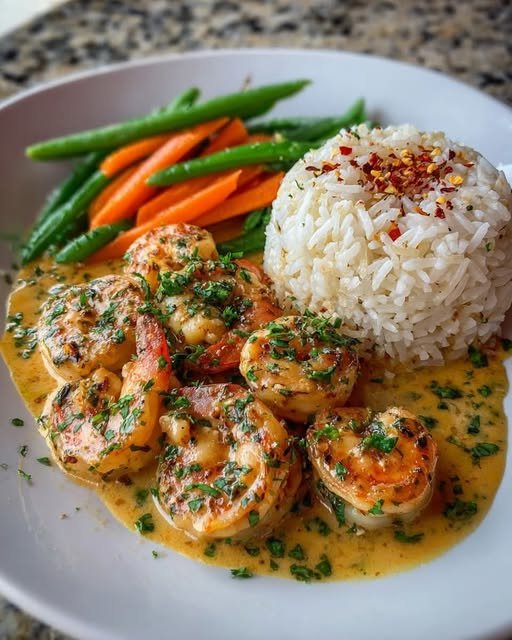
- Plate the Dish: To serve, spoon a generous portion of the fluffy cooked rice onto each plate. Arrange the cooked green beans and carrots alongside the rice. Spoon the creamy shrimp and sauce over the rice or next to it.
- Garnish: Garnish generously with fresh chopped parsley and an extra sprinkle of red pepper flakes for a touch of color and heat. Serve immediately and enjoy your delicious Creamy Shrimp & Rice Plate with Veggies!
Cooking Tips and Variations
Achieving the perfect creamy shrimp and rice dish involves a few key techniques and offers endless possibilities for customization. Firstly, do not overcook the shrimp. Shrimp cooks very quickly, and even a minute too long can turn it rubbery. Cook until it’s just pink and opaque, then remove it from the heat. It will continue to cook slightly when returned to the warm sauce. For the creamiest sauce, ensure your heavy cream is at room temperature before adding it to the skillet to prevent it from seizing or curdling. If your sauce is too thin, simply simmer it for a few extra minutes to allow it to reduce and thicken. If it’s too thick, you can thin it with a splash more broth or cream.
To enhance the flavor profile, consider adding a squeeze of fresh lemon juice to the sauce just before serving. The acidity brightens the rich flavors and adds a zesty finish. A pinch of fresh thyme or a bay leaf can also be added to the sauce while simmering for an aromatic boost. Always taste and adjust seasonings throughout the cooking process; a little extra salt or pepper can make a big difference.
This recipe is incredibly versatile. For variations, you can easily swap the protein: pan-seared chicken breast cut into bite-sized pieces, firm tofu, or even scallops would work wonderfully. If you prefer a different grain, brown rice, quinoa, or even couscous can be substituted for white rice, though cooking times will vary. Feel free to experiment with other vegetables based on what’s in season or what you have on hand. Asparagus, broccoli florets, bell peppers, or spinach are all excellent choices. For a cheesy twist, stir in a handful of grated Parmesan cheese into the sauce at the very end. To make it a bit spicier, increase the amount of red pepper flakes or add a dash of cayenne pepper. For a smoky flavor, a tiny pinch of smoked paprika can be a delightful addition to the sauce.
Storage and Reheating
Proper storage and reheating are key to enjoying your Creamy Shrimp & Rice Plate with Veggies as delicious leftovers. Once the meal has cooled to room temperature (within two hours of cooking), transfer any leftovers to an airtight container. Keep the rice, shrimp, and vegetables together, or separate them if you prefer. Store the container in the refrigerator for up to 2-3 days. Due to the seafood and cream, it’s best to consume leftovers relatively quickly.
When it comes to reheating, gentle methods are best to prevent the shrimp from becoming tough and the sauce from breaking. The most recommended method is to reheat on the stovetop. Transfer the desired portion to a skillet over medium-low heat. Add a splash of broth or milk/cream (about 1-2 tablespoons per serving) to help rehydrate the rice and thin the sauce. Stir gently and heat until warmed through, usually 5-7 minutes. Be careful not to boil the sauce vigorously. If reheating in the microwave, place the leftovers in a microwave-safe dish, add a splash of liquid, cover loosely, and microwave on medium power in 1-minute intervals, stirring in between, until heated through. Overheating in the microwave can dry out the shrimp and alter the sauce’s texture, so go slowly.
Frequently Asked Questions
Can I use frozen shrimp for this recipe?
Absolutely! Frozen shrimp works perfectly for this recipe. Just be sure to thaw it completely before cooking. You can thaw it by placing it in the refrigerator overnight or by running it under cold water in a colander for about 10-15 minutes until it’s no longer frozen. Pat the thawed shrimp very dry with paper towels before seasoning and cooking, as excess moisture can prevent it from searing properly.
How can I make the sauce thicker or thinner?
To thicken the sauce, simply simmer it for a few extra minutes, allowing more of the liquid to evaporate. You can also create a cornstarch slurry by whisking 1 teaspoon of cornstarch with 1 tablespoon of cold water, then stirring it into the simmering sauce and cooking for another minute until thickened. To thin the sauce, gradually stir in a little extra chicken broth, milk, or cream until it reaches your desired consistency.
What kind of rice is best for this dish?
While long-grain white rice (like Basmati or Jasmine) is often preferred for its fluffy texture and ability to absorb flavors, you can certainly use other types. Brown rice will add a nuttier flavor and more fiber, but it will require a longer cooking time. Short-grain rice varieties can sometimes be a bit stickier. Ultimately, choose a rice you enjoy, but ensure it’s cooked correctly to a fluffy consistency.
Can I prepare parts of this meal in advance?
Yes, you can definitely do some prep work ahead of time. The vegetables can be blanched and stored in the refrigerator for up to 2-3 days. The rice can also be cooked a day in advance and stored in an airtight container in the fridge. However, for the best texture, the shrimp and creamy sauce should be cooked fresh just before serving. Reheating the sauce and shrimp together can sometimes make the shrimp a bit tougher, so fresh is always ideal for the main components.