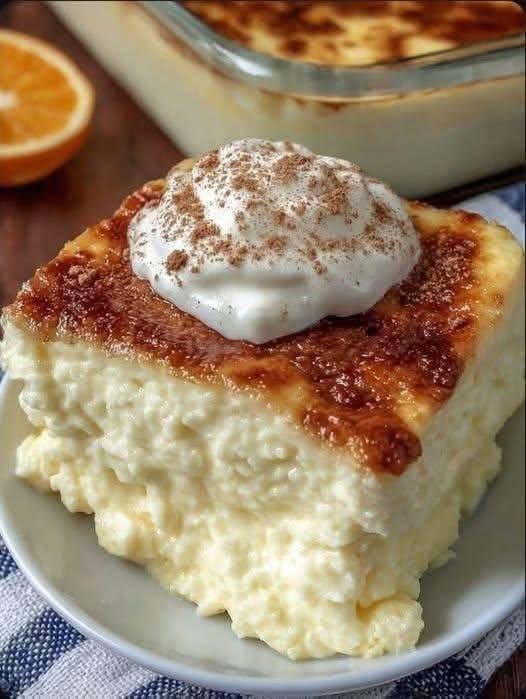
Instructions
- Prepare Your Baking Dish and Water Bath: Preheat your oven to 325°F (160°C). Grease a 9-inch round baking dish or an 8×8 inch square baking dish with butter or non-stick spray. Set the prepared baking dish inside a larger roasting pan.
- Heat the Milk: In a medium saucepan, combine the whole milk, 1 cup of granulated sugar, and salt. Heat over medium heat, stirring occasionally, until the sugar is fully dissolved and the milk is steaming but not boiling. Do not let it come to a boil. Remove from heat and stir in the vanilla extract and orange or lemon zest, if using. Let it cool slightly for about 5-10 minutes.
- Whisk the Eggs: In a large bowl, whisk together the 6 large eggs and 2 large egg yolks until just combined and pale yellow. Be careful not to over-whisk, as incorporating too much air can lead to a less smooth custard.
- Temper the Eggs: Slowly pour the warm milk mixture into the whisked eggs, whisking continuously. This process, called tempering, prevents the eggs from scrambling. Pour in a thin stream, mixing constantly, until all the milk is incorporated.
- Strain the Custard Mixture: For an extra smooth custard, strain the mixture through a fine-mesh sieve into a clean bowl or directly into your prepared baking dish. This removes any bits of cooked egg or chalazae, ensuring a silky-smooth texture.
- Fill the Water Bath: Carefully pour the strained custard mixture into the prepared baking dish. Now, carefully pour hot water into the larger roasting pan, surrounding the baking dish, until the water comes about halfway up the sides of the baking dish. This water bath (bain-marie) creates a gentle, even cooking environment that prevents the custard from curdling or cracking.
- Bake the Custard Cake: Carefully transfer the roasting pan with the custard to the preheated oven. Bake for 50-70 minutes, or until the edges are set but the center still has a slight jiggle when gently shaken. The exact baking time will vary depending on your oven and dish size. Do not overbake, as this can lead to a rubbery texture.
- Cool and Chill: Once baked, carefully remove the roasting pan from the oven. Let the custard cake cool in the water bath for about 15-20 minutes. Then, carefully remove the baking dish from the water bath and let it cool completely on a wire rack at room temperature. Once cooled, cover the dish with plastic wrap and refrigerate for at least 4 hours, or preferably overnight, until thoroughly chilled and set.
- Caramelize the Top (Optional): If you desire a caramelized sugar top similar to crème brûlée, sprinkle the remaining 2 tablespoons of granulated sugar evenly over the chilled custard cake just before serving. Use a kitchen torch to caramelize the sugar until it turns a deep amber color. Alternatively, you can place the chilled cake under a preheated broiler for a very short time (watch it constantly!) until the sugar melts and caramelizes.
- Serve: Cut into slices and serve chilled. Garnish with fresh berries, a dollop of whipped cream, or a drizzle of caramel sauce, if desired.
Cooking Tips and Variations
Achieving the perfect Creamy Baked Milk Custard Cake is all about precision and patience. For an exceptionally smooth texture, always temper your eggs slowly and strain the custard mixture before baking – this removes any potential lumps and ensures a silky finish. The water bath is non-negotiable; it provides gentle, even heat, preventing the custard from cooking too quickly or developing cracks. Don’t rush the baking process, and resist the urge to overbake; the cake should still have a slight wobble in the center when removed from the oven, as it will continue to set as it cools. Thorough chilling is also crucial for the custard to firm up and for the flavors to meld beautifully. For variations, consider infusing the milk with different flavors: a cinnamon stick, a few cardamom pods, or even a split vanilla bean can add wonderful depth. For a citrusy twist, increase the amount of orange or lemon zest, or try lime zest for a brighter note. A touch of almond extract can also complement the vanilla beautifully. If you’re feeling adventurous, experiment with different toppings: a sprinkle of toasted coconut, a dusting of cocoa powder, or a swirl of berry compote can elevate the presentation and flavor. For a decadent twist, try making a caramel layer at the bottom of your baking dish before pouring in the custard, creating a classic flan-like experience.
Storage and Reheating
This Creamy Baked Milk Custard Cake is best enjoyed chilled. Store any leftovers tightly covered with plastic wrap in the refrigerator for up to 3-4 days. It’s important to keep it airtight to prevent it from absorbing refrigerator odors and to maintain its delicate moisture. This cake does not freeze well, as freezing and thawing can alter its creamy texture, making it watery or grainy. Reheating is generally not recommended for this dessert; it is designed to be served cold. The beauty of a baked custard lies in its chilled, refreshing quality. If you’ve added a caramelized sugar topping, it’s best to apply this just before serving, as the sugar will soften and become sticky if stored in the refrigerator for too long. If you have leftovers with a caramelized top, the sugar layer might lose its crispness, but the custard itself will still be delicious.
Frequently Asked Questions
Why did my custard crack on top?
Custard cracks are usually a sign of overbaking or baking at too high a temperature. The water bath helps prevent this by providing gentle, even heat. Ensure your oven temperature is accurate and remove the custard from the oven when the edges are set but the center still has a slight jiggle. Rapid cooling can also sometimes cause cracks, so allow it to cool gradually in the water bath before transferring to a wire rack.
Can I make this recipe dairy-free?
While the traditional recipe relies heavily on dairy for its creamy texture, you can experiment with dairy-free alternatives. Use full-fat coconut milk or a rich oat milk as a substitute for whole milk. Be aware that the flavor and texture will be slightly different, and you might need to adjust the sweetness or add a touch more vanilla to compensate for flavor variations in plant-based milks. The custard may not set quite as firmly as with dairy milk.
How can I tell when the custard is perfectly cooked?
The best way to tell if your custard is done is by gently shaking the baking dish. The edges should appear set and firm, while the very center (about a 1-2 inch diameter) should still have a slight, delicate jiggle, like gelatin. If it’s completely firm throughout, it’s likely overbaked. A thermometer inserted into the center should read around 170-175°F (77-79°C).
Can I prepare this cake ahead of time?
Absolutely! In fact, this Creamy Baked Milk Custard Cake is an excellent make-ahead dessert. It requires thorough chilling for at least 4 hours, but ideally overnight, to fully set and for the flavors to develop. Preparing it a day in advance makes it perfect for entertaining, allowing you to focus on other aspects of your meal. If you plan to add a caramelized sugar topping, do so just before serving for the best crispness.