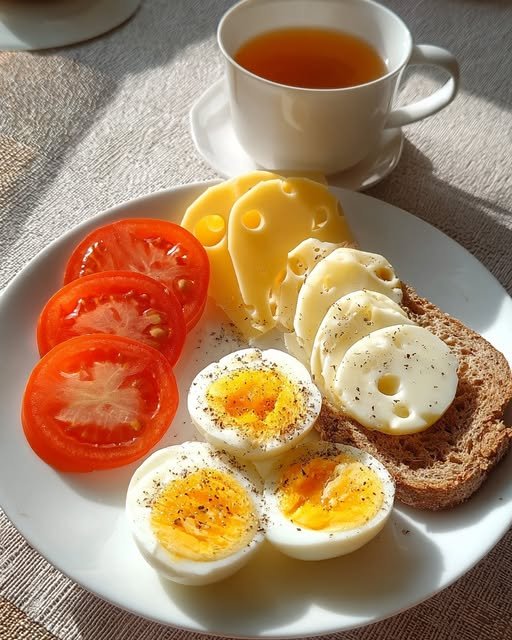
Instructions
- Prepare the Eggs: Bring a small pot of water to a rolling boil. Carefully lower the eggs into the boiling water using a spoon. Reduce the heat slightly to maintain a gentle boil. Cook for exactly 6-7 minutes for a perfect soft-boiled egg with a runny yolk and set whites.
- Prepare an Ice Bath: While the eggs are cooking, prepare an ice bath by filling a small bowl with ice water.
- Chill the Eggs: As soon as the cooking time is up, immediately transfer the eggs from the boiling water to the ice bath using a slotted spoon. Let them sit in the ice water for at least 2 minutes. This stops the cooking process and makes them easier to peel.
- Toast the Bread (Optional): While the eggs are cooling, toast your bread slices to your desired crispness. If using butter, spread it evenly on the warm toast.
- Slice the Tomato and Cheese: Wash and slice the tomato into even rounds. Arrange the cheese slices artfully on your serving plate.
- Peel the Eggs: Gently tap the cooled eggs on a hard surface and carefully peel the shells under cool running water. The ice bath should help the shells slide off more easily.
- Assemble the Plate: Place the peeled soft-boiled eggs on your serving plate alongside the toasted bread, sliced tomato, and cheese.
- Season and Serve: Lightly season the eggs and tomato with salt and freshly ground black pepper. If desired, sprinkle with fresh chives or parsley. Serve immediately with your favorite hot beverage, like a strong cup of coffee or tea.
Cooking Tips and Variations
Achieving the perfect soft-boiled egg is key to this dish. For a consistently runny yolk and firm white, always start with room temperature eggs. This prevents cracking and ensures more even cooking. If your eggs are straight from the fridge, add an extra 30 seconds to the boiling time. Another trick for easy peeling is to add a pinch of baking soda to the boiling water, which can help loosen the membrane from the shell. Don’t overcrowd the pot; cook in batches if necessary to maintain water temperature. Once peeled, slicing the egg in half lengthwise before seasoning can make for a more elegant presentation and easier eating.
The beauty of this Euro-Style Breakfast Plate lies in its adaptability. Don’t feel confined to the specific cheeses mentioned. Experiment with other favorites like creamy Brie, tangy goat cheese, or even a smoked Gouda for a different flavor profile. If you prefer a harder cheese, a thinly sliced Parmesan can add a salty, umami kick. For the bread, consider artisanal sourdough, a crusty baguette, or even a seeded whole grain loaf. To add more protein, thin slices of quality cured meats like prosciutto or salami would be a fantastic addition, staying true to the European inspiration. For an extra pop of freshness and nutrients, add a handful of fresh spinach or arugula under the tomato slices, or thinly sliced cucumber. A dollop of plain Greek yogurt or cottage cheese can also add a creamy, tangy element. For those who enjoy a bit of heat, a dash of hot sauce on the eggs or a sprinkle of red pepper flakes can awaken the palate. Consider adding a small bowl of olives or pickles for a briny contrast, or a spoonful of your favorite fruit preserves for a touch of sweetness.
For those busy mornings, some components can be prepared in advance. You can boil and peel the eggs the night before and store them in the refrigerator, ready to be quickly warmed or enjoyed cold. The cheese and tomato can also be sliced and kept in airtight containers. This prep-ahead strategy makes assembling the plate a breeze, turning a leisurely breakfast into a quick, wholesome option even on the busiest weekdays. And finally, don’t forget the beverage! This plate pairs wonderfully with a strong European-style coffee, a fragrant black tea, or a refreshing glass of freshly squeezed orange juice. The combination truly completes the experience.
Storage and Reheating
This Euro-Style Breakfast Plate is best enjoyed fresh, especially the soft-boiled eggs. The runny yolk is a key part of the experience and texture. However, if you have leftovers, they can be stored. Leftover hard-boiled eggs (if cooked longer) can be stored in an airtight container in the refrigerator for up to 3-4 days. Soft-boiled eggs are best consumed within a day or two for optimal quality. Sliced cheese and tomatoes should be stored separately in airtight containers in the refrigerator for up to 3 days. Toasted bread is best eaten immediately, as it tends to become stale or soggy when stored.
Reheating is generally not recommended for the eggs if you want to maintain the soft-boiled consistency. If you have leftover hard-boiled eggs, they can be eaten cold or gently warmed in a microwave for a few seconds (be careful not to overheat, as they can become rubbery). Cheese and tomatoes are typically served at room temperature or chilled, so no reheating is needed for these components. If you have any leftover bread, it’s usually best to re-toast it to bring back its crispness, or simply enjoy it as is. For the freshest and most enjoyable experience, it’s always recommended to prepare a new plate each time.
Frequently Asked Questions
Can I make the eggs ahead of time?
You can boil and peel the eggs a day in advance and store them in the refrigerator. However, for the best runny yolk experience, we highly recommend preparing the soft-boiled eggs fresh just before serving. If made ahead, the yolk may firm up slightly.
What if I don’t like soft-boiled eggs?
No problem! This plate is incredibly versatile. You can substitute the soft-boiled eggs with hard-boiled eggs (boil for 10-12 minutes), scrambled eggs, or even a fried egg cooked to your preference. The goal is a savory protein component, so choose what you enjoy most.
What kind of bread is best for this breakfast?
Dark, hearty breads like rye, whole wheat sourdough, or a rustic multi-grain loaf work wonderfully. Their robust flavor and texture stand up well to the other ingredients. However, feel free to use any bread you love, from a simple white toast to a crusty baguette.
Can I add meat to this breakfast plate?
Absolutely! Many European breakfasts include cured meats. Thinly sliced prosciutto, salami, ham, or even smoked salmon would be excellent additions to this plate, adding another layer of savory flavor and protein.