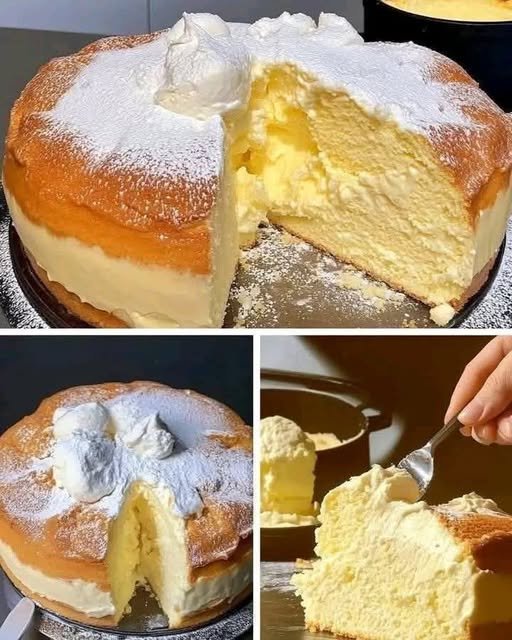
Instructions
- Preheat your oven to 325°F (160°C). Prepare a 9-inch round springform pan by greasing it thoroughly and lining the bottom with parchment paper. If you’re planning to use a water bath (highly recommended for the best texture), wrap the outside of the springform pan securely with two layers of heavy-duty aluminum foil to prevent water from seeping in.
- In a high-speed blender, combine the melted butter, whole milk, softened cream cheese chunks, egg yolks, 1/2 cup granulated sugar, all-purpose flour, cornstarch, vanilla extract, and lemon zest (if using). Blend on high speed until the mixture is completely smooth and creamy, with no lumps of cream cheese remaining. This should take about 1-2 minutes, scraping down the sides of the blender jar as needed to ensure everything is incorporated. Pour this smooth batter into a large mixing bowl.
- In a separate, very clean bowl, using an electric mixer with the whisk attachment, beat the egg whites on medium speed until foamy. Add the pinch of salt. Gradually increase the speed to high and slowly add the remaining 2 tablespoons of granulated sugar, one tablespoon at a time. Continue to beat until stiff, glossy peaks form. The egg whites should hold their shape firmly when you lift the whisk. Be careful not to overbeat, as this can make them dry and difficult to fold.
- Gently fold one-third of the beaten egg whites into the cream cheese batter using a spatula. This lightens the batter and makes it easier to incorporate the remaining whites. Continue to fold in the remaining egg whites in two more additions, being careful not to deflate the mixture. Use a gentle, lifting motion from the bottom of the bowl upwards, turning the bowl as you go, until no streaks of white remain. The goal is to keep as much air in the batter as possible.
- Pour the delicate batter into your prepared springform pan. Gently tap the pan a few times on the counter to release any large air bubbles.
- If baking in a water bath: Place the springform pan into a larger roasting pan. Carefully pour hot water into the roasting pan until it reaches halfway up the sides of the springform pan. This creates a moist environment that helps the cake bake evenly and achieve its signature custardy, cloud-like texture.
- Carefully transfer the roasting pan (with the cake pan inside) to the preheated oven. Bake for 60-70 minutes, or until the top is golden brown and the cake is set but still has a slight jiggle in the center when gently shaken. The internal temperature of the cake should reach 195-200°F (90-93°C).
- Once baked, turn off the oven and leave the cake inside with the oven door ajar for another 15-20 minutes. This slow cooling process helps prevent the cake from cracking or collapsing as it cools.
- Carefully remove the cake from the oven and the water bath (if used). Let it cool completely on a wire rack before attempting to remove it from the springform pan. This is crucial for its delicate structure. Once fully cooled, run a thin knife around the edge of the pan before releasing the springform.
- Just before serving, dust generously with powdered sugar and top with a dollop of freshly whipped cream and fresh berries, if desired. Slice carefully with a warm, sharp knife.
Cooking Tips and Variations
Achieving the perfect Cloud Cake is all about technique and a little patience. Firstly, ensure all your ingredients, especially the cream cheese and eggs, are at room temperature. This allows for a smoother, more uniform batter when blended and better volume from the egg whites. When blending the base batter, don’t rush it. Scrape down the sides of the blender jar several times to ensure there are no hidden lumps of cream cheese; a truly smooth batter is key to that silky texture. For the egg whites, make sure your bowl and whisk are impeccably clean and free of any grease, as even a tiny bit of fat can prevent them from whipping up properly. Beat them until they are stiff but not dry; they should hold a peak but still look glossy. Overbeaten egg whites will be crumbly and hard to fold in, leading to a denser cake.
The folding process is perhaps the most critical step. Be gentle! You’re trying to incorporate the airy egg whites without deflating them. Use a large spatula and a light hand, cutting down through the center of the batter and folding it over, rotating the bowl as you go. Stop folding as soon as no white streaks remain. Over-folding will knock out all the precious air you’ve worked so hard to incorporate, resulting in a less “cloud-like” cake. The water bath is highly recommended for this cake. It creates a steamy, moist environment in the oven, which promotes even baking, prevents cracking, and gives the cake its signature creamy, custardy interior, much like a baked cheesecake. Ensure your springform pan is well-wrapped in foil to prevent water seepage.
When it comes to variations, the possibilities are delightfully simple. For a citrusy twist, increase the lemon zest or add orange zest. A teaspoon of almond extract can be added to the batter along with the vanilla for a nutty aroma. Chocolate lovers can gently fold in a few tablespoons of unsweetened cocoa powder (sifted) into the wet batter before adding the egg whites, or swirl in a thin ribbon of melted chocolate on top before baking. For a coffee-flavored cake, dissolve a teaspoon of instant espresso powder in a tablespoon of hot water and add it to the batter. The beauty of this recipe is its versatility and simplicity. Serve it with a fruit compote, a drizzle of caramel, or simply as is. The delicate flavor of the cake allows any topping to shine.
Storage and Reheating
This Cloud Cake is best enjoyed on the day it’s made, as its delicate, airy texture is at its peak. However, if you have leftovers, they can be stored in an airtight container in the refrigerator for up to 3-4 days. It’s important to keep it covered to prevent it from drying out or absorbing odors from other foods in the fridge. If the cake has already been dusted with powdered sugar, the sugar may dissolve into the cake over time due to moisture; you can always dust it again before serving leftovers.
For reheating, the Cloud Cake is typically served chilled or at room temperature, which helps maintain its unique texture. Reheating in a microwave or oven is generally not recommended, as it can alter the delicate structure and make the cake rubbery or dry. If you prefer it slightly warmer, simply let a slice sit at room temperature for 15-20 minutes before serving. Avoid freezing this cake, as the freezing and thawing process will likely compromise its signature light and airy consistency, making it dense and watery.
Frequently Asked Questions
Why did my Cloud Cake crack on top?
Cracking is a common issue with delicate cakes like this, often due to a sudden change in temperature or overbaking. To prevent cracking, ensure you’re using a water bath, which provides a humid environment and helps the cake bake gently. Also, don’t open the oven door too frequently during baking. After baking, turn off the oven and leave the cake inside with the door ajar for 15-20 minutes to allow it to cool down gradually, preventing a sudden shock to its structure.
Can I make this Cloud Cake without a blender?
While the recipe title emphasizes the blender for its ease, you can technically make the base batter using an electric mixer. You would need to ensure the cream cheese is very soft and beat it with the sugar until smooth, then gradually add the other wet ingredients before folding in the flour and cornstarch. However, a blender provides the most effortless and lump-free batter, which is key to the cake’s smooth texture. The egg whites will still need to be whipped separately using an electric mixer.
What if I don’t have a springform pan?
A springform pan is ideal because it allows for easy removal of the delicate cake without inverting it. If you don’t have one, you could try a deep, round cake pan (9-inch) that you’ve greased and floured very well, and lined the bottom and sides with parchment paper, leaving an overhang to help lift the cake out. However, be extremely gentle when removing the cake, as its soft texture makes it prone to breaking. A water bath would still be recommended, so ensure your alternative pan is also well-wrapped to prevent water from entering.
Can I substitute the cream cheese for anything else?
The cream cheese is a fundamental ingredient that contributes to the cake’s creamy texture, slight tang, and stability, similar to a Japanese cheesecake. Substituting it would significantly change the nature of the cake. While some recipes use ricotta or mascarpone for similar effects in other desserts, for this specific “Cloud Cake” texture, cream cheese is essential. We recommend sticking to the recipe for the best results.