Instructions
- Prepare the Strawberries: First, gently wash the strawberries under cool running water. Pat them thoroughly dry with a paper towel. Remove the green hulls and then slice them in half or into quarters, depending on their size and your preference. Set aside.
- Prepare the Avocado: Carefully slice the ripe avocado in half lengthwise around the pit. Twist the halves to separate them. Gently remove the pit by carefully tapping it with a knife edge and twisting, or by scooping it out with a spoon. Using a spoon, scoop the flesh out of each half. Place the avocado flesh on a cutting board and slice it into even, thin strips or dice it into cubes. Arrange the avocado slices artfully on one side of your serving plate immediately to prevent browning.
- Scramble the Eggs: In a small bowl, crack the two large eggs. Add a pinch of salt and black pepper. Whisk the eggs vigorously with a fork until the yolks and whites are fully combined and slightly frothy, indicating a good amount of air has been incorporated.
- Cook the Eggs: Heat a non-stick skillet over medium-low heat. Add the unsalted butter or olive oil and allow it to melt and coat the bottom of the pan. Once the butter is shimmering (or oil is hot), pour in the whisked eggs.
- Gentle Scramble: Let the eggs sit undisturbed for about 30-60 seconds until the edges just begin to set. Then, using a rubber spatula, gently push the cooked egg from the edges towards the center, allowing the uncooked egg to flow underneath. Continue this process, folding and pushing the eggs, until they are mostly set but still slightly moist and creamy. Avoid overcooking, as this will result in dry, rubbery eggs. Remove the skillet from the heat when the eggs are still glistening and soft.
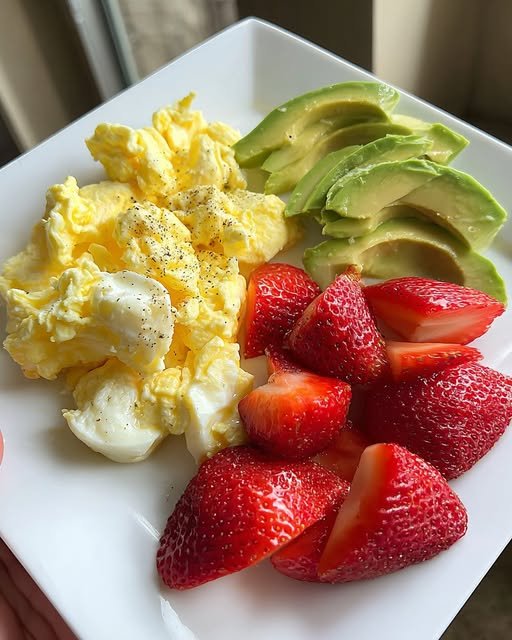
- Assemble the Plate: Carefully transfer the creamy scrambled eggs to your serving plate, placing them alongside the prepared avocado. Arrange the fresh strawberry halves or quarters on the remaining open space on the plate, creating a colorful and inviting presentation.
- Final Touches (Optional): If desired, sprinkle a little extra black pepper over the eggs and a few fresh herbs like chopped chives or parsley for added flavor and visual appeal. Serve immediately and enjoy your fresh, light, and feel-good breakfast!
Cooking Tips and Variations
For the best scrambled eggs, always use fresh eggs and cook them over low to medium-low heat. This slow cooking method allows the curds to form gently, resulting in a silkier, creamier texture. Don’t be afraid to pull them off the heat a little before they look fully set; residual heat will continue to cook them to perfection. When preparing your avocado, choose one that yields slightly to gentle pressure but isn’t mushy. For a neater presentation, consider fanning out your avocado slices.
To vary this power plate, consider adding a sprinkle of everything bagel seasoning to your avocado for an extra savory kick. For a touch of spice, a dash of hot sauce or red pepper flakes can be stirred into the eggs. If you’re looking for more greens, a handful of fresh spinach can be wilted into the eggs during the last minute of cooking. For a different fruit profile, blueberries or raspberries make excellent substitutes for strawberries, offering their own unique nutritional benefits and flavors. A small side of whole-grain toast or a sprinkle of chia seeds over the avocado can also boost fiber content.
If you’re aiming for a vegan version, swap the eggs for a tofu scramble seasoned with nutritional yeast for a cheesy flavor, and omit the butter, using olive oil instead. For those with egg allergies, a chickpea flour “omelet” batter can be a fantastic alternative. Experiment with different herbs like dill or basil in your eggs to find your favorite flavor combinations. The beauty of this clean power breakfast is its adaptability to your personal taste and dietary needs.
Storage and Reheating
This Clean Power Breakfast Plate is best enjoyed immediately after preparation to savor the freshness of the avocado and strawberries and the perfect texture of the scrambled eggs. However, if you have leftovers, they can be stored, though the quality will diminish slightly.
Store the scrambled eggs in an airtight container in the refrigerator for up to 1-2 days. The avocado, if already sliced, will brown due to oxidation. To minimize browning, you can sprinkle it with a little lemon or lime juice before storing, or try to store it pressed against the side of the container to limit air exposure. Store the strawberries separately in an airtight container in the refrigerator for up to 2-3 days.
When reheating, it’s best to reheat the scrambled eggs gently in a skillet over low heat, stirring occasionally, until just warmed through. Avoid microwaving eggs if possible, as it can make them rubbery. If you must use a microwave, heat in short 15-second bursts, stirring between each, until warm. The avocado and strawberries should not be reheated; they are best consumed chilled or at room temperature. For optimal enjoyment, it’s recommended to prepare the avocado and strawberries fresh for each serving.
Frequently Asked Questions
What makes this breakfast “clean eating”?
This breakfast is considered “clean eating” because it focuses on whole, unprocessed ingredients. Eggs provide natural protein, avocado offers healthy fats, and strawberries deliver vitamins and fiber directly from nature. There are no artificial additives, excessive sugars, or highly processed components, making it a wholesome and nourishing choice.
Can I prepare any components of this breakfast ahead of time?
While the scrambled eggs and avocado are best prepared fresh, you can wash and slice your strawberries the night before and store them in an airtight container in the refrigerator. This small step can save a few minutes in the morning, making your breakfast even quicker to assemble.
Is this breakfast suitable for a low-carb diet?
Absolutely! With its emphasis on protein (eggs) and healthy fats (avocado), and a moderate amount of carbohydrates from the strawberries, this power plate is inherently low-carb friendly. It provides sustained energy without spiking blood sugar, making it an excellent choice for those managing carb intake.
What if I don’t like strawberries? What fruit can I use instead?
If strawberries aren’t your preference, feel free to substitute them with other berries like blueberries, raspberries, or blackberries, which offer similar nutritional benefits and vibrant flavors. Sliced kiwi, melon wedges, or even a few orange segments could also provide a refreshing fruity component to your plate.