Instructions
- Preheat your oven to 425°F (220°C). Line a baking sheet with parchment paper or lightly grease it.
- Start with the Biscuits: In a large bowl, whisk together the flour, baking powder, salt, and baking soda (if using buttermilk).
- Add the cold, cubed butter to the dry ingredients. Using a pastry blender, your fingertips, or two knives, cut the butter into the flour mixture until it resembles coarse crumbs with some pea-sized pieces of butter remaining.
- Make a well in the center of the flour mixture and pour in the cold buttermilk (or milk). Stir with a fork just until the dough comes together. Be careful not to overmix; a shaggy dough is desirable.
- Turn the dough out onto a lightly floured surface. Gently pat the dough into a rectangle about 1/2 to 3/4 inch thick. Fold the dough in half, then pat it down again. Repeat this folding and patting process 2-3 more times (this creates layers).
- Pat the dough to a final thickness of about 1/2 inch. Using a 2-inch biscuit cutter (or a drinking glass), cut out biscuits. Press straight down without twisting the cutter to ensure a good rise. Re-roll scraps gently once to cut out any remaining biscuits.
- Place the biscuits on the prepared baking sheet, ensuring they are touching if you prefer softer sides, or slightly separated for crispier edges.
- Bake for 12-15 minutes, or until the biscuits are golden brown on top and bottom. Once baked, remove from the oven and brush with a little melted butter if desired. Set aside to keep warm.
- Next, prepare the Sausage Patties: In a medium bowl, combine the ground pork with salt, black pepper, dried sage, red pepper flakes (if using), garlic powder, and onion powder.
- Using your hands, gently mix the seasonings into the pork until just combined. Be careful not to overmix, as this can make the patties tough.
- Form the seasoned pork into 6-8 evenly sized patties, about 1/2 inch thick. Make a slight indentation in the center of each patty with your thumb to prevent them from puffing up too much during cooking.
- Heat the olive oil or vegetable oil in a large skillet over medium heat.
- Once the oil is hot, carefully place the sausage patties in the skillet. Cook for 4-6 minutes per side, or until golden brown and cooked through. An instant-read thermometer inserted into the center should read 160°F (71°C).
- Remove the sausage patties from the skillet and place them on a plate lined with paper towels to drain any excess grease. Keep warm.
- Finally, make the Scrambled Eggs: In a medium bowl, whisk the eggs with milk or half-and-half, a pinch of salt, and a dash of black pepper until well combined and slightly frothy.
- Melt the butter in a non-stick skillet over medium-low heat. Ensure the butter coats the bottom of the pan.
- Pour the egg mixture into the skillet. Let it sit undisturbed for about 30 seconds until the edges just begin to set.
- Using a rubber spatula, gently push the cooked egg from the edges towards the center, allowing the uncooked egg to flow underneath. Continue to gently fold and stir the eggs until they are mostly set but still slightly moist and creamy. Do not overcook, as they will continue to cook slightly from residual heat.
- Remove the skillet from the heat immediately. Taste and adjust seasoning if necessary.
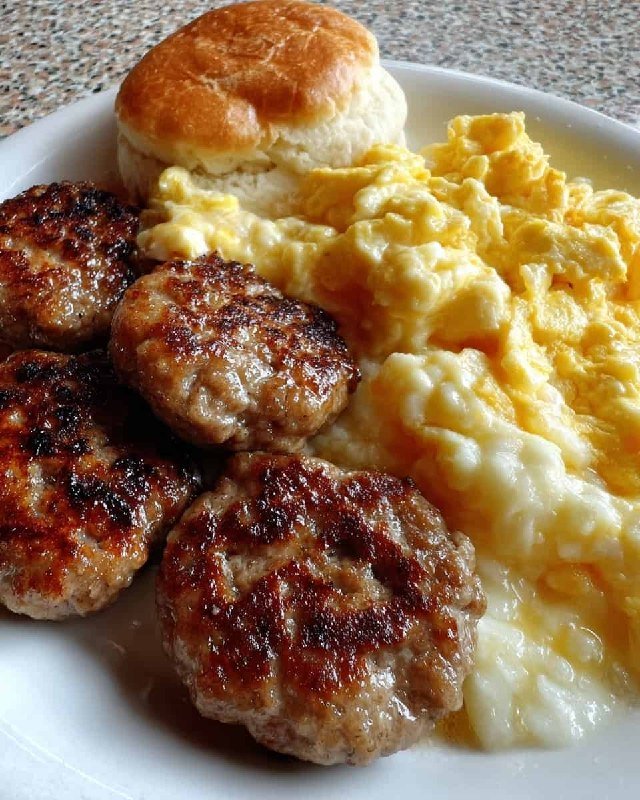
- Assemble your Classic Southern Breakfast Plate: Place two warm biscuits, two sausage patties, and a generous serving of creamy scrambled eggs on each plate.
- Serve immediately with any desired optional garnishes or accompaniments like hot sauce, fresh chives, or a side of grits. Enjoy!
Cooking Tips and Variations
For the fluffiest biscuits, ensure your butter and buttermilk are as cold as possible. This creates steam pockets during baking, resulting in a light, airy texture. Avoid overworking the biscuit dough; a light touch is key to tenderness. If you don’t have buttermilk, you can make your own by adding 1 tablespoon of white vinegar or lemon juice to a measuring cup, then filling the rest with regular milk to make 3/4 cup. Let it sit for 5 minutes before using. For a richer biscuit, you can brush the tops with melted butter immediately after they come out of the oven.
When forming sausage patties, don’t press too firmly. A light hand keeps them tender. You can customize the seasoning for your sausage patties; try adding a pinch of maple syrup for a touch of sweetness, or more red pepper flakes for extra heat. For a leaner option, you can substitute ground turkey or chicken for pork, though the flavor profile will be slightly different. Ensure the patties are cooked through by checking the internal temperature, which should be 160°F (71°C).
The secret to creamy scrambled eggs is low heat and gentle cooking. Don’t rush them! Removing them from the heat when they are still slightly underdone will prevent them from becoming dry and rubbery. For an even richer texture, you can use heavy cream instead of milk. For an extra layer of flavor, melt a pat of butter into the eggs just before serving. You can also fold in a handful of shredded cheese, like cheddar or Monterey Jack, during the last minute of cooking for cheesy scrambled eggs.
To vary your breakfast plate, consider adding a side of homemade sausage gravy to pour over your biscuits. A bowl of buttery, cheesy grits is another classic Southern addition. For a healthier touch, serve with a side of fresh seasonal fruit. Don’t forget the hot sauce for those who like a little kick!
Storage and Reheating
Leftover components of your Classic Southern Breakfast Plate can be stored separately in airtight containers in the refrigerator for up to 3-4 days. This allows each item to maintain its best texture and flavor.
To reheat the biscuits, the best method is to warm them in a preheated oven or toaster oven at 300°F (150°C) for 5-7 minutes, or until heated through and slightly crispy on the outside. This helps them regain some of their original texture. Microwaving biscuits tends to make them soft and sometimes chewy.
Sausage patties can be reheated in a skillet over medium-low heat until warmed through, about 2-3 minutes per side. You can also reheat them in the microwave for 30-60 seconds, though they may not be as crispy. For best results, a toaster oven or conventional oven at 350°F (175°C) for 5-10 minutes also works well.
Scrambled eggs are best enjoyed fresh, as they can become rubbery when reheated. However, if you must reheat them, do so gently in a microwave on low power, stirring occasionally, or in a non-stick skillet over very low heat with a tiny bit of butter or milk to help rehydrate them. Avoid high heat, which will make them tough.
For convenience, you can prepare the sausage patties ahead of time. Cook them fully, let them cool, and then store them in an airtight container in the refrigerator. Reheat as directed. Biscuit dough can also be prepared and cut, then frozen on a baking sheet before transferring to a freezer bag. Bake from frozen, adding a few extra minutes to the baking time.
Frequently Asked Questions
Can I make the biscuit dough ahead of time?
Yes, you can prepare the biscuit dough ahead of time! Once you’ve cut out the biscuits, you can place them on a baking sheet and refrigerate them for up to 24 hours before baking. Alternatively, you can freeze unbaked biscuits. Place them on a baking sheet in the freezer until solid, then transfer them to a freezer-safe bag. When ready to bake, place the frozen biscuits on a baking sheet and bake as directed, adding an extra 5-10 minutes to the baking time.
What’s the best way to prevent the scrambled eggs from becoming rubbery?
The key to creamy, non-rubbery scrambled eggs is low heat and not overcooking. Cook them slowly over medium-low heat, stirring and folding gently. Remove them from the heat when they are still slightly moist and set, as they will continue to cook from residual heat. Adding a splash of milk or cream also helps keep them tender, and using a non-stick skillet prevents sticking and allows for easier, gentler cooking.
Can I substitute other meats for the ground pork in the sausage patties?
Absolutely! While ground pork is traditional for its rich flavor and fat content, you can certainly experiment. Ground turkey or ground chicken can be used for a leaner option, though you might want to add a little extra olive oil to the pan when cooking to prevent sticking and drying out. Keep in mind that the flavor profile will change, so you might want to adjust the seasonings slightly to complement the new meat.