Instructions
- Prepare the Pancake Batter: In a large bowl, whisk together the flour, sugar, baking powder, and salt. In a separate medium bowl, whisk together the milk, egg, and melted butter until well combined. Pour the wet ingredients into the dry ingredients and mix until just combined. Do not overmix; a few lumps are okay. Set aside for 5-10 minutes to allow the baking powder to activate.
- Cook the Sausage: While the pancake batter rests, heat a large non-stick skillet or cast-iron pan over medium heat. Add the sausage links or patties and cook for 8-12 minutes, turning occasionally, until thoroughly cooked through and nicely browned on all sides. Remove the sausage from the pan and set aside on a plate, keeping warm.
- Sauté the Vegetables (Optional): In the same skillet or a separate small pan, heat 1 teaspoon of olive oil over medium heat. Add the sliced mushrooms and cherry tomatoes (if using). Sauté for 5-7 minutes, stirring occasionally, until the mushrooms are tender and lightly browned, and the tomatoes have softened slightly. Season with a pinch of salt and pepper. Remove from the pan and set aside with the sausage.
- Cook the Pancakes: Heat a griddle or large non-stick skillet over medium-low heat. Lightly grease with butter. Pour about 1/4 cup of pancake batter per pancake onto the griddle. Cook for 2-3 minutes per side, or until golden brown and cooked through. Flip gently when bubbles appear on the surface and the edges look set. Transfer cooked pancakes to a plate and keep warm (you can place them in a low oven, around 200°F/95°C, or cover loosely with foil). Repeat with remaining batter.
- Prepare the Scrambled Eggs: While the last batch of pancakes cooks, crack the eggs into a bowl. Add the milk or cream, salt, and pepper. Whisk vigorously with a fork until the yolks and whites are fully combined and slightly frothy.
- Scramble the Eggs: In a non-stick skillet (the one used for sausage and vegetables, if cleaned, or a separate one), melt 1 teaspoon of butter over low heat. Pour in the egg mixture. Let the eggs sit undisturbed for about 30 seconds until the edges just begin to set.
- Finish Scrambling: Using a rubber spatula, gently push the cooked portions of the eggs from the edges towards the center, tilting the pan to allow uncooked egg to flow underneath. Continue to cook and gently fold the eggs until they are mostly set but still slightly moist and creamy. Do not overcook. Remove from heat immediately.
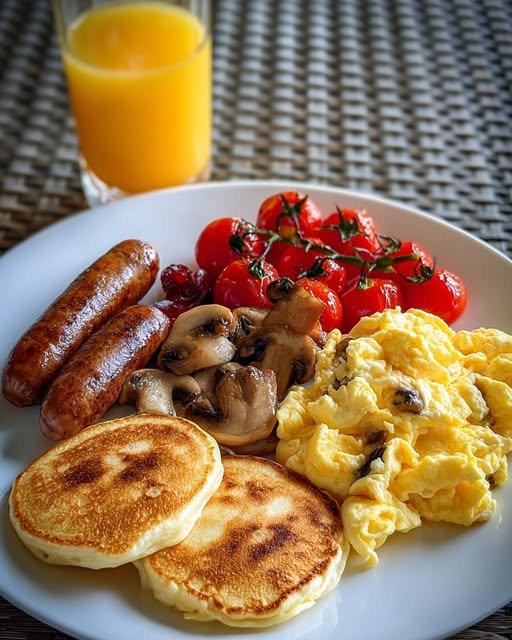
- Assemble and Serve: Arrange the cooked pancakes, scrambled eggs, sausage, and sautéed vegetables on a plate. Serve immediately with a drizzle of maple syrup, a pat of butter, fresh fruit, and a glass of orange juice.
Cooking Tips and Variations
Pancake Perfection:
- Don’t Overmix: The key to fluffy pancakes is to mix the batter just until the dry and wet ingredients are combined. Lumps are perfectly fine and even desirable. Overmixing develops the gluten, leading to tough, chewy pancakes.
- Rest the Batter: Allowing the batter to rest for 5-10 minutes gives the baking powder time to activate, resulting in a lighter and fluffier texture.
- Buttermilk Boost: For extra tender and tangy pancakes, substitute regular milk with buttermilk. If you don’t have buttermilk, you can make your own by adding 1 tablespoon of white vinegar or lemon juice to 1 cup of regular milk and letting it sit for 5 minutes before using.
- Test Your Griddle: Before cooking a full batch, do a test pancake. This helps you gauge the correct temperature of your griddle. It should be hot enough to cook evenly but not so hot that the outside burns before the inside cooks.
Fluffy Scrambled Eggs:
- Low and Slow: The most crucial tip for fluffy scrambled eggs is to cook them over low to medium-low heat. High heat makes them rubbery.
- Creamy Addition: A splash of milk, cream, or even water added to the eggs before whisking helps create steam during cooking, resulting in a softer, fluffier texture.
- Don’t Overcook: Remove the eggs from the heat when they are still slightly moist and look a little undercooked. They will continue to cook from residual heat, ensuring they don’t become dry.
- Gentle Stirring: Use a rubber spatula and gently push and fold the eggs rather than vigorously stirring them. This helps create soft curds.
Sausage Sizzle:
- Even Browning: Ensure your skillet is adequately heated before adding the sausage. Turn the sausage frequently to achieve an even golden-brown crust and thorough cooking.
- Don’t Crowd the Pan: If cooking a larger batch, cook the sausage in batches to avoid overcrowding the pan, which can steam the sausage instead of browning it.
Vegetable Enhancements:
- Garlic and Herbs: When sautéing mushrooms, add a minced clove of garlic and a pinch of fresh or dried thyme or rosemary for enhanced flavor.
- Roasted Tomatoes: For a sweeter and more concentrated tomato flavor, instead of sautéing, roast the cherry tomatoes on the vine in a preheated oven at 400°F (200°C) for 10-15 minutes with a drizzle of olive oil, salt, and pepper until they burst.
Variations:
- Meat Alternatives: Substitute pork sausage with turkey sausage, bacon, or even ham.
- Cheese Please: Stir shredded cheddar, Monterey Jack, or a sprinkle of Parmesan into your scrambled eggs during the last minute of cooking.
- Sweet Pancakes: Add a handful of blueberries, chocolate chips, or sliced bananas to the pancake batter before cooking.
- Spice It Up: A pinch of red pepper flakes in the eggs or a dash of hot sauce on the side can add a nice kick.
- Hearty Sides: Add a small serving of breakfast potatoes or hash browns to complete the plate.
- Gluten-Free Option: Use a 1:1 gluten-free all-purpose flour blend for the pancakes.
Storage and Reheating
Pancakes:
- Storage: Allow pancakes to cool completely. Store them in an airtight container or a freezer-safe bag with parchment paper between each pancake to prevent sticking. They can be stored in the refrigerator for up to 3-4 days or in the freezer for up to 2-3 months.
- Reheating:
- From Refrigerator: Reheat in a toaster, toaster oven, microwave (for 30-60 seconds), or on a griddle over medium heat until warmed through.
- From Freezer: Reheat directly from frozen in a toaster oven or oven at 350°F (175°C) for 5-10 minutes, or in the microwave.
Scrambled Eggs:
- Storage: Scrambled eggs are best enjoyed fresh. If you must store them, allow them to cool and place in an airtight container in the refrigerator for no more than 1-2 days.
- Reheating: Reheat gently in the microwave for short bursts (15-30 seconds), stirring between each, until just warm. Be careful not to overcook, as they can become rubbery. A tiny splash of milk or water can help restore some moisture.
Sausage:
- Storage: Cooked sausage can be stored in an airtight container in the refrigerator for 3-4 days or frozen for up to 1-2 months.
- Reheating:
- From Refrigerator: Reheat in a skillet over medium heat until warmed through, or in the microwave.
- From Freezer: Thaw in the refrigerator overnight, then reheat as above.
Sautéed Vegetables:
- Storage: Store cooked mushrooms and tomatoes in an airtight container in the refrigerator for up to 2-3 days.
- Reheating: Reheat gently in a skillet over low heat or in the microwave until warmed through.
Frequently Asked Questions
Can I make the pancake batter ahead of time?
Yes, you can! You can prepare the pancake batter the night before. Cover it tightly and refrigerate. When ready to cook, give it a gentle stir (don’t overmix). You might need to add a tablespoon or two of milk to thin it slightly, as it can thicken in the fridge. Letting it sit overnight can sometimes result in slightly denser pancakes, but they will still be delicious.
What if I don’t have a griddle for pancakes?
No problem! A large non-stick skillet or a well-seasoned cast-iron pan works perfectly well for cooking pancakes. Just ensure it’s heated evenly over medium-low heat and lightly greased before pouring the batter.
How do I know when the eggs are cooked just right?
Perfectly scrambled eggs should be set but still moist and creamy, not dry or rubbery. They should have small, soft curds. Remove them from the heat when they are still slightly glossy and look a little underdone, as they will continue to cook from the residual heat of the pan.
Can I use different types of sausage?
Absolutely! This recipe is versatile. Feel free to use pork breakfast sausage, turkey sausage, chicken sausage, or even vegetarian sausages. Adjust cooking times according to the specific type of sausage you choose to ensure it’s cooked through.