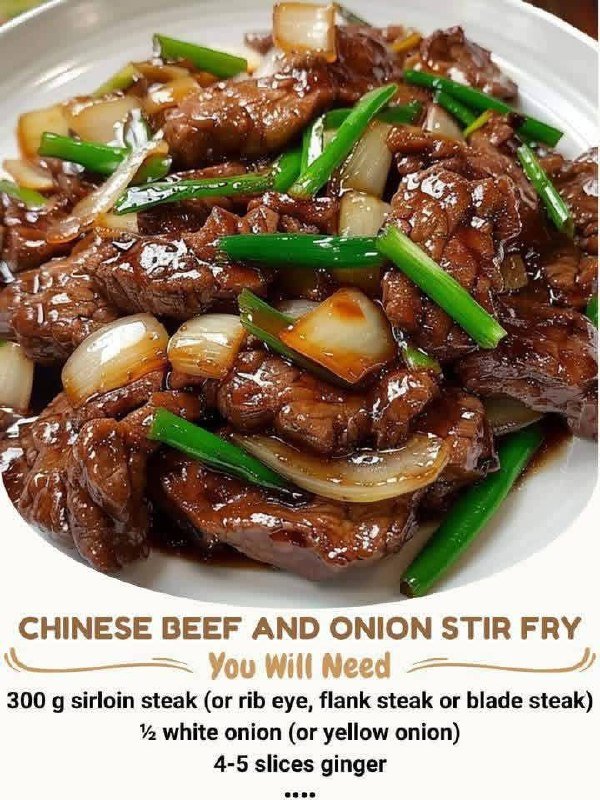
Instructions
- Prepare the Beef: Place the thinly sliced beef in a medium bowl. Add the marinade ingredients (1 tablespoon soy sauce, 1 tablespoon Shaoxing wine, 1 teaspoon cornstarch, 1/2 teaspoon sesame oil, 1/4 teaspoon white pepper). Toss well to coat every piece of beef. Let it marinate at room temperature for at least 15 minutes, or in the refrigerator for up to 30 minutes.
- Prepare the Stir-Fry Sauce: In a small bowl, whisk together all the stir-fry sauce ingredients (1/4 cup low-sodium soy sauce, 1 tablespoon dark soy sauce, 1 tablespoon oyster sauce, 1 tablespoon rice vinegar, 1 tablespoon sugar, 1 teaspoon cornstarch, 1/2 cup chicken broth or water) until the cornstarch is fully dissolved and there are no lumps. Set aside.
- Prepare Vegetables: Slice the yellow onions into 1/2-inch thick wedges. Mince the garlic and grate the ginger. Cut the green onions into 2-inch pieces, separating the white and green parts. Have all your ingredients ready and within reach before you start cooking, as stir-frying is a very fast process.
- Cook the Beef: Heat 1 tablespoon of cooking oil in a large wok or a heavy-bottomed skillet over high heat until it’s smoking slightly. Add the marinated beef in a single layer, ensuring not to overcrowd the pan. You may need to cook the beef in two batches to get a good sear. Stir-fry for 1-2 minutes per side until beautifully browned and just cooked through. Remove the beef from the wok and set aside on a plate.
- Stir-Fry Aromatics and Onions: Add the remaining 1 tablespoon of cooking oil to the wok. Add the minced garlic and grated ginger, along with the white parts of the green onions. Stir-fry for about 30 seconds until fragrant.
- Add Yellow Onions: Add the sliced yellow onions to the wok. Stir-fry for 3-4 minutes, or until the onions begin to soften and become slightly translucent but still retain a bit of crispness. You want them to be tender-crisp, not mushy.
- Combine and Sauce: Return the cooked beef to the wok with the onions. Give the prepared stir-fry sauce a quick whisk again (as the cornstarch can settle) and pour it over the beef and onions. Bring the sauce to a simmer, stirring constantly, until it thickens and coats all the ingredients, which should take about 1-2 minutes.
- Finish and Serve: Stir in the green parts of the green onions. Toss everything together for another 30 seconds. Remove from heat immediately. Serve hot over steamed white rice or your favorite noodles. Enjoy your delicious Chinese Beef and Onion Stir Fry!
Cooking Tips and Variations
To achieve the best possible Chinese Beef and Onion Stir Fry, mastering a few key techniques and knowing how to adapt the recipe can make all the difference. The most crucial tip for any stir-fry is to ensure your wok or pan is screaming hot before you add any ingredients. High heat is essential for searing the beef quickly, preventing it from steaming, and giving it that desirable slightly charred exterior. If your pan isn’t hot enough, the beef will release its juices, boil rather than fry, and become tough. Don’t overcrowd the pan; if you have a smaller pan, cook the beef in two batches. This allows each piece to get proper contact with the hot surface, leading to a better sear and more tender results.
Another vital tip is to perform “mise en place” – have all your ingredients prepped, chopped, and measured before you even turn on the stove. Stir-frying is incredibly fast, and once you start, there’s no time to chop an onion or measure out soy sauce. Everything should be within arm’s reach so you can add ingredients in quick succession. For the beef, slicing it thinly against the grain is critical for tenderness. If you slice with the grain, the muscle fibers remain long, resulting in chewy beef. Slicing against the grain shortens these fibers, making the beef much more tender and pleasant to eat.
For variations, this recipe is incredibly versatile. To add more vegetables, consider tossing in sliced bell peppers (red, yellow, or green), broccoli florets, snow peas, or sliced mushrooms during step 6, along with the yellow onions. Adjust the cooking time slightly to ensure they are tender-crisp. If you like a bit of heat, a pinch of red pepper flakes added with the garlic and ginger, or a drizzle of sriracha at the end, will elevate the spice level. For a different protein, you can easily substitute chicken breast or thigh, thinly sliced, or even firm tofu cut into cubes and pan-fried until golden before adding to the stir-fry. For a richer flavor profile, consider adding a teaspoon of black bean paste or a dash of chili bean paste to the sauce. Experiment with different types of onions too – red onions can add a sharper bite and beautiful color, while sweet onions will enhance the dish’s overall sweetness. Finally, for an extra layer of umami, a sprinkle of toasted sesame seeds over the finished dish adds both flavor and visual appeal.
Storage and Reheating
Proper storage and reheating are key to enjoying your Chinese Beef and Onion Stir Fry leftovers without sacrificing flavor or texture. Once cooled, transfer any leftover stir-fry to an airtight container. It can be stored in the refrigerator for up to 3-4 days. It’s best to store the stir-fry separate from any rice or noodles you served it with, as the rice can become mushy if stored with the saucy components.
When reheating, the goal is to warm it through without overcooking the beef or making the onions soggy. The best method for reheating stir-fry is on the stovetop. Heat a non-stick skillet or wok over medium-high heat. Add a tiny splash of water or broth (about 1-2 tablespoons) to create some steam and prevent drying. Add the leftover stir-fry and toss frequently for 3-5 minutes, or until heated through. If the sauce seems a bit dry, you can add another splash of soy sauce or broth. Avoid reheating in the microwave if possible, as it can make the beef tough and the onions soft. However, if using a microwave, reheat in short bursts (30-60 seconds) and stir in between to ensure even heating and prevent overcooking, adding a tablespoon of water before heating can also help.
Frequently Asked Questions
What kind of beef is best for stir-fry?
Flank steak and sirloin are excellent choices for stir-frying due to their robust flavor and tenderness when sliced thinly against the grain. Other good options include ribeye, blade steak, or even tenderloin for a more luxurious cut. The key is to choose a cut that isn’t too tough and to slice it properly to ensure it cooks quickly and remains tender.
Can I make this dish ahead of time?
While stir-fries are best enjoyed fresh, you can do a lot of prep work in advance. You can slice and marinate the beef up to 24 hours ahead, keeping it refrigerated. The stir-fry sauce can also be mixed and stored in the refrigerator for a few days. Chop all your vegetables ahead of time and store them in airtight containers. This way, when it’s dinner time, the actual cooking process will be incredibly fast, taking less than 15 minutes.
Why is my beef tough in stir-fry?
Tough beef in stir-fry is usually due to a few common mistakes. First, not slicing the beef thinly enough or not slicing it against the grain will make it chewy. Second, overcrowding the pan lowers the temperature, causing the beef to boil instead of sear, which also toughens it. Always cook beef in batches if necessary. Third, overcooking the beef will dry it out and make it tough; stir-fry beef cooks very quickly, so aim for just cooked through.
What can I use instead of Shaoxing wine?
Shaoxing wine is a traditional Chinese cooking wine that adds a unique depth of flavor. If you don’t have it, a good dry sherry (like fino or oloroso) is the best substitute. White wine vinegar or even a small amount of chicken broth with a squeeze of lemon juice can work in a pinch, but the flavor will be slightly different. Avoid using regular drinking wine as it may not have the same savory notes.