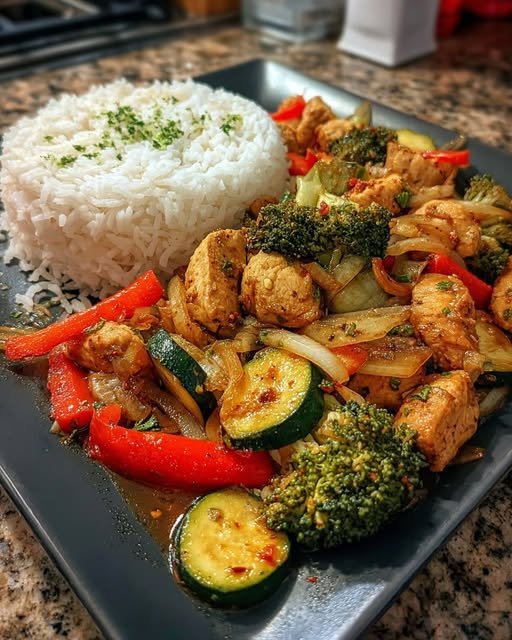
Instructions
- Prepare the Sauce: In a small bowl, whisk together the soy sauce, oyster sauce, rice vinegar, brown sugar, cornstarch, and water or chicken broth. Set aside.
- Cook the Chicken: Heat 1 tablespoon of sesame oil in a large wok or skillet over medium-high heat. Add the chicken pieces and cook, stirring occasionally, until browned and cooked through, about 5-7 minutes. Remove the chicken from the wok and set aside on a plate.
- Stir-Fry the Vegetables: Add the sliced onion to the wok and stir-fry for 2-3 minutes until slightly softened.
- Add More Vegetables: Add the broccoli florets and red bell pepper to the wok. Stir-fry for another 3-4 minutes, until the vegetables are crisp-tender.
- Introduce Zucchini and Aromatics: Add the sliced zucchini, minced garlic, and grated ginger (if using) to the wok. Stir-fry for 2-3 minutes until the zucchini is just tender.
- Combine and Sauce: Return the cooked chicken to the wok with the vegetables. Give the prepared sauce a quick whisk again (as cornstarch can settle) and pour it over the chicken and vegetables.
- Thicken the Sauce: Stir constantly as the sauce comes to a simmer and thickens, coating all the ingredients. This should take about 1-2 minutes.
- Serve: Remove from heat. Serve immediately over warm cooked rice.
- Garnish: Garnish with sesame seeds, chopped green onions, or red pepper flakes if desired.
Cooking Tips and Variations
To achieve the perfect stir-fry texture, avoiding soggy vegetables, remember these key tips. Firstly, always use a very hot wok or large skillet. High heat is crucial for searing and quick cooking, which helps the vegetables retain their crispness. Secondly, do not overcrowd the pan. If you have a large amount of chicken or vegetables, cook them in batches. Overcrowding lowers the pan’s temperature, leading to steaming rather than stir-frying, which results in soggy textures. Make sure all your ingredients are prepped and ready to go before you start cooking, as stir-frying moves very quickly. Cut your vegetables and chicken into uniform sizes to ensure even cooking, meaning everything will be perfectly tender-crisp at the same time. For the sauce, you can adjust the consistency by adding a little more cornstarch slurry (cornstarch mixed with a small amount of cold water) if you prefer a thicker sauce, or a splash more broth or water if it’s too thick. For a spicier kick, add a pinch of red pepper flakes to the sauce or a dash of sriracha at the end. To elevate the flavor, consider marinating the chicken for at least 15-30 minutes in a small amount of soy sauce, rice vinegar, and a pinch of cornstarch before cooking; this also helps tenderize the meat. For dietary variations, swap chicken for shrimp, beef, tofu, or tempeh. You can also experiment with different vegetables like snap peas, carrots, mushrooms, or bell peppers of various colors. For a low-carb option, serve over cauliflower rice or spiralized zucchini noodles instead of traditional rice. If you’re gluten-free, ensure you use tamari instead of soy sauce and check that your oyster or hoisin sauce is also gluten-free.
Storage and Reheating
This Chicken Veggie Stir-Fry Power Bowl is excellent for meal prep, making healthy eating convenient throughout the week. To store leftovers, allow the stir-fry to cool completely before transferring it to an airtight container. Keep the stir-fry and rice separate if possible, as this helps maintain the texture of both components. Stored in the refrigerator, it will remain fresh for up to 3-4 days. For reheating, the best method is to gently warm it on the stovetop in a skillet over medium heat. You may need to add a tablespoon or two of water or broth to prevent it from drying out and to help rejuvenate the sauce. Stir occasionally until heated through. Alternatively, you can reheat individual portions in the microwave. Place the stir-fry and rice in a microwave-safe bowl, cover loosely, and heat on high for 1-2 minutes, stirring halfway through, until thoroughly warmed. Be careful not to overheat, as this can make the chicken tough and the vegetables mushy.
Frequently Asked Questions
What kind of rice is best for a stir-fry power bowl?
Jasmine rice or basmati rice are generally preferred for stir-fry bowls. Their long grains cook up fluffy and separate, providing a great base that doesn’t clump together, allowing the stir-fry sauce to coat each grain beautifully. Brown rice is also an excellent healthy alternative, offering more fiber and a nuttier flavor.
Can I prepare the ingredients ahead of time for a quicker weeknight meal?
Absolutely! This is a fantastic strategy for quick weeknight cooking. You can chop all your vegetables and chicken, mince the garlic and ginger, and whisk together the stir-fry sauce up to a day in advance. Store the prepped ingredients in separate airtight containers in the refrigerator. This way, when it’s dinner time, you only need to focus on the quick cooking steps, making the entire process even faster.
How do I prevent my stir-fry from becoming watery?
To prevent a watery stir-fry, ensure your wok or skillet is very hot before adding ingredients. Cook the chicken and vegetables in batches if necessary to avoid overcrowding the pan, as overcrowding lowers the temperature and causes ingredients to steam rather than sear. Also, pat your chicken and any high-water-content vegetables (like zucchini) dry before cooking to remove excess moisture. Using a cornstarch slurry in your sauce also helps to thicken it, preventing a watery consistency.