Instructions
- Prepare the Sausages: Heat a medium non-stick skillet or grill pan over medium heat. If using a skillet, add 1/2 tablespoon of butter or cooking oil. Once hot, add the breakfast sausage links. Cook for 8-12 minutes, turning occasionally, until they are browned on all sides and cooked through. Ensure the internal temperature reaches 160°F (71°C) for pork sausage. If grilling, preheat your grill to medium heat and grill sausages directly for 8-12 minutes, turning frequently. Once cooked, remove from heat and set aside on a plate, loosely covered with foil to keep warm.
- Toast the Bread: While the sausages are cooking, place the bread slices in a toaster or under a broiler. Toast to your desired level of golden brown. If using a pan, you can lightly butter the bread slices and toast them in the same skillet after removing the sausages, or in a separate pan, until golden and crisp. Set aside.
- Prepare the Cheesy Scrambled Eggs: In a medium bowl, crack the four eggs. Add the milk or cream (if using), a pinch of salt, and a dash of black pepper. Whisk vigorously with a fork or whisk until the yolks and whites are fully combined and slightly frothy.
- Heat a non-stick skillet (preferably 8-inch) over medium-low heat. Add 1/2 tablespoon of butter or cooking oil. Once the butter is melted and shimmering, pour in the egg mixture.
- Allow the eggs to set for about 30 seconds without stirring, forming a thin layer at the bottom. Then, using a rubber spatula, gently push the cooked egg from the edges towards the center, allowing the uncooked egg to flow underneath.
- Continue this process, gently folding and pushing the eggs, about every 15-20 seconds. Keep the heat low to prevent the eggs from browning and becoming rubbery.
- When the eggs are mostly set but still slightly moist and glossy (this is key for creamy scrambled eggs), sprinkle the shredded cheese evenly over the top.
- Continue to gently fold for another 30 seconds, allowing the cheese to melt into the warm eggs. Remove the skillet from the heat immediately when the eggs are still soft and moist; they will continue to cook slightly from residual heat.
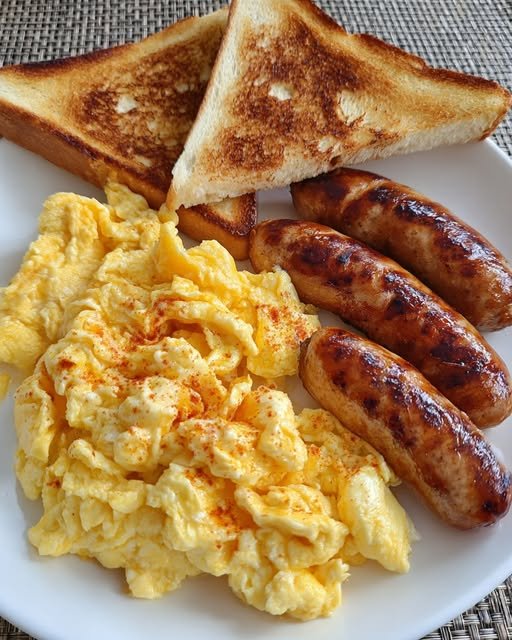
- Assemble the Breakfast Plate: Arrange the cheesy scrambled eggs, grilled sausage links, and toasted bread on a plate.
- Garnish and Serve: If desired, sprinkle a pinch of paprika over the scrambled eggs for color and a subtle smoky flavor. Add chopped chives for freshness. Serve immediately with your favorite breakfast beverages.
Cooking Tips and Variations
Achieving the perfect breakfast plate is all about technique and personal preference. Here are some tips to elevate your meal and ideas for variations to keep things exciting:
Tips for Best Results:
- For Creamy Scrambled Eggs: The secret to truly creamy scrambled eggs is low heat and patience. Never cook them over high heat, as this will result in dry, rubbery eggs. Stirring frequently but gently, and removing them from the heat when they are still slightly undercooked and glistening, will ensure a tender, custardy texture. A splash of milk, cream, or even a teaspoon of butter stirred in at the end can also enhance creaminess.
- Don’t Overcrowd the Pan: When cooking sausages, ensure there’s enough space between them in the pan or on the grill. Overcrowding can lower the temperature of the pan, causing the sausages to steam rather than brown, leading to a less appealing texture.
- Seasoning is Key: Don’t forget to season your eggs with salt and pepper before cooking. A little seasoning goes a long way in bringing out the natural flavors. Taste and adjust as needed.
- Preheat Your Skillet: Always preheat your skillet for both the sausages and the eggs. This ensures even cooking and prevents sticking. For eggs, a medium-low heat is ideal.
- The Right Toast: While any bread works, consider the texture. A slightly thicker slice of sourdough or a good quality artisanal white bread can provide a more satisfying crunch and structure for your plate.
Variations to Try:
- Cheese Choices: Don’t limit yourself to cheddar! Try Monterey Jack for a milder, meltier egg, or a sprinkle of crumbled feta for a tangy bite. Pepper Jack will add a subtle kick, while a touch of smoked gouda can introduce a sophisticated smoky flavor.
- Sausage Alternatives: Explore different types of sausages. Chicken apple sausage offers a sweeter, leaner option, while spicy Italian sausage can add a vibrant heat. For a vegetarian or vegan twist, use plant-based breakfast sausages, which are widely available and cook similarly.
- Bread Options: Experiment with different breads. Sourdough offers a tangy, chewy contrast, while rye bread provides a denser, earthy flavor. English muffins or bagels can also make excellent bases for your breakfast plate. For a gluten-free option, use your favorite gluten-free bread.
- Herb Infusion: Fresh herbs can brighten up your eggs. Finely chopped chives, parsley, or dill can be stirred into the eggs just before cooking or sprinkled as a garnish.
- Spice It Up: For those who love a bit of heat, a dash of hot sauce (like Tabasco or Sriracha) on the side, or a pinch of red pepper flakes stirred into the eggs, can provide a welcome kick.
- Add Vegetables: Make your breakfast even more wholesome by folding in some finely diced vegetables into your eggs. Cooked spinach, bell peppers, onions, or mushrooms are excellent additions that add flavor and nutrients.
- Avocado Power: Sliced avocado alongside your breakfast plate adds healthy fats, a creamy texture, and a beautiful green color.
- Sweet & Savory Combo: If you enjoy a sweet and savory breakfast, consider serving a small side of fresh fruit (berries, melon) or a dollop of fruit preserves with your toast.
Storage and Reheating
While this breakfast plate is best enjoyed fresh, sometimes leftovers happen, or you might want to meal prep components for a busy week. Here’s how to store and reheat effectively:
Storage:
- Scrambled Eggs: Cooked scrambled eggs can be stored in an airtight container in the refrigerator for up to 2-3 days. Note that their texture may change slightly upon reheating, becoming a bit firmer.
- Sausage: Cooked breakfast sausages can be stored in an airtight container in the refrigerator for up to 3-4 days.
- Toast: Toast is best consumed fresh. Leftover toast will become stale and lose its crispness. If you have untoasted bread, keep it in its original packaging at room temperature or in the freezer.
- Assembled Plate: It’s generally not recommended to store the fully assembled plate, as the toast will become soggy, and the eggs and sausage are best stored separately.
Reheating:
- Scrambled Eggs:
- Microwave: Place the eggs in a microwave-safe dish. Add a tiny splash of milk or water (about 1 teaspoon per serving) and cover loosely. Microwave on medium power for 30-60 seconds, stirring halfway through, until just heated through. Be careful not to overcook, as this will make them rubbery.
- Stovetop: Heat a non-stick skillet over low heat. Add a tiny bit of butter or oil. Add the eggs and stir gently, breaking up any large pieces, until just heated through. This method often yields better texture than microwaving.
- Sausage:
- Microwave: Place sausages on a microwave-safe plate. Heat on high for 30-60 seconds, or until heated through.
- Stovetop/Oven: For best results, reheat sausages in a non-stick skillet over medium-low heat until warmed through and slightly re-crisped. Alternatively, you can reheat them in a preheated oven at 300°F (150°C) for about 5-7 minutes.
- Toast: It’s always best to make fresh toast. If you have leftover toast that has gone soft, you can try to re-toast it, but it may not regain its original crispness.
Frequently Asked Questions
What’s the secret to truly fluffy scrambled eggs?
The secret lies in proper technique: use fresh eggs, whisk them well but don’t over-whisk, cook them over low heat, and remove them from the pan while they are still slightly moist and glossy. Gentle, continuous stirring and folding also helps create soft curds. Adding a splash of milk or cream can also contribute to a creamier texture.
Can I prepare any components of this breakfast plate ahead of time?
You can cook the sausages ahead of time and store them in the refrigerator for up to 3-4 days. They reheat well. While you can pre-whisk the eggs, it’s best to cook them fresh just before serving for the optimal texture. Toast should always be made fresh to ensure crispness.
What are some healthy substitutions for this breakfast?
For a healthier twist, opt for whole-wheat or sprouted grain bread, use lean chicken or turkey sausages, and consider adding a handful of spinach or other vegetables to your eggs. You can also reduce the amount of cheese or use a low-fat cheese. Serving with a side of fresh fruit or sliced avocado can also boost the nutritional value.
My eggs always turn out rubbery. What am I doing wrong?
Rubbery eggs are usually a sign of overcooking or cooking at too high a temperature. Ensure your skillet is on medium-low heat, and remove the eggs from the heat when they are still visibly moist. They will continue to cook slightly from the residual heat in the pan. Gentle stirring and not letting them sit untouched for too long are also key.