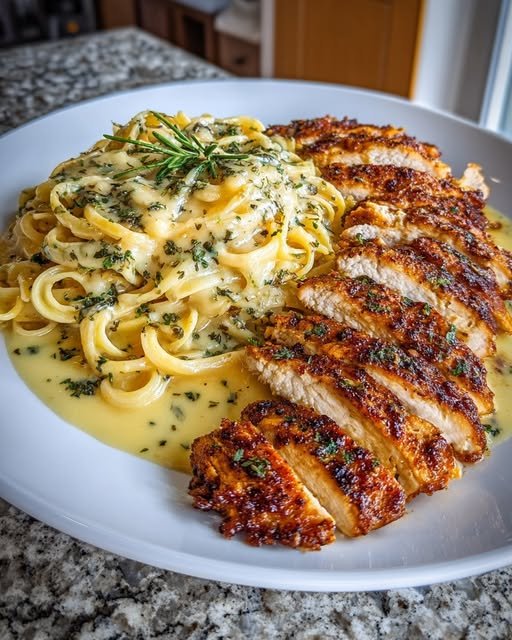
Instructions
- Prepare the Pasta: Bring a large pot of salted water to a rolling boil. Add the fettuccine or linguine and cook according to package directions until al dente. Before draining, reserve about 1 cup of the starchy pasta water. Drain the pasta and set aside.
- Prepare the Chicken: While the pasta cooks, pat the chicken breasts dry with paper towels. Season both sides with 1/2 teaspoon salt and 1/4 teaspoon black pepper.
- Heat 1 tablespoon of olive oil in a large skillet or Dutch oven over medium-high heat. Once the oil is shimmering, add the chicken breasts in a single layer, being careful not to overcrowd the pan. You may need to cook them in batches.
- Sear the chicken for 4-6 minutes per side, or until golden brown and cooked through (internal temperature reaches 165°F / 74°C). Remove the chicken from the skillet and transfer to a cutting board. Let it rest for 5 minutes, then slice against the grain into 1/2-inch thick strips or dice into cubes. Set aside.
- Start the Garlic Sauce: Reduce the heat to medium-low. Add the remaining 1 tablespoon of olive oil and the 4 tablespoons of butter to the same skillet. Once the butter is melted, add the minced garlic. Sauté for 1-2 minutes, stirring constantly, until fragrant. Be careful not to burn the garlic, as it will become bitter.
- Deglaze and Add Cream: Pour in the white wine (or chicken broth) and scrape up any browned bits from the bottom of the pan with a wooden spoon. Let it simmer for 1-2 minutes until slightly reduced.
- Stir in the heavy cream, remaining 1/2 teaspoon salt, 1/4 teaspoon black pepper, and red pepper flakes (if using). Bring the sauce to a gentle simmer, stirring occasionally. Do not allow it to boil vigorously.
- Add the Cheese: Reduce the heat to low. Gradually add the grated Parmesan cheese and shredded mozzarella cheese, stirring continuously until the cheeses are fully melted and the sauce is smooth and creamy. If the sauce seems too thick, add a splash of the reserved pasta water, a tablespoon at a time, until it reaches your desired consistency.
- Combine and Finish: Add the cooked and drained pasta to the skillet with the sauce. Toss gently to coat all the pasta evenly.
- Add the sliced or diced cooked chicken, chopped fresh parsley, and finely chopped fresh rosemary to the pasta. Toss again to combine everything.
- Serve: Taste and adjust seasoning if necessary. Serve immediately, garnished with extra Parmesan cheese and fresh parsley.
Cooking Tips and Variations
Perfectly Cooked Chicken: For uniformly cooked chicken, pound the breasts to an even 1/2-inch thickness. This ensures they cook through at the same rate, preventing dry spots. Use a meat thermometer to confirm the internal temperature reaches 165°F (74°C) for food safety and optimal tenderness. Don’t overcrowd the pan when searing, as this will steam the chicken instead of browning it, leading to less flavor.
Preventing Sauce Curdling: The key to a smooth, creamy sauce is low heat when adding dairy and cheese. Never bring heavy cream to a rolling boil, and add cheese gradually, stirring constantly, over low heat. If your sauce seems too thick, use reserved pasta water, which contains starch that helps emulsify the sauce without diluting the flavor.
Garlic Intensity: The specified amount of garlic provides a robust flavor. If you prefer a milder garlic taste, reduce the quantity to 5-6 cloves. For an even more intense garlic punch, you can add a pinch of garlic powder along with the fresh minced garlic, or roast a head of garlic and mash it into the sauce for a sweeter, more mellow garlic flavor.
Herb Power: Fresh herbs are crucial for the brightness of this dish. While parsley and rosemary are recommended, feel free to experiment with other fresh herbs like thyme or chives. Always add fresh herbs towards the end of cooking to preserve their vibrant flavor and aroma.
Cheese Choices: While Parmesan and mozzarella offer a classic creamy and tangy profile, you can experiment with other cheeses. A touch of provolone, fontina, or even a mild cheddar can add different dimensions of flavor. For an extra sharp kick, a sprinkle of Pecorino Romano can be used in place of some of the Parmesan.
Vegetable Boost: To add more nutrition and color, consider sautéing some spinach, mushrooms, or sun-dried tomatoes with the garlic before adding the cream. Steamed broccoli florets or asparagus spears also make a wonderful addition when tossed in at the end.
Spice It Up: If you love a bit of heat, increase the amount of red pepper flakes or add a dash of your favorite hot sauce to the cream sauce.
Gluten-Free Option: Easily make this dish gluten-free by using your favorite gluten-free pasta and ensuring all other ingredients are certified gluten-free.
Dairy-Free Alternative: For a dairy-free version, use a plant-based heavy cream alternative (like full-fat coconut milk or cashew cream) and dairy-free Parmesan and mozzarella substitutes. Note that the flavor profile will be different but still delicious.
Storage and Reheating
Storage: Leftover Cheesy Garlic Chicken Pasta can be stored in an airtight container in the refrigerator for up to 3-4 days. It’s best consumed within this timeframe to maintain optimal flavor and texture.
Reheating: Reheating creamy pasta dishes can sometimes be tricky, as the sauce can separate or become dry. Here are a few methods:
- Stovetop: This is the preferred method for the best results. Transfer the leftover pasta to a skillet or saucepan over medium-low heat. Add a splash of milk, cream, or chicken broth (1-2 tablespoons per serving) to help rehydrate the sauce. Stir gently and continuously until the pasta is heated through and the sauce is creamy again. Do not bring to a boil.
- Microwave: Place a single serving of pasta in a microwave-safe dish. Add 1-2 tablespoons of milk, cream, or broth. Cover loosely and microwave on medium power for 1-2 minutes, stirring halfway through, until heated through. Be careful not to overheat, as this can cause the sauce to separate.
Note that the pasta may absorb some of the sauce during storage, and the chicken might become slightly less tender upon reheating. Adding a little extra liquid helps to bring the dish back to its original creamy consistency.
Frequently Asked Questions
What kind of pasta works best for this recipe?
While fettuccine or linguine are classic choices for creamy sauces as they provide ample surface area for the sauce to cling to, other long pasta shapes like spaghetti or tagliatelle also work wonderfully. Shorter pasta shapes like penne or rigatoni can also be used if you prefer, as they’ll capture the sauce within their tubes and ridges.
Can I use pre-cooked chicken or rotisserie chicken?
Absolutely! Using pre-cooked chicken, such as leftover roasted chicken or a store-bought rotisserie chicken, is a fantastic time-saver. Simply shred or dice the cooked chicken and add it to the sauce along with the pasta in step 9, ensuring it heats through. This will significantly cut down on preparation time without sacrificing flavor.
My sauce is too thin/thick. How can I fix it?
If your sauce is too thin, continue to simmer it gently over low heat, stirring frequently, allowing it to reduce and thicken naturally. You can also mix a teaspoon of cornstarch with a tablespoon of cold water to create a slurry, then gradually stir it into the simmering sauce until it reaches your desired consistency. If the sauce is too thick, simply thin it out by adding a tablespoon or two of reserved pasta water, milk, or chicken broth until it’s perfect.
Can I make this dish ahead of time?
While this Cheesy Garlic Chicken Pasta is best enjoyed fresh, you can certainly prepare components in advance. You can cook and slice the chicken a day ahead and store it in the refrigerator. You can also mince the garlic and chop the herbs. The sauce itself is best made fresh and combined with the pasta and chicken just before serving to maintain its creamy texture and prevent the pasta from becoming too soft.