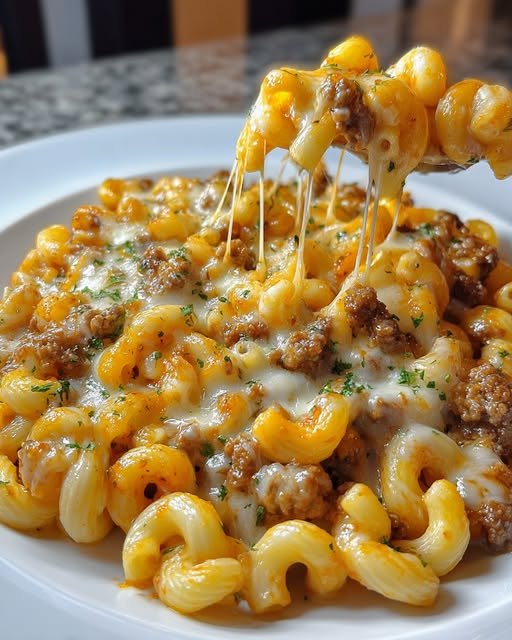
Instructions
- Heat the olive oil in a large, deep skillet or Dutch oven over medium-high heat. Add the ground beef and cook, breaking it up with a spoon, until thoroughly browned and no pink remains. This usually takes about 5-7 minutes.
- Once the beef is browned, drain any excess grease from the skillet.
- Add the diced onion to the skillet with the beef and cook for 3-5 minutes, until the onion softens and becomes translucent.
- Stir in the minced garlic, Italian seasoning, smoked paprika, black pepper, and salt. Cook for another 1 minute, stirring constantly, until fragrant.
- Pour in the beef broth, water, crushed tomatoes, tomato sauce, and Worcestershire sauce. Stir everything together, scraping up any browned bits from the bottom of the skillet.
- Bring the mixture to a gentle boil. Once boiling, add the uncooked elbow macaroni. Stir well to ensure the macaroni is submerged in the liquid.
- Reduce the heat to medium-low, cover the skillet, and simmer for 12-15 minutes, or until the macaroni is tender and most of the liquid has been absorbed. Stir occasionally to prevent the pasta from sticking to the bottom of the pan.
- Once the macaroni is cooked, remove the skillet from the heat. Stir in 1 cup of the shredded sharp cheddar cheese and 1/2 cup of the shredded mozzarella cheese until completely melted and creamy.
- Sprinkle the remaining 1 cup of sharp cheddar cheese and 1/2 cup of mozzarella cheese evenly over the top of the macaroni mixture.
- Cover the skillet again for 2-3 minutes, or until the cheese on top is melted and bubbly. Alternatively, if your skillet is oven-safe, you can place it under a preheated broiler for 1-2 minutes until the cheese is golden and bubbly (watch carefully to prevent burning).
- Garnish with fresh chopped parsley, if desired, and serve hot.
Cooking Tips and Variations
Achieving the perfect Cheesy Beef Macaroni Skillet is easier than you think, especially with a few handy tips. To prevent your pasta from sticking, ensure you stir it frequently during the simmering process, especially in the first few minutes after adding it to the liquid. Using a skillet with a good non-stick surface can also help. Don’t be shy with the liquid; if the sauce seems too thick before the pasta is fully cooked, add a splash more broth or water, a quarter cup at a time, until it reaches your desired consistency. Remember, the pasta will absorb a lot of liquid.
When it comes to cheese, shredding your own from a block is always recommended. Pre-shredded cheeses often contain anti-caking agents that can make them melt less smoothly. For this recipe, a blend of sharp cheddar and mozzarella offers a fantastic balance of tangy flavor and incredible stringy melt, but feel free to experiment! Monterey Jack, Colby, or even a touch of smoked gouda could add an interesting twist. For an extra creamy sauce, you can stir in a tablespoon of cream cheese or a splash of heavy cream along with the shredded cheese at the end.
This recipe is highly adaptable, making it perfect for adding more vegetables. Consider sautéing diced bell peppers (any color!), carrots, or celery along with the onion for added nutrition and flavor. Frozen peas or corn can be stirred in during the last 5 minutes of cooking. For a richer, deeper flavor, you could also add a tablespoon of tomato paste when you add the garlic and spices. Spice variations are endless: a pinch of chili powder or cayenne pepper will add a kick, while a teaspoon of onion powder can enhance the savory notes. A dash of red pepper flakes can also provide a subtle heat.
If you prefer a different type of ground meat, ground turkey or chicken can be substituted for the beef, though you might need to adjust the seasoning slightly. For a slightly healthier option, ensure you use lean ground beef (90/10 or 95/5) and thoroughly drain any fat after browning. This one-pan wonder is designed for ease, so don’t overthink it. Trust the process, and enjoy the delicious aromas filling your kitchen!
Storage and Reheating
Your Cheesy Beef Macaroni Skillet is just as delicious the next day, making it perfect for meal prep or planned leftovers. To store, allow the skillet to cool completely to room temperature (this is crucial to prevent bacterial growth and maintain food quality). Once cooled, transfer the macaroni to an airtight container. It can be stored in the refrigerator for up to 3-4 days.
For longer storage, this dish freezes surprisingly well. Portion the cooled macaroni into freezer-safe containers or heavy-duty freezer bags, removing as much air as possible. It can be stored in the freezer for up to 2-3 months. Thaw frozen portions overnight in the refrigerator before reheating.
When reheating, for best results, add a splash of beef broth or water (1-2 tablespoons per serving) to help loosen the sauce and prevent it from drying out. You can reheat individual portions in the microwave: cover loosely and heat on medium power for 2-3 minutes, stirring halfway through, until heated through. If reheating a larger quantity, transfer it back to a skillet on the stovetop over medium-low heat, stirring occasionally, until warmed through and bubbly. If the sauce seems too thick, add a little extra liquid. Avoid overheating, as this can make the pasta mushy and the cheese oily.
Frequently Asked Questions
Can I use a different type of pasta?
Absolutely! While elbow macaroni is classic for this dish, you can certainly experiment with other small pasta shapes. Ditalini, small shells, or cavatappi would all work well. Just be mindful that cooking times might vary slightly depending on the pasta shape, so always cook until al dente as per package directions, or until tender in the skillet.
What if my sauce is too thin or too thick?
If your sauce is too thin after the pasta has cooked, you can remove the lid and continue to simmer for a few more minutes, allowing some of the liquid to evaporate. Alternatively, you can make a slurry with 1 tablespoon of cornstarch mixed with 2 tablespoons of cold water, then stir it into the simmering sauce and cook for another minute until thickened. If the sauce is too thick, simply stir in an additional 1/4 to 1/2 cup of beef broth or water until it reaches your desired consistency.
Can I make this dish vegetarian?
Yes, you can adapt this recipe for a vegetarian diet! Instead of ground beef, use a plant-based ground crumble, lentils, or finely chopped mushrooms. Replace the beef broth with vegetable broth. The rest of the ingredients and steps can remain largely the same, providing a delicious and hearty meatless meal.
How can I make this dish spicier?
To add more heat, you have several options! You can increase the amount of smoked paprika (use hot paprika instead of sweet), add a pinch or two of cayenne pepper along with the other spices, or stir in some red pepper flakes during the simmering process. For a fresher kick, you could also finely dice a jalapeño or serrano pepper and sauté it with the onion and garlic.